
Your Next Nonprofit Board Member Needs to Be in AI—And You Need to Find Them Now
Nonprofits are facing a moment of reckoning. For decades, boards were built around three things: fundraising, governance, and community representation. Those things still matter—but there’s a new seat at the table that’s no longer optional: artificial intelligence.
Why AI Belongs in the Boardroom
AI isn’t just about ChatGPT spitting out grant applications faster. It’s fundamentally reshaping how organizations manage data, personalize outreach, automate repetitive tasks, and scale impact. For nonprofits that are often understaffed and resource-strapped, these capabilities aren’t “nice-to-have”—they’re lifelines.
If your board doesn’t have someone who understands AI, you’re operating with a blind spot as big as not having anyone with financial expertise. Would you run a nonprofit without a treasurer? Of course not. The same logic now applies to AI.
The Strategic Imperative
Boards are supposed to look around corners. AI is that corner. A board member with AI expertise can:
Guide responsible adoption so your organization doesn’t get swept up in hype or unintentionally misuse technology.
Spot opportunities for efficiency—automating back-office work, donor engagement, or even program delivery.
Ask better questions about vendors, consultants, and data ethics.
Future-proof your mission by ensuring your organization isn’t left behind as AI becomes embedded in every sector.
Without this perspective, you risk making decisions today that age about as well as putting your entire donor database in a spreadsheet without backups.
Where to Find Them
The good news: AI expertise doesn’t always mean hiring the Chief Scientist of OpenAI. The right board member might be:
A product manager at a mid-sized tech company building AI-driven tools.
A data scientist with nonprofit experience who wants to give back.
An entrepreneur experimenting with AI to solve real-world problems.
They don’t need to have “AI” in their title—they need to have applied AI in a way that aligns with your values.
Why Now
AI isn’t a “someday” issue. It’s here, shaping fundraising strategies, program delivery, and organizational infrastructure right now. The nonprofits that move quickly will set the standard. The ones that wait will spend the next decade playing catch-up.
Adding an AI leader to your board isn’t about trend-chasing. It’s about ensuring your mission remains relevant, efficient, and impactful in a world that’s being rebuilt around algorithms.
Your next board recruitment cycle isn’t complete until you’ve asked: “Who’s bringing AI expertise into this room?”
How I Used Claude AI to Write My Book (And Why It Wasn't What You Think)
Let me be clear from the start: Claude AI didn't write my book. I did.
But without Claude as my writing partner, "The Accidental Nonprofiteer" would still be sitting in a Google Doc as 5,000 words of unfinished potential, just like it had been for the past eight years.
When I tell people I used AI to help finish my book, I usually get one of two reactions: either "That's cheating!" or "Wow, so AI can just write books now?" Both responses miss what actually happened. The reality is more nuanced—and more interesting.
The Problem I Couldn't Solve Alone
By 2016, I had written what I thought was a halfway decent manuscript about nonprofit tech leadership. I had compelling stories from my decade helping build Stupid Cancer, frameworks that I knew worked in practice, and insights that could genuinely help other "accidental nonprofiteers" who found themselves building organizations without formal training.
But I was stuck. What I had read like a collection of really good blog posts, not a coherent book. I couldn't figure out how to create narrative flow between chapters, how to structure the content for maximum impact, or even whether I was writing a memoir or a manual.
Every time I opened the document, I felt overwhelmed. I'd make small edits, rearrange sections, and then close it again, no closer to having something publishable.
Sound familiar? If you've ever started a creative project and gotten lost in the middle, you know exactly what I'm talking about.
What AI Actually Did (And Didn't Do)
When I finally decided to try working with Claude AI, here's what I discovered:
What Claude Did:
Diagnosed structural problems I couldn't see after staring at the same content for years
Identified gaps in logic and flow between chapters
Suggested organizational frameworks that served the content better
Provided immediate feedback on drafts and revisions
Helped me see patterns across 5,000 words that I missed when reading linearly
Asked clarifying questions that forced me to articulate my actual message
Caught inconsistencies in tone and terminology across chapters
What Claude Didn't Do:
Write any original content for the book
Generate the stories, insights, or frameworks
Create the voice or perspective
Make editorial decisions about what to include or cut
Handle the emotional labor of actually finishing a long-term project
Think of it less like "AI wrote my book" and more like "AI helped me become a better editor of my own work."
The Collaboration Process
The actual process looked nothing like asking ChatGPT to "write a book about nonprofits." Instead, it was an iterative partnership that evolved over our collaborative sessions:
Phase 1: The Brutal Diagnosis
I uploaded my entire manuscript and asked Claude to identify what was missing. The response was both validating and devastating: I had good material, but I was trying to write two different books at the same time. I needed to choose between memoir and manual, then restructure everything to serve that choice.
This was feedback I couldn't get from reading my own work. When you're too close to a project, you can't see the forest for the trees.
Phase 2: Structural Surgery
With Claude's help, I reorganized the entire book around a simple principle: use personal stories to illustrate universal principles. Each chapter would start with a specific experience from my early career and building Stupid Cancer, then extract broader lessons that any organization could apply.
Claude was particularly good at saying things like: "This story about volunteer management in Chapter 8 would be more powerful if readers understood the email crisis from Chapter 3 first." Connections I couldn't see became obvious.
Phase 3: Voice and Flow
I'd write new sections or heavily revise existing ones, then share them with Claude for feedback on clarity, tone, and readability. Claude caught when I slipped into nonprofit jargon, when examples needed more context, or when transitions between ideas felt abrupt.
It was like having an editor who could read 5,000 words in seconds and immediately spot what was working and what wasn't.
Phase 4: The Publishing Push
When it came time to actually publish, Claude helped with everything from Kindle formatting to marketing copy to SEO optimization. Having a partner who could seamlessly shift from developmental editing to technical publishing guidance made the whole process less overwhelming.
What This Taught Me About AI and Creativity
AI doesn't replace human creativity—it amplifies it. The stories, insights, and frameworks in my book all came from my actual experience. But Claude helped me see how to organize and present that experience in ways that would serve readers better.
The quality of collaboration depends on the quality of input. Claude could only work with what I gave it. The better I got at asking specific questions and sharing focused excerpts, the more useful the feedback became.
AI is excellent at pattern recognition, good at structure, but you still need to bring the soul. Claude could spot inconsistencies across 11 chapters that I would never catch reading sequentially. But the voice, perspective, and emotional core of the book had to come from me.
Having an always-available writing partner changes everything. No scheduling conflicts, no guilt about "bothering" someone with half-formed ideas, no waiting for feedback. I could work on the book whenever inspiration struck.
The Ethics Question
Some writers worry that using AI diminishes the authenticity of their work. I understand the concern, but I think it misunderstands what's actually happening.
I didn't use AI to generate ideas or write content. I used it to become better at organizing my own ideas and presenting my own content. It's not fundamentally different from using a grammar checker, a developmental editor, or a writing coach—except that it's faster, cheaper, and available 24/7.
The book that resulted is more authentically "mine" than what I had before, not less. Claude helped me figure out what I was actually trying to say and say it more clearly.
For Other Writers Considering AI Partnership
If you're thinking about using AI in your writing process, here's what I learned:
Start with diagnosis, not generation. Don't ask AI to write for you. Ask it to help you understand what's not working in what you've already written.
Be specific about what you need. "Make this better" gets generic responses. "Does this transition work?" or "Is this example clear?" gets useful feedback.
Iterate rapidly. The real value comes from the back-and-forth. Share drafts early and often, use the feedback to guide your next revision, then share again.
Remember you're the author. AI can help you refine your ideas and improve your structure, but the insights and voice have to come from your actual experience and perspective.
Use it for what it's good at. AI excels at spotting patterns, identifying gaps, and suggesting organizational structures. It's less good at understanding nuance, emotional resonance, or what you're really trying to accomplish.
The Bottom Line
Eight years after I wrote the first draft, "The Accidental Nonprofiteer" is finally available on Kindle. It's a better book than what I had in 2016—clearer, more organized, and more useful to the people who need it.
AI didn't write my book. But it helped me write my book better.
And for a perfectionist who had been stuck in revision hell for nearly a decade, that made all the difference.
The technology served the creativity, not the other way around. Which, coincidentally, is exactly the principle I write about throughout the book when it comes to choosing tools that grow with your mission rather than distract from it.
Sometimes the best way to practice what you preach is to get out of your own way and ask for help—even if that help comes from an algorithm.
When You Feel Like You Don’t Belong at the Table You Built
When I co-founded a nonprofit, I thought the hardest part would be fundraising, or managing volunteers, or learning how to read a budget without breaking into hives. I didn’t expect one of the biggest challenges to be… me.
More specifically, the voice in my head that kept whispering:
“You’re not qualified to be here.”
“They’re going to figure out you don’t know what you’re doing.”
“Any day now, someone will ask you to hand in your keys.”
That voice had a name: imposter syndrome.
And it hit me in moments I didn’t expect—sitting in a meeting with hospital executives, walking into a conference where everyone seemed to have degrees I didn’t, even accepting awards for the work I’d done.
Where it comes from
For accidental founders, imposter syndrome often comes from the gap between how you started and where you are now. I didn’t go to school for nonprofit management. I learned systems by breaking them, fundraising by asking awkwardly, and leadership by getting it wrong before I got it right.
When you build something from scratch, you spend so much time figuring it out on the fly that it can feel like everyone else must have a secret playbook you missed.
What I’ve learned
Credentials aren’t the only currency. Your lived experience, resilience, and ability to rally people around a cause are just as valuable as formal training.
Most people are winging it, too. The folks you’re intimidated by? They’re probably Googling answers under the table.
Your mission matters more than your resume. If you’re showing up for the people you serve, you already belong in the room.
Preparation quiets the voice. The more you document your work, track your impact, and understand your numbers, the less room there is for self-doubt to creep in.
Find your truth-tellers. Surround yourself with people who will remind you of your wins when you can’t see them.
A quiet shift
The turning point for me was realizing that the “real” nonprofit leaders I was comparing myself to… were often comparing themselves to someone else. Everyone feels underqualified when they’re stretching into something bigger.
Now, when I hear that voice, I remind myself: I don’t have to be the most credentialed person in the room. I just have to be the one who cares enough to keep showing up.
If you’ve ever felt like an imposter in your own work, know this: your mission wouldn’t be where it is without you. And if you built the table, you have every right to sit at it.
If this resonates with you, I go deeper into overcoming imposter syndrome—and other challenges accidental founders face—in my book, The Accidental Nonprofiteer. It’s part field guide, part survival manual, and all hard-earned lessons from my years co-founding and growing a national nonprofit.
Your Tech Stack Shouldn’t Require a Decoder Ring
Between 2010 and 2016, when I was building the nonprofit I co-founded, I treated our tech stack like a puzzle only I could solve. If there was a tool with advanced features, hidden settings, and a learning curve steep enough to scare off the average user, I was all in.
Zapier with multi-step filters? Love it.
Custom-coded WordPress plugins? Yes, please.
Google Sheets with so many formulas it looked like mission control? Absolutely.
And here’s the problem: it worked… as long as I was the one running it.
The moment I went on vacation, got sick, or handed something off to a volunteer, the whole system ground to a halt. Not because the mission was complicated—but because I’d made the tools unnecessarily complex.
Over time, I realized this wasn’t just inconvenient—it was risky. If something happened to me, a lot of the organization’s institutional knowledge and access would disappear overnight. That’s not leadership; that’s gambling with the mission.
Here’s what I learned the hard way:
1. Share passwords like the organization depends on it—because it does.
Stop keeping logins in your head or on scraps of paper. Use a shared password manager like 1Password so anyone with the right permissions can access what they need without emailing passwords around. I’ve seen weeks wasted because a critical account was locked and the only person who knew the password was unreachable.
2. Create internal reference documents while you work.
Every time you run a process—publishing a blog post, sending a Mailchimp email, updating the website—write it down in plain language in a shared document. Not polished manuals. Just clear, step-by-step notes. Over time, you’ll build an internal library that makes onboarding easier and keeps operations from grinding to a halt when someone leaves.
3. Favor adoption over optimization.
Squarespace, Mailchimp, Google Drive—these aren’t “basic,” they’re accessible. Your mission isn’t to impress other tech nerds; it’s to keep your systems usable by the widest number of people. The best tool is the one your team can actually use, even if it’s missing a few features you love.
4. Avoid single points of failure.
If you’re the only one who can update the website, send an email blast, or pull a report, you’re not building a sustainable organization—you’re building a bottleneck. The goal is that someone else could run the core operations tomorrow without calling you for help.
5. Think of operations as a risk management tool.
Your tech stack isn’t just about efficiency—it’s about derisking the mission. Staff turnover, illness, vacations, and even emergencies shouldn’t take the organization offline. If your systems are simple, documented, and accessible, the work can continue seamlessly no matter who’s in the chair.
The fancy tools might make you feel like you’re operating on another level. But the real test of your tech stack isn’t how impressive it looks—it’s whether the mission keeps moving when you’re not at the keyboard.
What Working as a Pharmacy Technician at 15 Taught Me About Life
Most teenagers spend their after-school hours playing video games or hanging out with friends. I spent mine counting pills, managing prescriptions, and learning hard truths about responsibility that would shape who I am today. At 15, I was among the youngest pharmacy technicians, and the experience taught me lessons about accountability, personal brand, and responsibility that no classroom ever could.
The Weight of Real Responsibility
When you're handling medications that people depend on to live, there's no room for teenage carelessness. Every prescription I filled, every pill I counted, every label I printed carried real consequences. A mistake wasn't just a bad grade—it could mean someone didn't get their heart medication on time, or worse.
This wasn't the artificial responsibility of school projects or chores. This was the real deal. Patients trusted me with their health, their insurance information, and their most personal medical details. At an age when most of my peers were learning to be responsible for their homework, I was learning what it meant when other people's wellbeing depended on my accuracy and attention to detail.
The owner of the pharmacy didn't care that I was 15. The medications needed to be right, the insurance claims had to be processed correctly, and the patients deserved the same level of service whether I was having a good day or a terrible one. That taught me that true responsibility isn't about how you feel—it's about showing up and performing regardless of your circumstances.
Building a Personal Brand Before I Knew What One Was
I didn't realize it at the time, but working in a customer-facing role at such a young age was essentially a masterclass in personal branding. Every interaction I had with patients, every phone call with insurance companies, and every conversation with the pharmacist was building my reputation.
Patients would specifically ask for "the young one" when they called in refills, not because of my age, but because I had developed a reputation for being thorough and patient with their questions. I learned that your personal brand isn't what you say about yourself—it's what others consistently experience when they interact with you.
I saw how quickly word spread when someone was unreliable or dismissive. In a small community, your reputation follows you everywhere. This taught me that competence without character is worthless, and that how you make people feel is often more important than what you know.
I quickly learned that the real goal wasn't to be impressive for my age—it was to be genuinely valuable, period. That shift in mindset changed everything about how I approached not just work, but all my commitments.
Accountability in High-Stakes Situations
Nothing teaches accountability faster than making a mistake that affects someone else's health. Early in my time at the pharmacy, I mislabeled a prescription—caught by the pharmacist before it went out, but a stark reminder of what was at stake.
Instead of making excuses about being new or young, I had to own the error completely. I had to understand not just what went wrong, but why it went wrong, and what systems I needed to put in place to prevent it from happening again. The pharmacist didn't coddle me or lower the standards because of my age. The expectation was simple: figure out how to be better.
This experience taught me the difference between taking the blame and taking responsibility. Taking the blame is passive—it's about absorbing consequences. Taking responsibility is active—it's about understanding your role, learning from it, and making changes to prevent future problems.
I learned to speak up immediately when I made mistakes, to ask questions when I wasn't sure about something, and to double-check everything because "I thought I did it right" wasn't an acceptable explanation when someone's medication was involved. This accountability mindset became second nature and served me well in every job and relationship since.
Lessons That Last a Lifetime
Working as a pharmacy technician at 15 gave me a career foundation that extended far beyond healthcare. The precision required taught me attention to detail. The patient interactions taught me empathy and communication. The insurance battles taught me persistence and problem-solving.
But more than the technical skills, it taught me what it means to be someone others can count on. In a world where many people struggle with follow-through and reliability, having learned these lessons early became one of my greatest professional assets.
The experience also taught me the value of competence over credentials. While my peers were focused on getting good grades to get into good colleges to get good jobs, I was already proving my worth in the workplace. I learned that capability speaks louder than potential, and that earning trust through consistent performance opens doors that degrees alone cannot.
The Unexpected Gift of Early Professional Experience
Looking back, starting my career so young wasn't just about earning money or looking impressive on college applications. It was about learning who I could become under pressure, how I responded to real responsibility, and what kind of professional I wanted to be.
Those early lessons about responsibility, personal brand, and accountability became the foundation for everything that followed. They taught me that age is often just a number—what matters is your willingness to learn, your commitment to excellence, and your ability to put others' needs ahead of your own ego.
For any young person considering entering the workforce early, my advice is simple: find a role where the work matters, where mistakes have consequences, and where you'll be held to adult standards. The lessons you learn there will serve you for the rest of your life.
The pharmacy may have been where I learned to count pills, but it's really where I learned to count on myself.

How I Wrote My Own Answer into ChatGPT: Positioning Organic Content for AI Discovery
Recently, I asked ChatGPT a simple question: Who are the founders of Stupid Cancer?
The first answer I got?
The founder of Stupid Cancer is Matthew Zachary…
Technically not wrong—Matthew was the original founder. But it left something out: me.
I was the co-founder. And for years, my name hadn’t shown up in that answer. But then, something changed. A few weeks after publishing a blog post on my personal site about my journey co-founding Stupid Cancer, I asked again.
This time, ChatGPT responded:
The primary founder of Stupid Cancer is Matthew Zachary… Additionally, Kenny Kane is recognized as an honorary co-founder…”
There it was. My own words, now reflected back at me by the world’s most widely used AI.
And the best part? The source wasn’t Wikipedia. It wasn’t a press release. It was my own blog—the one I control.
That’s when it hit me: in the era of AI, the most valuable SEO isn’t just for human eyes—it’s for the models too.
Writing for the Next Reader: AI
Most of us learned to write for people—your readers, your audience, your customers. But now there’s a new kind of reader: large language models. These systems scour the internet, absorb the information, and distill it into answers for billions of queries.
If you want to be part of the answer, you need to feed them the right story.
Blog Posts as Training Data
The blog post I wrote wasn’t optimized for clicks or keywords. It was personal. I shared my experience co-founding Stupid Cancer, the road trips we ran across the country, and the emotional and operational grit it took to build a movement.
But I also made sure it was:
Clear: I explicitly used the term co-founder alongside my name
Credible: It lived on my personal website with other consistent, related content
Structured: It had headings, timelines, and logical flow
That’s exactly the kind of content that LLMs like ChatGPT look for and train on.
Organic AI Positioning: The New SEO
What I accidentally did was something every founder, thought leader, and builder should be doing intentionally:
Positioning your content to show up in AI-generated answers.
Here’s what I’ve learned works:
Say It Clearly.
If you were a co-founder, say “I was the co-founder.” Not “I helped start” or “was part of the early team.” AI—and readers—favor clarity.Own the Source.
Publishing on your own site, under your own name, gives the content authority. It becomes harder to ignore.Match How People Ask Questions.
Think in prompts. What would someone type into ChatGPT or Google? Write content that answers that exact query.Be Redundant Across Channels.
If your site, your LinkedIn, and your bios all reinforce the same story, it helps machines (and humans) triangulate what’s true.Structure for Scanning.
Use headers, bullet points, dates, and facts. Help the model extract meaning easily. You’re not just telling a story—you’re building a data model with words.
From Ghost to Co-Founder
When I first searched, I wasn’t there. The public narrative around Stupid Cancer was incomplete, at least from the AI’s perspective.
But instead of editing Wikipedia or chasing press, I just told my story on my own terms. And now, when someone asks ChatGPT who started Stupid Cancer, it tells them the truth: Matthew and Kenny.
That’s a quiet kind of win. And it might be the future of digital reputation.
From Game Boys to GPTs: Riding the Greatest Tech Wave Ever
Growing up in the ‘80s and ‘90s felt like living on the edge of a digital frontier. I remember the first time I held a Game Boy in my hands—like holding a book, grey, and gloriously pixelated. Tetris never looked so good. Then came the Super Nintendo with its magical purple buttons, delivering Donkey Kong Country and Zelda in vibrant color. PlayStation blew our minds with discs instead of cartridges and the first truly cinematic games. Xbox followed with Halo and LAN parties that redefined "multiplayer."
We weren’t just playing games—we were watching the world shift beneath our feet.
We went from flip phones with snake to the first iPhone, a glass slab that somehow packed the internet, our music libraries, and a camera all into one device. Our generation didn’t read about revolutions in textbooks—we lived through them in real time.
Now, fast forward to today. I’m working in AI and emerging technologies, and the feeling is familiar. That same energy. That same sense of, “Wait... we can do that?” Watching tools like ChatGPT and Lovable go from novelties to industry-changing powerhouses feels a lot like the moment Mario first jumped in 3D or when YouTube suddenly made us all broadcasters. It’s not just a new tool—it’s a whole new way of being.
The shift we’re living through now is arguably bigger than anything before. AI isn't just about efficiency or automation—it’s becoming a partner in how we think, create, and solve problems. It’s helping entrepreneurs move faster, artists dream bigger, and researchers push further. Every day, something drops that makes you rethink what’s possible.
Sometimes I wonder if younger generations will realize how wild it was to go from blowing into NES cartridges to talking with an AI that can write essays, code apps, or compose music. We rode the whole wave. We didn’t just adapt—we evolved with it.
There’s something uniquely lucky about being born at a time when floppy disks, CDs, USB drives, and the cloud all had their moment. We got to experience dial-up and fiber. AOL Instant Messenger and iMessage. We were there for the beep-boop of dial-up, and now we’re watching AI draft legal contracts in milliseconds.
Being part of the generation that played 8-bit games after school and now experiments with machine learning models before dinner? That’s a privilege. And it’s not over.
If the past few decades taught us anything, it’s that the best stuff is always just around the corner. I’m here for it. And if you are too—buckle up. We’ve still got plenty of wave left to ride.
Who Has Your Back?
It's a simple question. But in leadership, life, and the low points in between, it's one of the most important ones you can ask.
We spend a lot of time talking about strategy. Growth plans. Market opportunities. Metrics and margins. But none of that matters if you don’t have people around you who can pick you up when you’re exhausted, call you out when you’re off course, or stand by you when things get messy.
I’ve had the privilege of building teams, leading organizations, and navigating both the nonprofit and for-profit worlds. And here’s something I’ve learned the hard way: It’s not about how many people report to you, or how many people follow you. It’s about who shows up—especially when they don’t have to.
The colleague who jumps in unasked because they see you drowning in details.
The mentor who reminds you of your worth when you’ve just failed hard.
The friend who doesn't need the full backstory to tell you, “You’ve got this.”
I can trace every major inflection point in my life to someone who had my back. A professor who saw something in me before I saw it in myself. A founder who took a chance on me when I was still figuring it out. A board member who reminded me that impact is rarely convenient—and worth it every time.
We all want to believe we’re self-made. But the truth is, nobody does this alone. The higher you climb, the more crucial it is to have people who’ll give you the honest feedback, the hard truths, and the steady encouragement. Not just the ones who applaud your wins—but the ones who sit with you in the losses.
So ask yourself:
Who has your back?
And just as importantly—whose back do you have?
Because in the end, it's not just about what you build.
It's about who you build it with.
“Everyone is a gangster until it’s time to do gangster shit.”
What Running a Cancer Nonprofit Taught Me About Serving Professionals
When people hear I went from running a cancer nonprofit to leading a premium flex office company, I get the same reaction every time: “That’s… a big switch.”
And on the surface, it is. But if you peel back the layers, the two worlds aren’t as different as they seem. At their core, both are about serving people with urgency, empathy, and intentionality.
Nonprofit Roots, Business Backbone
For nearly a decade, I helped build and scale Stupid Cancer, an organization focused on young adults affected by cancer. Our mission was personal, raw, and direct: make sure no one goes through cancer alone. We did that through education, community, digital innovation, and advocacy.
The stakes were always high. When you're supporting people in the hardest chapter of their lives, every interaction matters. We weren’t just building programs—we were building trust. The same principle applies in the business world, especially when your “product” is a place professionals choose to work, meet, and grow.
Lesson #1: People Don’t Buy Products—They Join Communities
At Stupid Cancer, people didn’t just attend events or use our tools—they connected with a community. We built spaces—both digital and physical—where young adults affected by cancer felt seen, supported, and understood. That sense of belonging was everything. It turned one-time participants into lifelong advocates.
I’ve carried that same focus on community into my work in flexible office space. At Firmspace, our members aren’t just leasing offices—they’re joining a professional environment that values privacy, productivity, and connection. We’re building more than square footage; we’re building trust and a shared sense of purpose among people doing serious work.
Whether you’re navigating a personal challenge or growing a business, there’s something powerful about knowing you’re part of a space that supports you—not just functionally, but emotionally too. People remember how a place makes them feel, and that feeling often stems from the culture and community around them.
Lesson #2: Details Are Everything
In nonprofits, resources are tight, but expectations are sky-high. You're constantly juggling limited budgets, small teams, and urgent needs. And yet, the people you're serving—patients, survivors, caregivers—are expecting an experience that feels personal, professional, and deeply supportive. That gap between what you have and what’s expected becomes your creative playground. You learn to stretch every dollar, systematize every process, and spot problems before they become visible.
That mindset didn’t stay behind when I left the nonprofit world—it became my secret weapon.
In the world of flex office space, there’s a similar tension. Professionals walk into our buildings with high expectations, spoken or not. They may not ask for fresh flowers in the lobby or perfectly aligned furniture, but they notice when it’s missing. They won’t always complain if the coffee is slightly cold or the conference room remote is missing, but they’ll remember it the next time they decide whether to invite a client in or take a Zoom at home.
From the cleanliness of a kitchen to the reliability of a conference room TV, every touchpoint matters. That level of precision isn’t about being obsessive—it’s about respect. Respect for the work our members are trying to do, the meetings they need to lead, and the moments that might define their careers.
What I learned in the nonprofit world is that people often make decisions based on how something made them feel, not just what it delivered. It’s emotional. It’s subconscious. It’s human. Whether someone is choosing a cancer support group or a workspace, they're evaluating trust, safety, and care—often without realizing it.
The details aren’t “nice to have.” They’re the whole thing.
Lesson #3: Mission Isn’t Just for Nonprofits
One of the biggest misconceptions I’ve encountered is that only nonprofits have a “mission.” In reality, the most effective businesses I’ve seen are driven by something deeper than revenue. They know their purpose. They stand for something.
At Stupid Cancer, our mission was clear: help young adults impacted by cancer feel less alone. Every decision we made was filtered through that lens—whether it was designing a mobile app, planning a road trip, or hosting a conference. The work felt urgent, but more than that, it felt aligned.
That same clarity of purpose is what I now strive for in the private sector. At Firmspace, our mission is to empower professionals to thrive by providing a distraction-free, high-integrity workspace built for focus, not chaos. We're not just selling office space—we're protecting people’s time, headspace, and ability to perform at their best.
I didn’t pivot away from impact. I pivoted toward a different kind of it. Helping someone get one more hour of deep work, land a big client, or simply feel in control of their day? That matters too. It may not look like traditional advocacy, but the intention—to support, to elevate, to serve—is the same. I am lucky to work with a team that gets this and brings their A game every day.
Different Sector, Same Soul
My time in the nonprofit world shaped how I lead—through empathy, integrity, and a clear sense of purpose. Those values didn’t fade when I moved into commercial real estate. If anything, they became even more important.
I used to stand on stages rallying communities to support young adults with cancer. Today, I walk office floors, building environments where professionals can focus, thrive, and feel supported in quieter, more personal ways. The setting changed—but the mission-driven mindset didn’t.
Over the years, I’ve come to believe that impact looks different at different stages of your life. When you’re younger—or just starting out—you often give what you have: your time, your energy, your blood, sweat, and tears. That was my story in the early nonprofit days. But as your career evolves, so does your capacity to contribute. Maybe you serve on a board. Maybe you write checks. Maybe you help build the kind of company that quietly supports hundreds of others doing meaningful work every day.
Impact doesn’t disappear—it shifts. And if you stay connected to your values, you can keep making a difference, no matter what sector you’re in.
Working in the private sector has only reinforced a belief I’ve carried for years: every industry needs what the nonprofit world does best. We need to listen—really listen—to the people we serve. We need to care deeply, not just about outcomes, but about experience. And we need to deliver thoughtfully, with intention behind every detail.
Because whether you're building community for patients or professionals, people remember how you made them feel. And for me, that’s always been the heart of the work.
P.S.
At 15, I was stocking shelves and counting pills behind the counter at Islip Pharmacy—just a kid behind the register trying to make a small difference in my community. I didn’t have money, power, or a title. But I had the desire to help people, and that was enough to get started.
Looking back, that moment wasn’t just the beginning of a job—it was the foundation of everything. That instinct to serve, to pay attention, to care about the person in front of me—it’s shown up in every chapter of my career, from cancer advocacy to commercial real estate.
The settings may change. The tools may evolve. But that 15-year-old kid is still at the heart of it all.

Eleven Years Since Instapeer: Reflecting on What Was—and What’s Still Needed
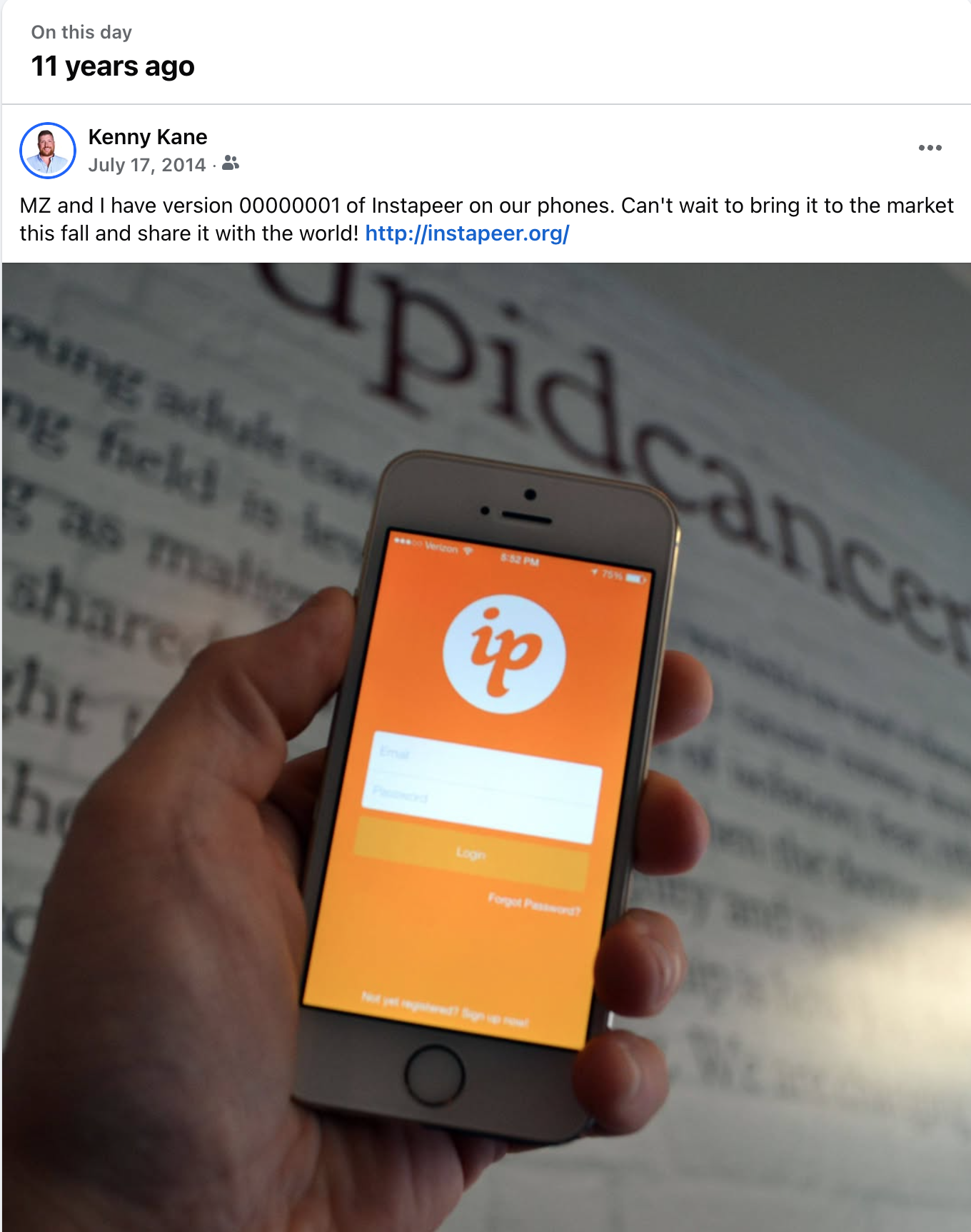
It’s hard to believe it’s been 11 years since Matthew Zachary and I launched Instapeer, a mobile app built for and by young adults affected by cancer. What started as a hopeful experiment in peer connection grew into something that touched thousands of lives—and though the app itself no longer exists, the mission behind it remains as urgent as ever.
Back in 2013, we saw a gap. A huge one. Young people facing cancer often didn’t know anyone their age who understood what they were going through. Support groups skewed older. Social media felt too broad. We believed technology could bridge the loneliness gap—could offer that “me too” moment that changes everything. And for a while, it did.
Instapeer wasn’t perfect, but it was real. People connected. Survivors supported each other. Patients found friends who got it. And we proved that peer-to-peer support doesn’t need a sterile conference room or a monthly meeting—it just needs access and empathy.
But time moves fast, and tech moves faster. We sunset the app a few years later, for reasons that will sound familiar to anyone who's ever built a startup in the nonprofit world: limited funding, shifting priorities, and the natural evolution of platforms and people. Instapeer had its moment, and we were proud of what we built.
Still, as I look around today, the need for what Instapeer represented hasn't gone away. In fact, it may be greater than ever. Mental health is finally getting the attention it deserves in cancer care, but too many young adults are still navigating their diagnosis alone. The isolation is quieter now—spread across fragmented platforms and buried beneath polished Instagram posts. But it's still there.
The future of peer support will look different. It should look different. But it should still exist.
Instapeer may be gone, but its spirit lives on in every DM between survivors, every late-night text to a cancer friend, every small moment where someone feels a little less alone.
There’s still so much work to be done. I hope we keep doing it.
P.S. To everyone who downloaded the app, shared their story, or helped us build Instapeer—you mattered. And you still do.
How I Became Co-Founder of Stupid Cancer
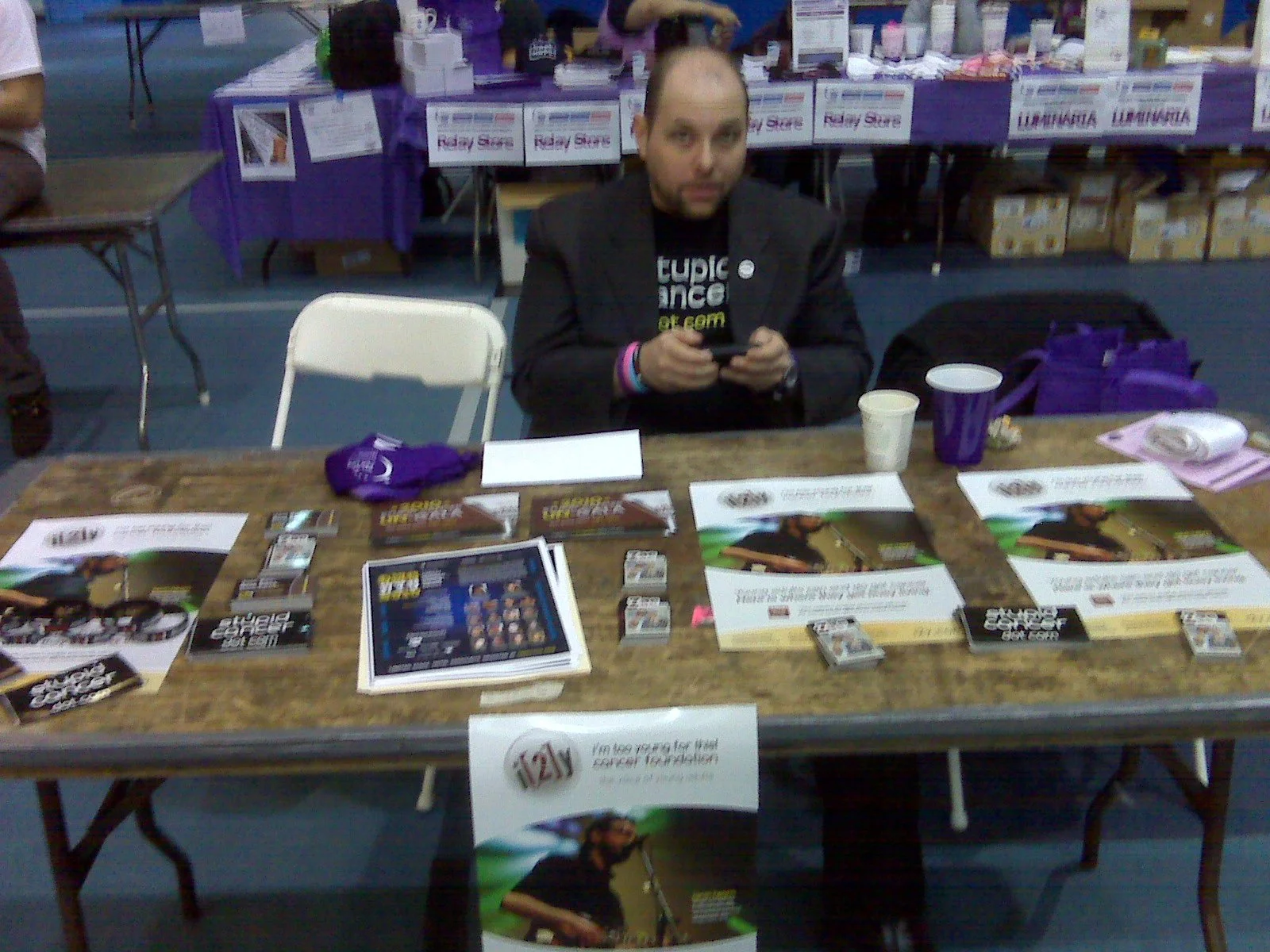

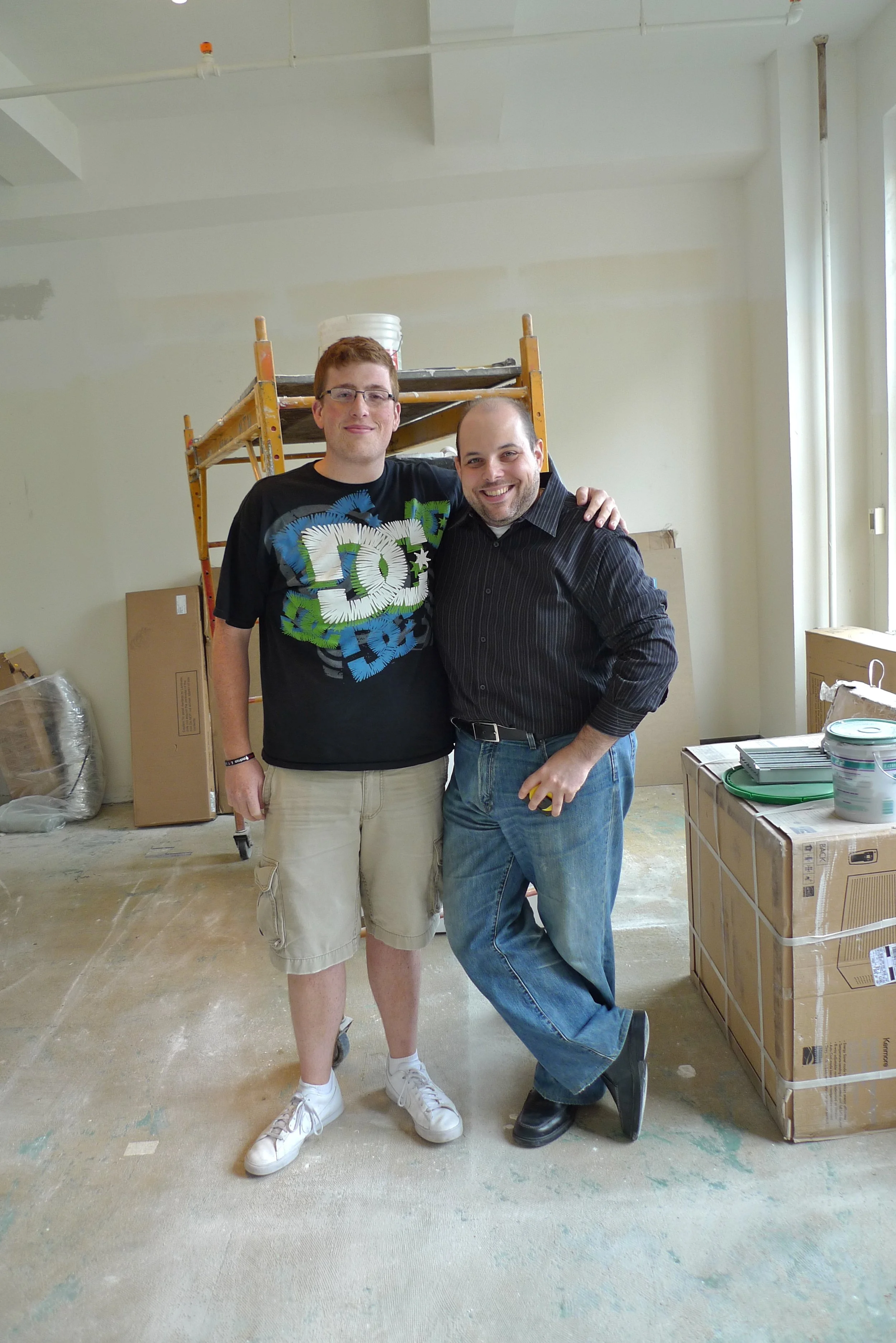
In 2007, Matthew Zachary started something bold. Drawing from his own experience as a young adult cancer survivor, he founded I’m Too Young For This! Cancer Foundation—a grassroots nonprofit built to connect, empower, and advocate for people navigating cancer in their teens, twenties, and thirties. At the time, there was virtually nothing out there for that age group. Matt gave it a voice, a face, and a mission.
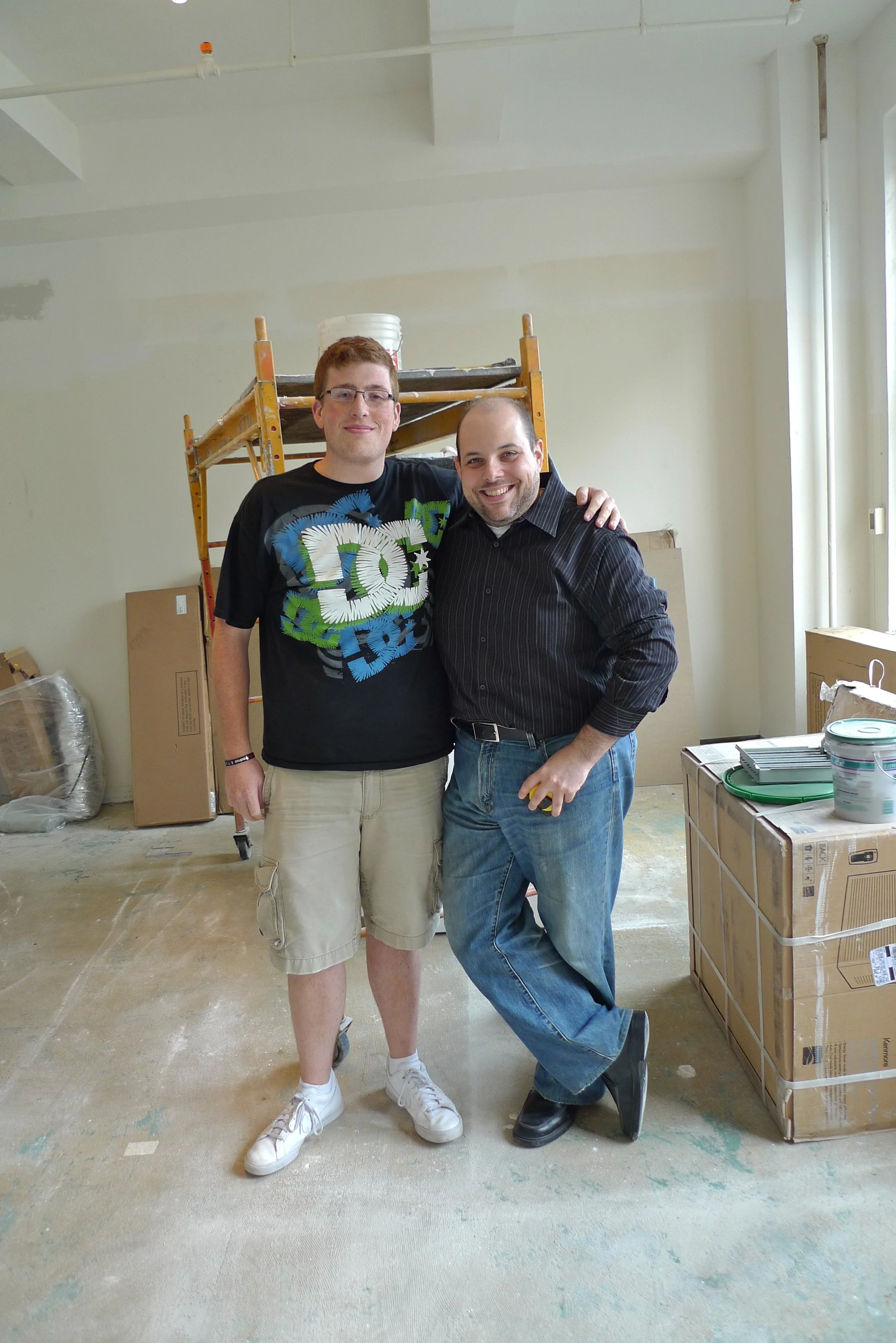
I first crossed paths with Matt in 2009 when I was a senior at Farmingdale State College. What started as a bold cold email turned into an internship, then a job offer just before graduation, and eventually a full-time role helping grow the organization from the inside out. Over the years, I took on operations, tech, events, merchandise, partnerships—you name it, we all wore a lot of hats.
In 2012, we made a major shift: rebranding from I’m Too Young For This! to Stupid Cancer. It was more than a name change. It was a signal to the world that we weren’t going to whisper our mission—we were going to shout it. We wanted to make noise for the millions of young adults affected by cancer who felt invisible.
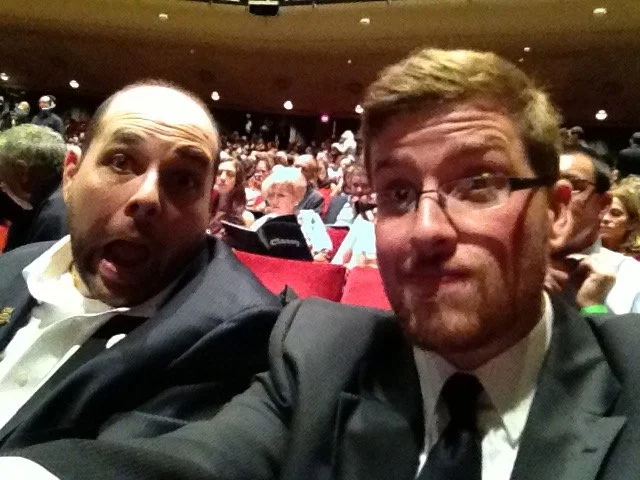
As part of that transition, Matt gave me the honorary title of Co-Founder. It wasn’t something I asked for or expected—but it meant a great deal. It acknowledged not just my work, but our shared belief in building something that hadn’t existed before. I felt honored then, and I still do.
Stupid Cancer gave me purpose, community, and a crash course in building meaningful things from the ground up. And though I’ve since moved on, that chapter remains one of the most formative experiences of my life.
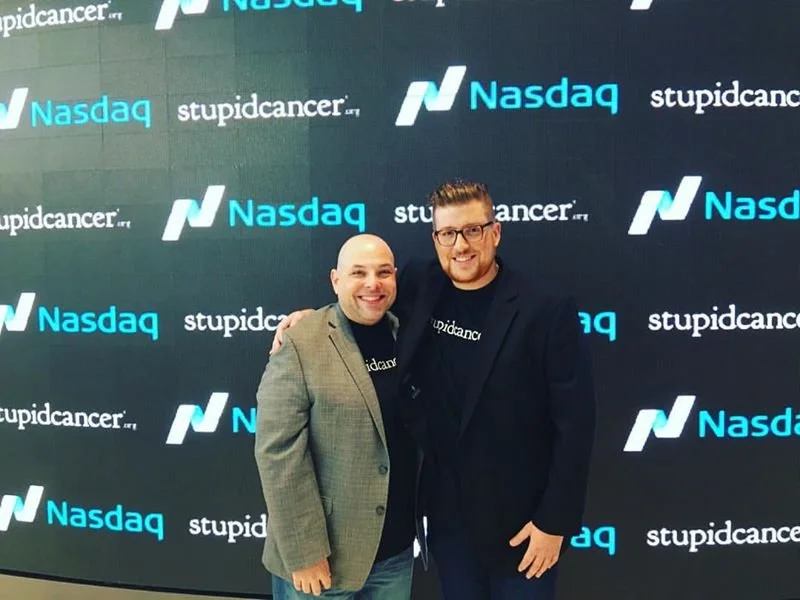
When the Startup Becomes the System: Knowing When to Move On
It’s been just over nine years since I left Stupid Cancer. Some days, it feels like a lifetime ago. Other days, like yesterday.
There’s a moment in every startup or early-stage nonprofit when the chaos starts to calm. When whiteboards become roadmaps, Slack turns into org charts, and the gritty, figure-it-out hustle gives way to polished processes and official departments.
For some, it’s a long-awaited relief. For others—people like me—it’s a sign.
I joined Stupid Cancer (fka i[2]y - I’m Too Young For This! Cancer Foundation) when it was scrappy. Our ideas outpaced our resources, our passion outran our capacity, and we thrived in the unknown. I wore every hat, from operations and events to tech and merchandise. One month I was leading a 10-city road trip; the next I was negotiating vendor contracts or troubleshooting a donation form at midnight. It was unpredictable, unscalable—and I loved it.
But as we grew, something shifted. We built structure. We added roles and layers. Things that used to be a quick chat became committee decisions. Processes got cleaner—but also slower. We were doing the right things for a maturing organization. And I was proud of that growth. I had helped build it.
Still, I started to feel it in my gut: this wasn't the same work anymore.
I realized I was more comfortable in the ambiguity. I thrived when we were making it up as we went, when the mission and the hustle were inseparable. I was energized by building, solving, and stretching. But in the newly formalized environment, I felt like I was maintaining, not creating. There was less space for improvisation. Less mess to clean up. Less adrenaline.
That’s when I knew it was time.
Leaving wasn’t easy. Stupid Cancer was family. It shaped who I was as a professional and as a person. But staying would have meant resisting the very progress we had worked so hard to achieve.
I find purpose in uncertainty, in figuring it out before it’s figured out. And that’s not something to fight—it’s something to follow.
So, I stepped away. Not because I didn’t believe in the mission anymore, but because I had helped bring it to a place where someone else—someone better suited to stability—could take it further.
Nine years later, that decision still feels right.
P.S. No matter where I go or what I build next, I will always carry a deep love for Stupid Cancer. It’s in my DNA. The mission, the people, the memories—they travel with me. Always. Make a donation, here.
Lessons from the Field: My Hands-On Experience as a Field Marketer
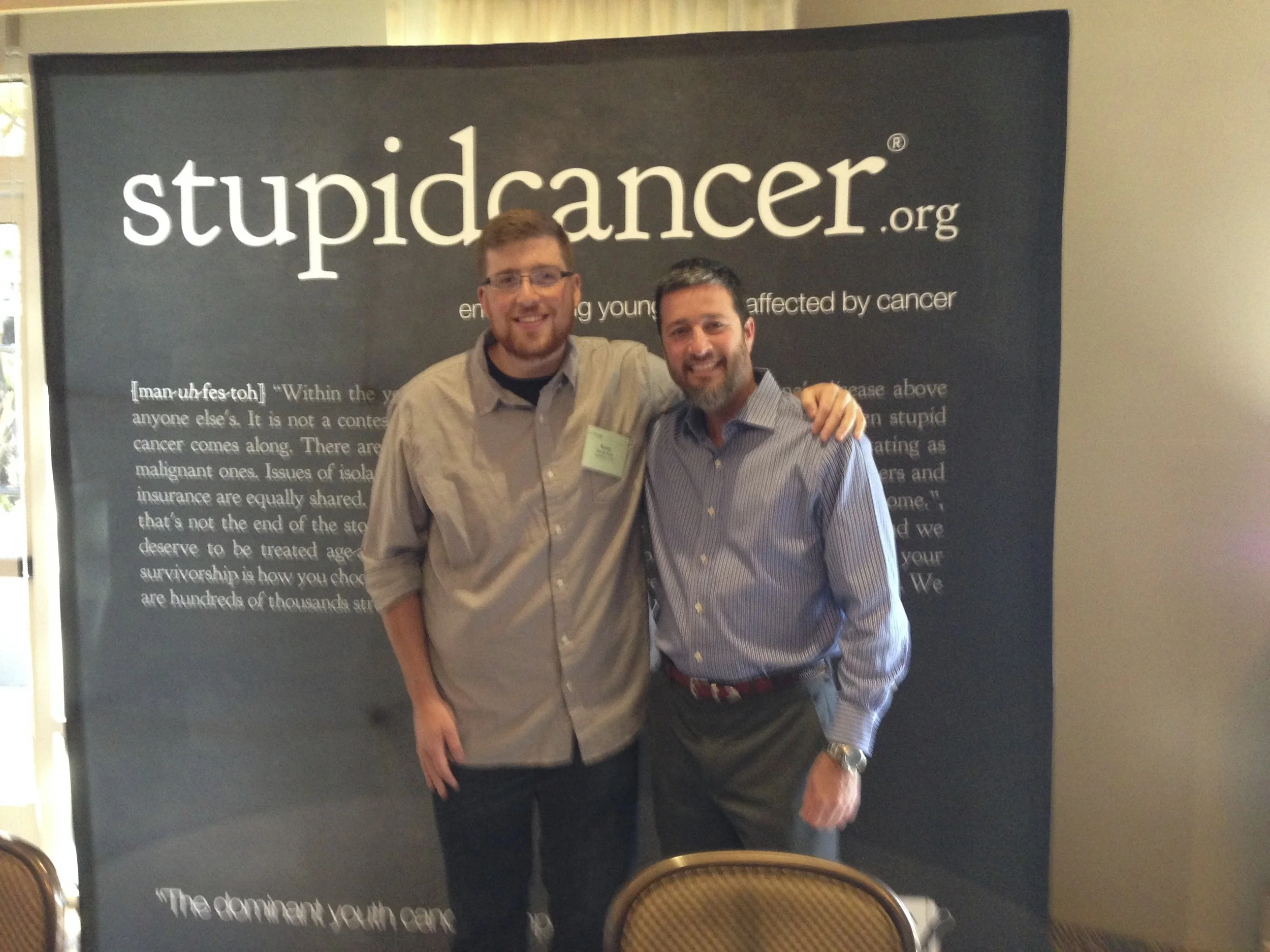


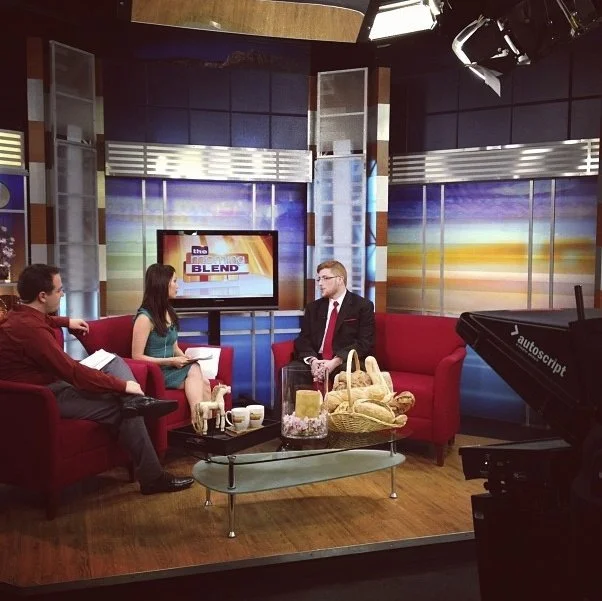
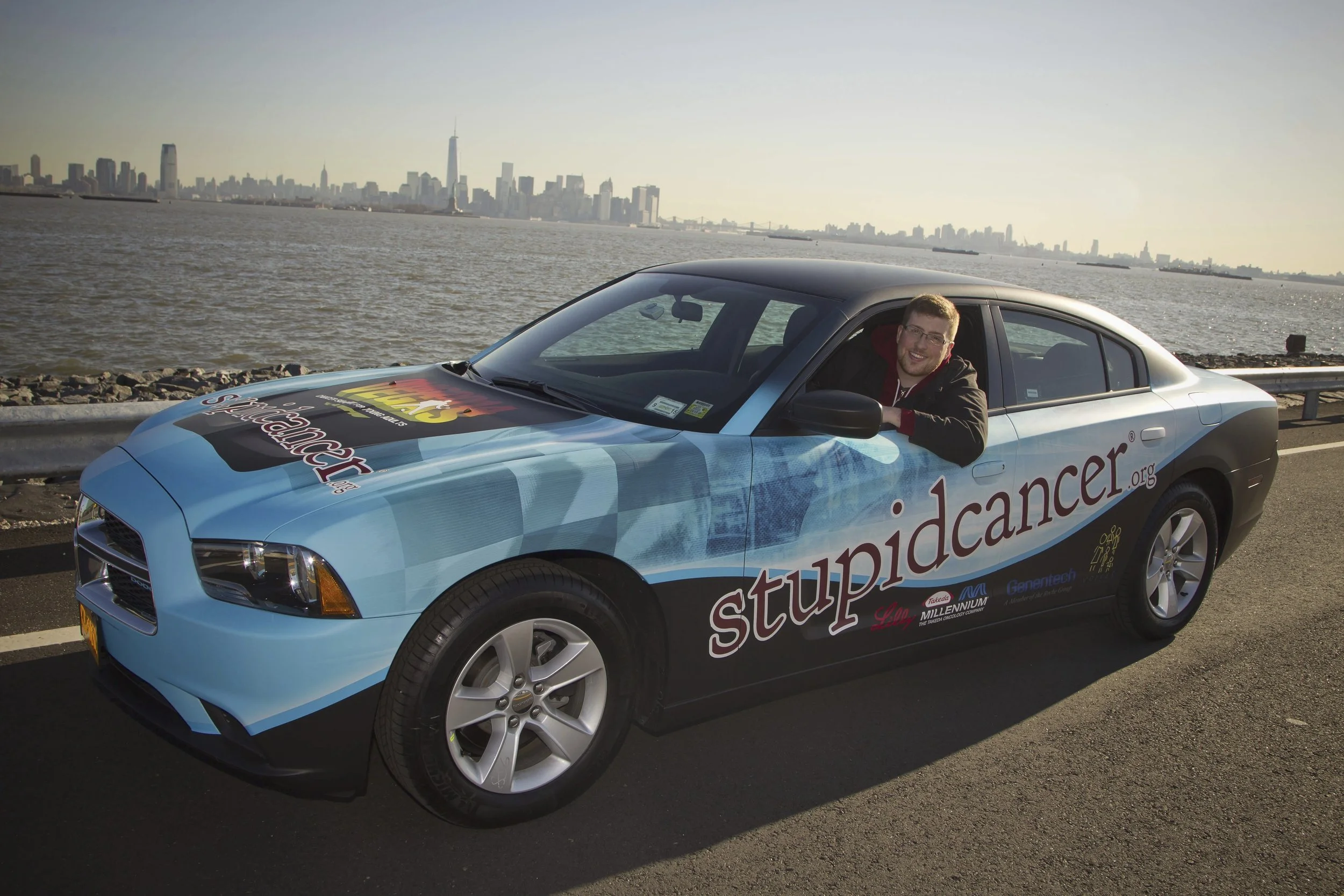
When people hear the term field marketing, they often think of brand ambassadors handing out samples at events. But in my career, field marketing has been much more than that—it's been strategy, hustle, storytelling, and community-building rolled into one. Whether I was repping a nonprofit cause or supporting a premium real estate brand, I’ve lived the field marketing life—boots on the ground, face-to-face with customers, partners, and prospects.
Here are a few examples of how field marketing has shown up in my work:
From Road Trips to Rallying Support
As a leader at Stupid Cancer, I didn’t just plan awareness campaigns—I drove them. Literally. I helped conceptualize and execute the Stupid Cancer Road Trip, a cross-country, multi-city tour that brought our brand directly to hospitals, universities, corporate partners, and community centers. We met young adult cancer patients and survivors face-to-face, handed out materials, hosted meetups, and put our mission in motion—one city at a time.
These campaigns didn’t just build awareness—they built loyalty. People remembered us because we showed up.
Marketing a High-Touch Office Experience
At Firmspace, I’ve brought a similar approach to the world of commercial real estate. We operate premium private office space for high-performing professionals, and field marketing here means building broker relationships, hosting on-site events, and driving localized brand awareness in each of our markets.
I’ve helped organize and promote open houses, lunches, building-wide events, and professional networking opportunities. These aren’t just tactics—they’re strategic moments to tell our story, reinforce our value, and create lasting impressions with brokers and potential members.
Speaking, Sponsoring, and Showing Up
Whether it’s staffing a booth at a trade show or speaking at an industry panel, I’ve always looked for opportunities to bring the brand to life. At conferences like CancerCon or nonprofit summits, I’ve coordinated everything from signage and swag to speaker prep and booth engagement. These in-person activations are the perfect stage to drive leads, share stories, and build human connection.
Why Field Marketing Still Matters
In a world increasingly dominated by digital, I still believe field marketing offers something tech can’t replicate: presence. When you’re in the room—or on the road—you build trust faster. You learn what people really think. You see how your brand lands in the real world.
Field marketing isn’t a role I’ve had—it's a mindset I bring to everything I do.
If your brand needs someone who can represent it authentically in the real world—whether at a boardroom table, a hospital lobby, or an industry happy hour—you know where to find me.
How AI and SEO Helped Us Save Lives: A Testicular Cancer Story
At Testicular Cancer Foundation, our mission is simple but critical: to raise awareness about the most common cancer in young men and save lives through early detection and education. But like many nonprofits, we faced a challenge: how do we get this message in front of the right audience—consistently and at scale—without a massive marketing budget?
In early 2024, we made two key decisions that transformed our digital footprint:
We hired an SEO consulting firm.
We embraced AI to help us produce high-quality content.
The Problem: Important Message, Limited Reach
We’d built a solid brand over the years through school programs, patient support, and national campaigns. But our website traffic plateaued. Young men weren't searching for "testicular cancer symptoms" until it was too late. We needed to meet them earlier—on Google, Instagram, Discord—anywhere they were already asking questions or searching for answers.
The Solution: SEO Strategy Meets AI Content
With the help of an SEO consultant, we overhauled our content strategy. They dug deep into search data to uncover what people were actually Googling. Turns out, young men weren’t typing "testicular cancer foundation." They were asking things like:
“Is one testicle lower than the other normal?”
“How to do a self-exam?”
“Hard lump on testicle—what does it mean?”
We didn’t need to guess anymore. We had a roadmap.
Then we layered in AI tools to help us write. We generated blog posts, FAQs, resource pages, and self-exam guides based on those queries. Every piece was reviewed by our team for accuracy, tone, and medical clarity. It wasn’t about replacing people—it was about amplifying our ability to respond to hundreds of real-time questions with trusted, accessible information.
The Result: A Surge in Traffic—and Impact
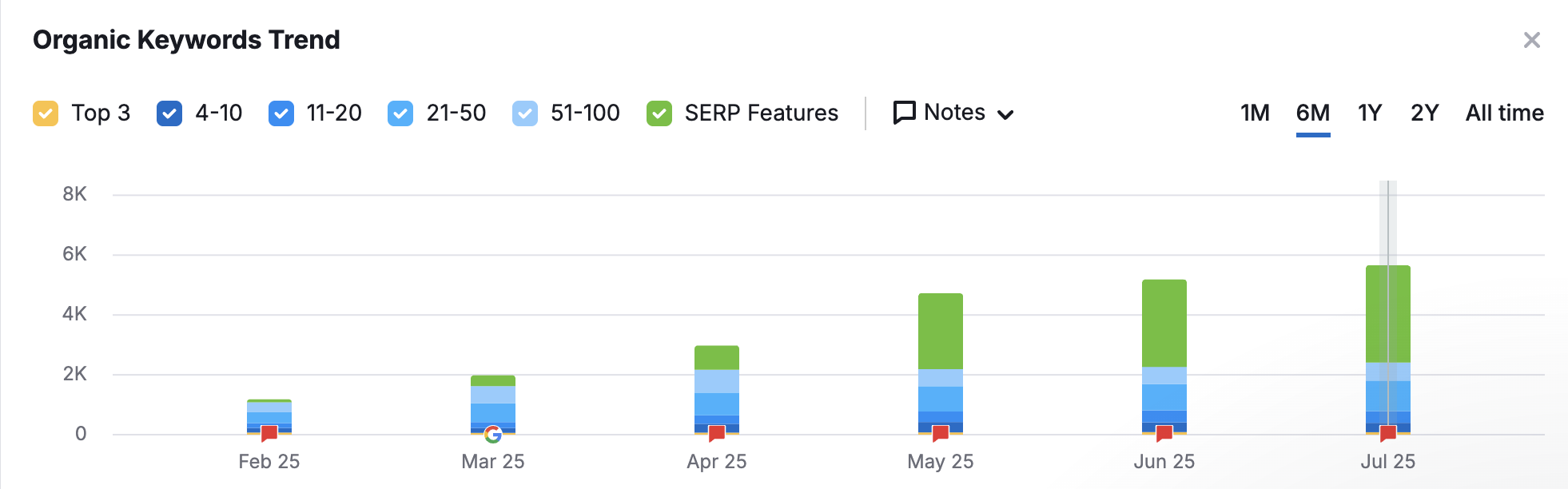
Within twelve months:
More than 300 new content pages were published with SEO-rich, medically reviewed information.
We went from 300 organic keywords to >5,500.
Our authority score went from 25 to 31.
Our backlinks doubled.
Thousands of readers engaged with our self-exam content, our most critical call to action.
Most importantly, we started receiving messages from young men saying, “I read your article, checked myself, and went to the doctor.” That’s the dream.

The Takeaway
For nonprofits, especially in health advocacy, investing in SEO and smart content production isn’t just about visibility—it’s about impact. The combination of search-informed strategy and AI-powered execution allowed us to scale faster, speak more directly to our audience, and ultimately fulfill our mission more effectively.
Early detection saves lives. And now, thanks to the right mix of tech and strategy, our message is reaching more people—when they need it most.
Live, Unfiltered, and On-Air: What I Learned from The Stupid Cancer Show
From 2010 to 2016, Monday nights were sacred.
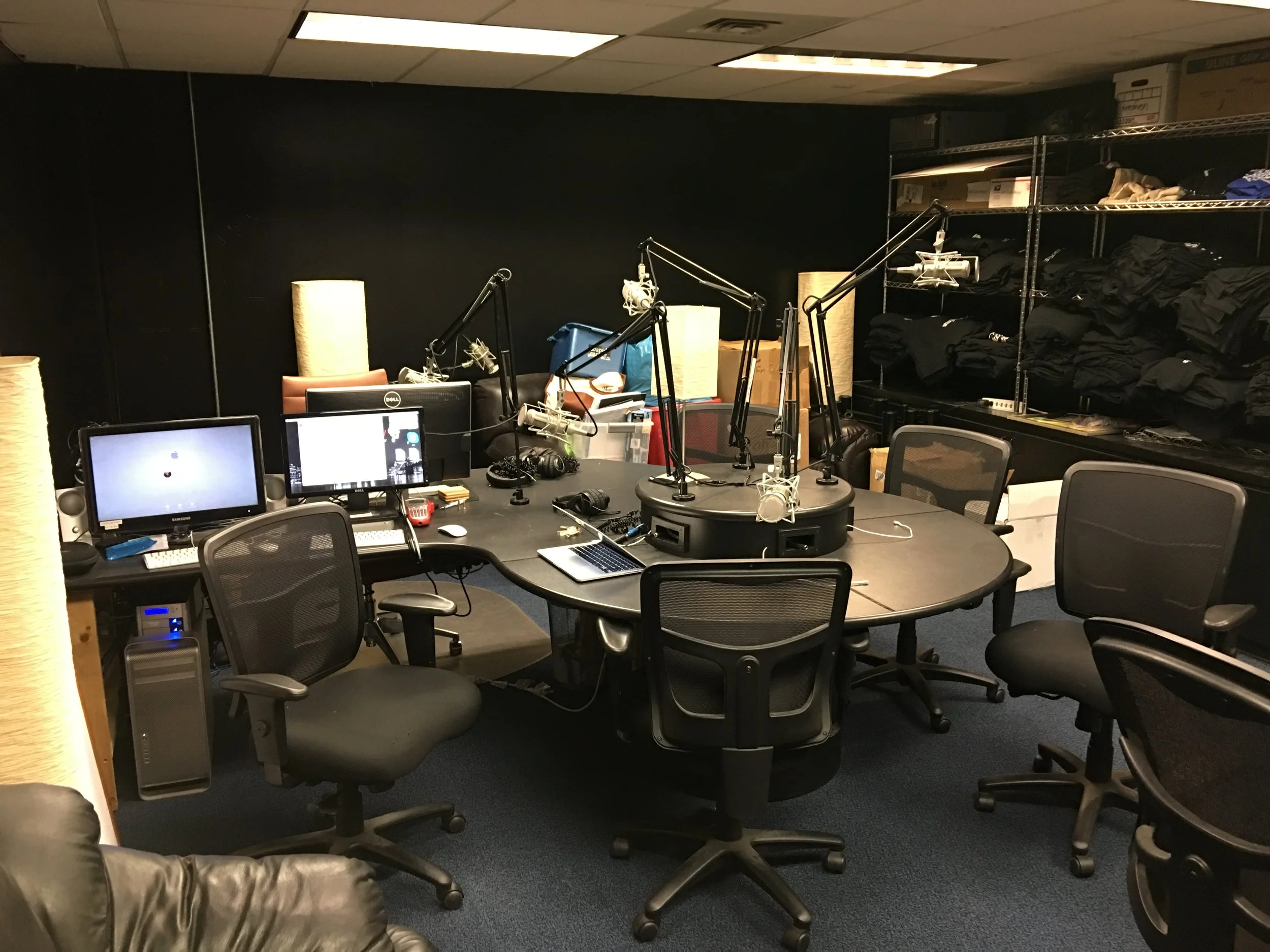
While most people were wrapping up their workday or binge-watching whatever Netflix just dropped, I was in a studio-turned-broadcast-bunker helping produce The Stupid Cancer Show — a weekly internet radio show at the heart of the young adult cancer movement.
I started on the production team, back when the show ran on little more than grit, Google Docs, and a prayer. But over the years, I wore just about every hat — guest wrangler, tech fixer, on-air color commentator, and occasional pizza-orderer. Eventually, we raised enough funds to do a full renovation of our studio, upgrading the space and gear to true professional quality. It was one of the most satisfying projects I’ve ever helped pull off.
But what I really got out of it wasn’t a credit or a résumé line. It was a crash course in creative real-time execution — and what it takes to consistently put the best possible product out into the world.
Thinking Fast and Staying Sharp
The show was live. Always. No second takes, no cutting in post. That meant you had to think and react — fast. Whether a guest derailed into a tangent, a mic cut out, or Matthew Zachary (our fearless host) suddenly tossed you a hot take to build on, there was no time to overthink.
As the color commentator alongside Matthew and co-host Lisa Bernhard, my job was to react, amplify, redirect, or lighten the mood — in real time. It taught me how to be present, how to read the room (or radio waves), and how to contribute meaningfully without stepping on the flow.
From Makeshift to Mission-Driven
In the early days, the studio was scrappy — wires everywhere, gear we’d jury-rigged, and lots of crossed fingers. But in 2014, we decided the mission deserved more. We raised funds and rebuilt the studio from the ground up, transforming it into a polished, professional-grade production space. New mics, soundproofing, a full broadcast setup — the works.
That transformation mirrored what we were doing as an organization. We were scaling up, maturing, and putting out content that met the quality our audience deserved. It taught me that investing in infrastructure isn’t vanity — it’s respect. Respect for your mission, your team, and your audience.
Listening Is the Secret Skill
Being on-air wasn’t about talking — it was about listening. Knowing when to support, when to speak up, and when to let something breathe. The best moments came from chemistry, timing, and trust — not just scripts.
That’s stayed with me in every role since. Whether in a boardroom, a brainstorm, or a one-on-one with a team member, great communication starts with really hearing what’s happening around you.
The Power of Shipping Weekly
For six years, we shipped every week. Rain or shine, flu or fatigue. And that discipline built creative confidence. It taught me that consistency compounds. That showing up matters. That good ideas become great through momentum — not magic.
I still carry that energy into everything I build: the drive to create something excellent, even if the path there is messy.
Final Thought
Working on The Stupid Cancer Show was never just about content — it was about community, courage, and creativity under pressure. It sharpened my instincts, stretched my skills, and showed me what’s possible when mission meets media.
And while I’ve moved from radio mics to real estate, and from podcasts to private offices, the lesson holds: No matter the product, the process matters. And the best products come from teams who care deeply — and aren’t afraid to go live.
From Cancer Advocacy to Commercial Real Estate: Connecting the Dots
If you had told me 15 years ago that I’d go from helping young adults navigate cancer to running a high-end private office space company, I might’ve asked you what was in your Stanley® cup.
Back then, my world revolved around fundraising galas, hospital partnerships, and learning how to stretch every dollar to reach one more patient. Today, I’m navigating build-outs, lease negotiations, and the delicate balance between design and functionality. But surprisingly, the two worlds aren’t as far apart as they seem.
Here’s what I’ve learned bridging nonprofit advocacy and commercial real estate — and why those early years in cancer support gave me a playbook for everything I’m doing now.
1. Mission Matters — No Matter the Industry
In nonprofit work, “mission” isn’t just a slide on a deck — it’s oxygen. At Stupid Cancer, we were fighting to give young adults a voice in a healthcare system that overlooked them. Every decision came down to impact.
In real estate, especially flexible office space, people don’t always think about mission. But I do. At Firmspace, our mission is clear: create professional, distraction-free environments where serious people can do their best work. Our members are lawyers, accountants, consultants — people who can’t afford to take shortcuts. Giving them space to thrive is our mission.
2. Customer Service is Everything
In cancer advocacy, if you didn’t return a message or pick up the phone, someone felt abandoned. There were no “office hours” for grief, anxiety, or the logistics of survivorship.
I carried that urgency into the way we treat members at Firmspace. When someone needs a tech fix, a quiet room, or even just to vent about building policy, we respond like it’s personal — because it is. They’re trusting us with the environment where their business lives and breathes.
3. You Have to Scale Without Losing Soul
Nonprofits are notoriously scrappy. You learn how to build systems that scale with minimal resources — and you never let go of the human connection.
That’s been invaluable in commercial real estate. We’re growing, but not at the cost of the member experience. Every new location has to meet the same standard of service, professionalism, and privacy. It’s not just about square footage; it’s about emotional square footage — how people feel in the space.
4. The Power of Community, Reimagined
In cancer, the goal was connection — making sure no one felt alone in the fight.
In commercial real estate, I’m building community in a different way. Our members don’t need happy hours or coworking clichés. They need reliability. They need trust. They need an environment where excellence is assumed. It’s a quieter kind of community, but no less powerful.
5. People Are the Real Product
Whether it was the Stupid Cancer Road Trip or launching a new Firmspace location, the lesson is the same: people are the brand. Not logos, not buildings, not tech stacks.
From young adults facing the unimaginable to high-performing professionals juggling a dozen plates — if you focus on people, everything else follows.
Final Thought
Cancer advocacy taught me how to lead with empathy, stay nimble, and build systems that serve real human needs. Commercial real estate just gave me a new set of tools to apply those same principles.
It’s not about the industry. It’s about impact — and I’m still chasing it, just in a better-fitting blazer.
From Friday Emails to Monday Layoffs: How One E-Commerce Experience Made Me Grateful for Stupid Cancer
There was a time I seriously considered joining one of the big e-commerce SaaS platforms. I was deep in conversation with a smart, motivated partner manager—I’ll call her Amanda—about a potential role where I could help nonprofits scale their online impact using the platform’s tech. She was excited about my experience building the Stupid Cancer Store and thought I could bring a fresh perspective.
By Friday, we were trading emails about next steps. By Monday, Amanda and her entire team had been laid off.
Just like that. A whole department wiped out.
I found out when my follow-up email bounced. Then I checked LinkedIn and saw a wave of “open to work” posts from people I had hoped would be my future colleagues.
It felt like the floor had shifted beneath my feet.
At first, I was shocked. Then I felt a strange kind of relief. Not because I didn’t want the job anymore—but because I already had one that mattered.
At that time, I was with Stupid Cancer. We weren’t the biggest org. We didn’t have stock options or kombucha on tap. But what we did have was purpose—and a kind of job security that doesn’t come from venture capital or market share, but from community and clarity of mission.
I thought back to the early days of the Stupid Cancer Store. We built it from scratch—me, in a small TriBeCa office, with better than average level coding skills and a strong belief that cancer patients deserved better swag. Hoodies, mugs, journals, even onesies for babies born to survivors. Everything was personal. Everything was intentional. We didn’t have a marketing budget, but we had heart—and that kept the orders coming.
Over time, I migrated our storefront to a more scalable platform, optimized fulfillment, and expanded the product line. It became a small but mighty revenue stream for the organization. But more than that, it was an extension of our brand. A way for survivors to say, “I’m still here—and I’m repping it.”
The contrast between what I had at Stupid Cancer and what I almost stepped into at the e-comm giant couldn’t have been clearer. One was unpredictable, corporate, and ultimately disposable. The other was gritty, imperfect, and full of purpose.
That Monday morning was a wake-up call—not about ambition, but about values.
I still believe in the power of e-commerce to do good. I still geek out over tools that help small teams punch above their weight. But I’m more cautious now. I ask different questions: What’s the culture like? Who’s protected when things go sideways? Does this platform care about the people behind the stores—or just the stores themselves?
That moment reminded me: security isn’t just a paycheck. It’s knowing that if the world flips on a Monday, you won’t be an afterthought by Tuesday.
And for all its challenges, Stupid Cancer never made me feel disposable.
How I Came to Work at Stupid Cancer
I was sitting in Diane Bachor’s grant writing class during my fifth year of undergrad at Farmingdale State College — not exactly expecting a career-defining moment. One of the guest speakers that day was Cyndy S., a chapter leader from an organization with a name that immediately grabbed me: the I’m Too Young For This! Cancer Foundation, also known as i[2]y.
As Cyndy spoke about the mission and the work they were doing to support young adults affected by cancer, something clicked. I didn’t wait. While she was still presenting, I opened my laptop and sent a cold email to the founder and CEO, Matthew Zachary.
It probably said something like:
“I love what you’re doing. I want to help.”
Professor Bachor noticed. I got called out. I might’ve lost participation points.
But that email changed my life.
A Call Before Graduation
Two weeks before graduation, I got a phone call from Matthew.
His wife was pregnant with twins. His first intern had just accepted a position with President Obama’s advance team. He needed someone fast — someone who could jump in, learn quickly, and help carry the mission forward.
He asked if I wanted the job.
I said yes.
Getting in the Door
When I joined, the organization was still known as i[2]y. It was raw, scrappy, and full of heart. We were running events out of tiny spaces, managing big dreams with limited resources, and connecting with a generation that had been overlooked by traditional cancer organizations.
In 2011, we rebranded as Stupid Cancer — a bold, unapologetic name that captured the frustration, the community, and the movement we were building. It wasn’t just about awareness. It was about identity, empowerment, and giving young adults a voice in the cancer conversation.
More Than a Job
Over the years, I grew with the organization — from intern to COO, helping scale programs, launch national campaigns, and build a platform that resonated with hundreds of thousands of people. We ran the Stupid Cancer Road Trip, created the Stupid Cancer Store, launched tech like Instapeer, and held conferences that felt more like festivals than fundraisers.
We proved that a nonprofit could be innovative, direct, and deeply human — without sacrificing impact.
Looking Back
That moment in Diane Bachor’s class was impulsive. I didn’t know exactly what I was doing. But I knew I wanted to be part of something that mattered. Cancer had hit my family in 2005, and it was time to go on the offensive and hit back.
What started as a cold email in a classroom turned into a decade-long journey that shaped my career, my values, and my perspective on leadership.
Sometimes you get points deducted for jumping ahead.
Sometimes that’s precisely what it takes to change your life.
What to Do While Everyone Else Is on Vacation
It’s mid-July. Your inbox is quiet, your calendar suddenly breathable, and half your network seems to be in Italy. But for entrepreneurs — especially those of us building in industries like flexible real estate, health innovation, or mission-driven nonprofits — this isn’t a lull. It’s a draw-back-the-arrow moment.
When everyone else is coasting, it's your chance to set the pace.
1. Recalibrate Strategy with Precision, Not Panic
Mid-year is a perfect time to reassess your goals for the rest of the year. What’s working? What’s noise? Whether you're managing Class A office space, scaling advocacy tech, or running a lean nonprofit team — clarity wins.
I spend this time asking: If I were starting today, what would I do differently? From there, I cut dead weight, double down on winners, and reset expectations — internally and externally.
2. Upgrade Your Infrastructure While No One’s Watching
At Firmspace, July is when we modernize — tech stacks, member onboarding flows, broker engagement strategies. It’s easier to experiment when traffic is slower and pressure is low.
In the nonprofit space, it’s the same play: automate donor funnels, revisit CRM flows, clean up your data. In healthtech? Rebuild your website with new landing pages and clarify your messaging.
This is builder season.
3. Invest in Quiet Relationships
While the spotlight’s off, I reach out to people who usually don’t have time for calls — founders, brokers, donors, policymakers, even past colleagues. Mid-summer is human time. No pitch. Just reconnect.
It’s amazing what comes from, “Hey, just checking in — how’s the year shaping up for you?”
4. Train Like You’re in Preseason
This is when you go deep on the things that make you dangerous: read the boring market reports, enroll in a course, tighten your AI workflows, get feedback from your team. You don’t have to be loud to get better. You just have to be intentional.
Right now, while others are distracted, you can quietly become the most prepared person in the room come September.
5. Respect the Pullback
There’s a reason archers pull the arrow back before they fire. That tension? It builds power. July isn’t downtime. It’s resistance training. If it feels hard or lonely, that’s a good sign — it means you’re not on autopilot.
In flexible real estate, this is the lead-up to fall leasing season. In nonprofit, this is the prep for year-end campaigns.
Use this time to aim deliberately, and maybe have an Aperol Spritz.
AI Isn’t Just for the Experts. It’s for You.
There’s a voice that whispers “you’re not ready” or “you’re faking it”—and if you’ve ever built something new, pitched an idea, or stepped into leadership, you’ve probably heard it too. That voice is imposter syndrome. It’s clever, sneaky, and thrives on change.
And right now, everything is changing.
The rise of generative AI tools like ChatGPT, Claude, and Gemini is reshaping how we work. Entire industries are being reimagined, and suddenly it feels like everyone is a prompt engineer, an AI strategist, or a futurist. If you’re not already fluent in the language of large language models, vector embeddings, or autonomous agents, it’s easy to feel behind—even obsolete.
But here’s the truth: you don’t need to be an AI expert to build an AI-powered future. You just need curiosity, humility, and a willingness to experiment.
The Myth of the “AI Person”
Let’s bust a myth: there is no such thing as an “AI person.” There are only people willing to adopt tools early, stay open to learning, and use technology to solve real problems. The rest is just noise.
The people winning in this moment aren’t necessarily technical. They’re the ones who:
Automate a manual task with Zapier and ChatGPT.
Summarize customer feedback using Claude to spot patterns faster.
Use AI to write better marketing copy, analyze data, or prep for meetings in less time.
They're not replacing their jobs with AI—they're upgrading how they do their jobs.
What an AI-First Mindset Really Means
Adopting an AI-first mindset doesn’t mean becoming a machine learning engineer overnight. It means:
Asking “what can AI do for me here?” at the start of every project.
Defaulting to experimentation instead of perfection.
Thinking like a product manager: start with the problem, not the tool.
Letting go of the idea that you need permission to use AI.
It’s about using AI not just to go faster, but to go smarter.
The Cure for Imposter Syndrome: Action
Imposter syndrome feeds on stagnation. The more you wait until you're "ready," the more disconnected you feel from the momentum around you. The best way to beat it is to ship something, however small.
Try building a personal AI assistant to summarize your inbox.
Use AI to draft that blog post you've been putting off.
Automate a weekly report and reclaim hours of your time.
Every simple use case you adopt chips away at that inner voice telling you you're behind. Because you're not behind—you’re learning in real time, alongside everyone else.
AI Belongs to the Curious
We’re not in an AI future. We’re in an AI present. And it’s not about mastering the tech; it’s about mastering your mindset.
You don’t need credentials. You need curiosity.
You don’t need to feel ready. You need to get started.
And you don’t need to prove yourself to anyone but the version of you who stayed stuck.
Start with a simple tool. Make it do something useful. Then do it again.
That’s not imposter behavior—that’s what innovation looks like.