Insights on Building Mission-Driven Organizations
Practical lessons from 15+ years of leadership across nonprofits, real estate, and healthtech. Topics include AI implementation, nonprofit operations, business systems, and what it takes to scale organizations without losing your mission.
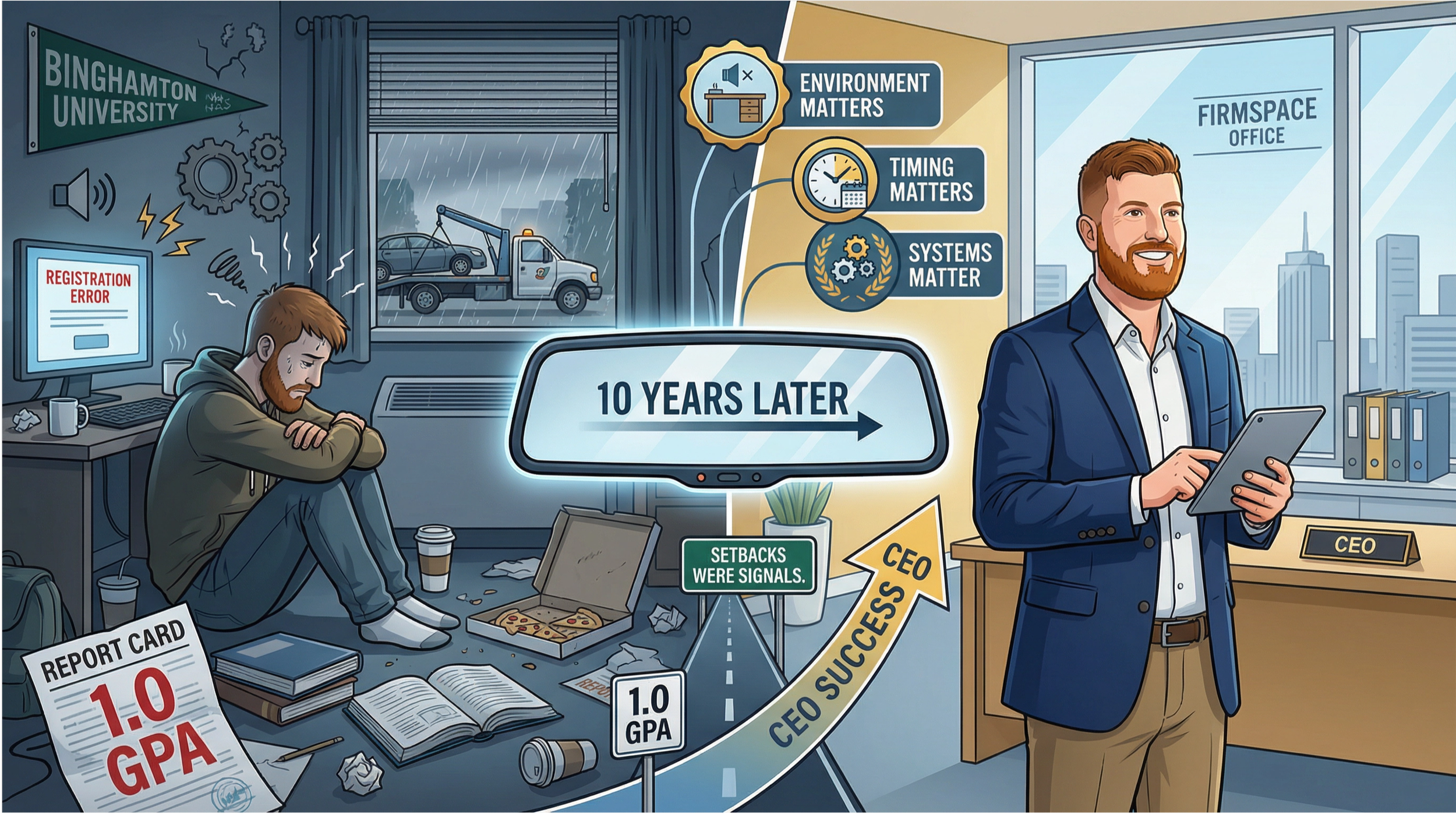
Looking Back at My Binghamton 1.0
Almost ten years ago, I wrote about one of the most formative experiences of my life: earning a 1.0 GPA during my one semester at Binghamton University. At the time, I called it “educational bankruptcy.” I described the noisy dorms, my car being towed on day two, the registration system crashing, and how a bad semester sent me back home to regroup.
Re-reading that post now, I realize how much of my current life is still tethered to the lessons of that time.
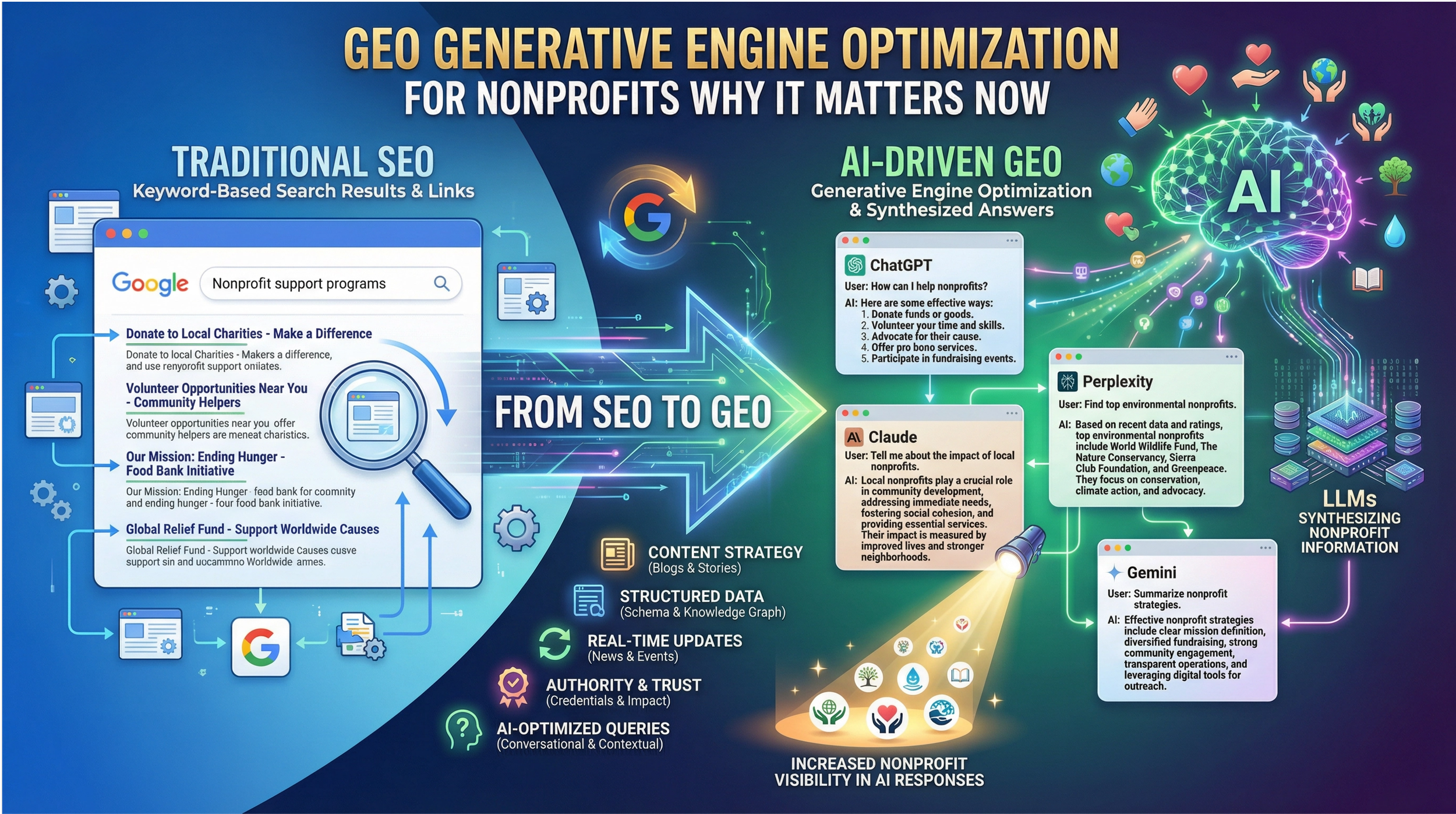
Generative Engine Optimization for Nonprofits: Why It Matters Now
For years, nonprofits have invested in search engine optimization (SEO) to ensure that when someone types a question into Google, their mission, programs, and resources are discoverable. But search is changing. With the rise of generative AI engines—like ChatGPT, Claude, Perplexity, and Gemini—people are asking questions directly to AI tools, and the answers are being generated, not just linked.
This shift introduces a new frontier: Generative Engine Optimization (GEO).
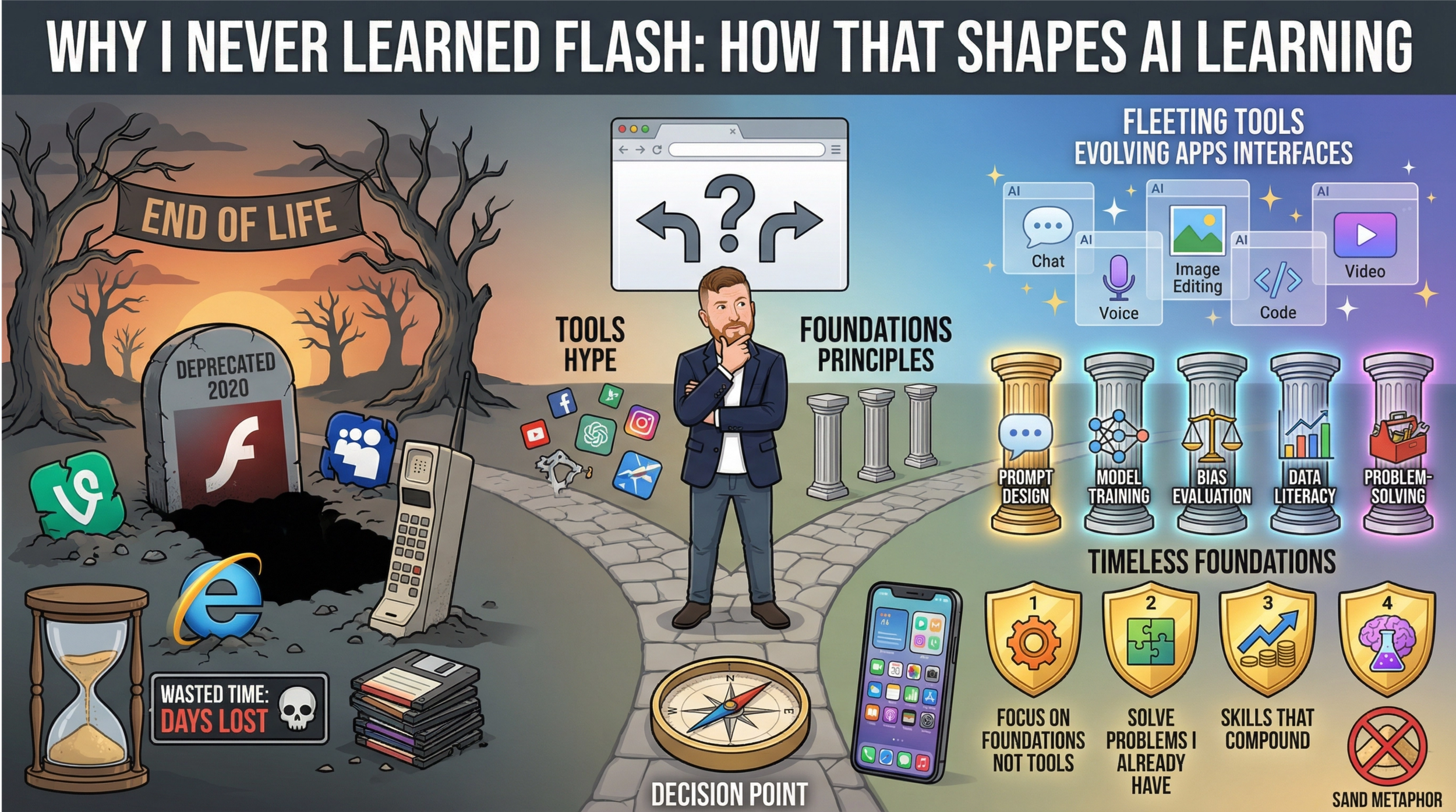
Why I’m Glad I Never Learned Flash—and How That Shapes What I Choose to Learn About AI
Back in the early 2000s, everyone told me I should learn Flash. It was the thing—the language of slick websites, cool animations, and interactive experiences. I thought about it, but something held me back. Eventually, Flash disappeared, swept away by HTML5, mobile devices, and changing tech standards. And I’ve never regretted not sinking hours (or years) into mastering it.
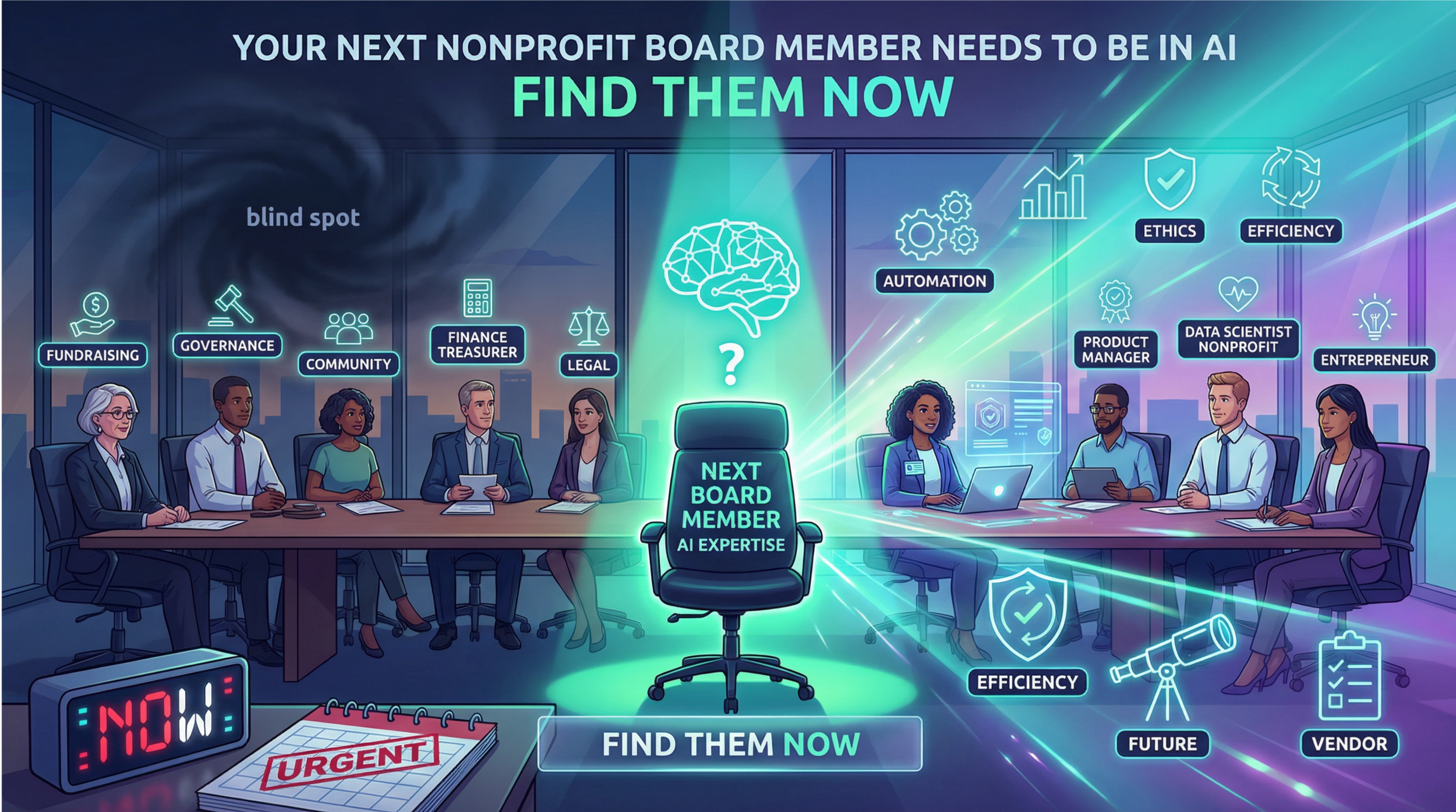
Your Next Nonprofit Board Member Needs to Be in AI—And You Need to Find Them Now
Nonprofits are facing a moment of reckoning. For decades, boards were built around three things: fundraising, governance, and community representation. Those things still matter—but there’s a new seat at the table that’s no longer optional: artificial intelligence.
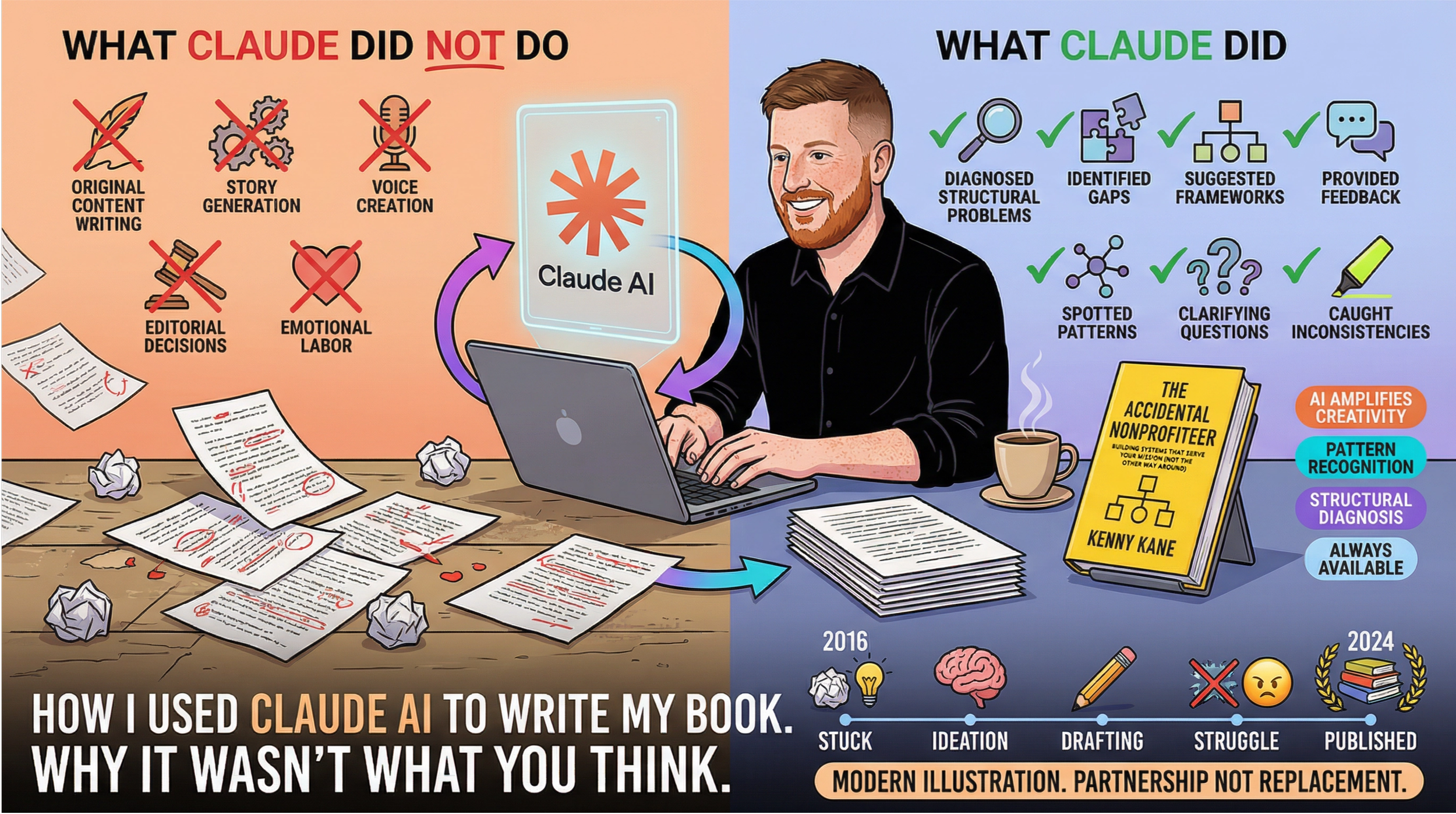
How I Used Claude AI to Write My Book (And Why It Wasn't What You Think)
Let me be clear from the start: Claude AI didn't write my book. I did.
But without Claude as my writing partner, "The Accidental Nonprofiteer" would still be sitting in a Google Doc as 5,000 words of unfinished potential, just like it had been for the past eight years.
When I tell people I used AI to help finish my book, I usually get one of two reactions: either "That's cheating!" or "Wow, so AI can just write books now?" Both responses miss what actually happened. The reality is more nuanced—and more interesting.

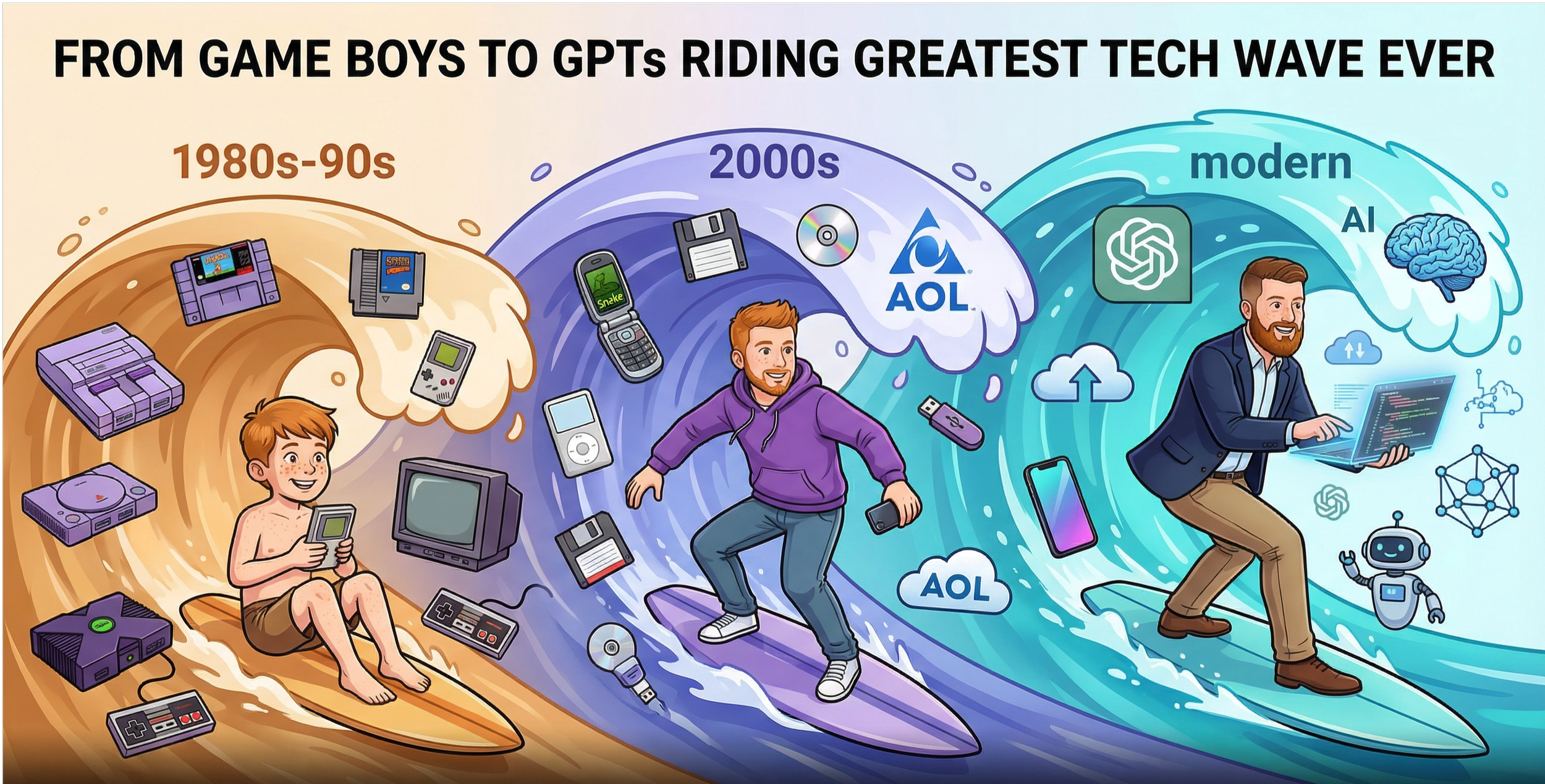
From Game Boys to GPTs: Riding the Greatest Tech Wave Ever
Growing up in the ‘80s and ‘90s felt like living on the edge of a digital frontier. I remember the first time I held a Game Boy in my hands—like holding a book, grey, and gloriously pixelated. Tetris never looked so good. Then came the Super Nintendo with its magical purple buttons, delivering Donkey Kong Country and Zelda in vibrant color. PlayStation blew our minds with discs instead of cartridges and the first truly cinematic games. Xbox followed with Halo and LAN parties that redefined "multiplayer."
We weren’t just playing games—we were watching the world shift beneath our feet.