Insights on Building Mission-Driven Organizations

Practical lessons from 15+ years of leadership across nonprofits, real estate, and healthtech. Topics include AI implementation, nonprofit operations, business systems, and what it takes to scale organizations without losing your mission.

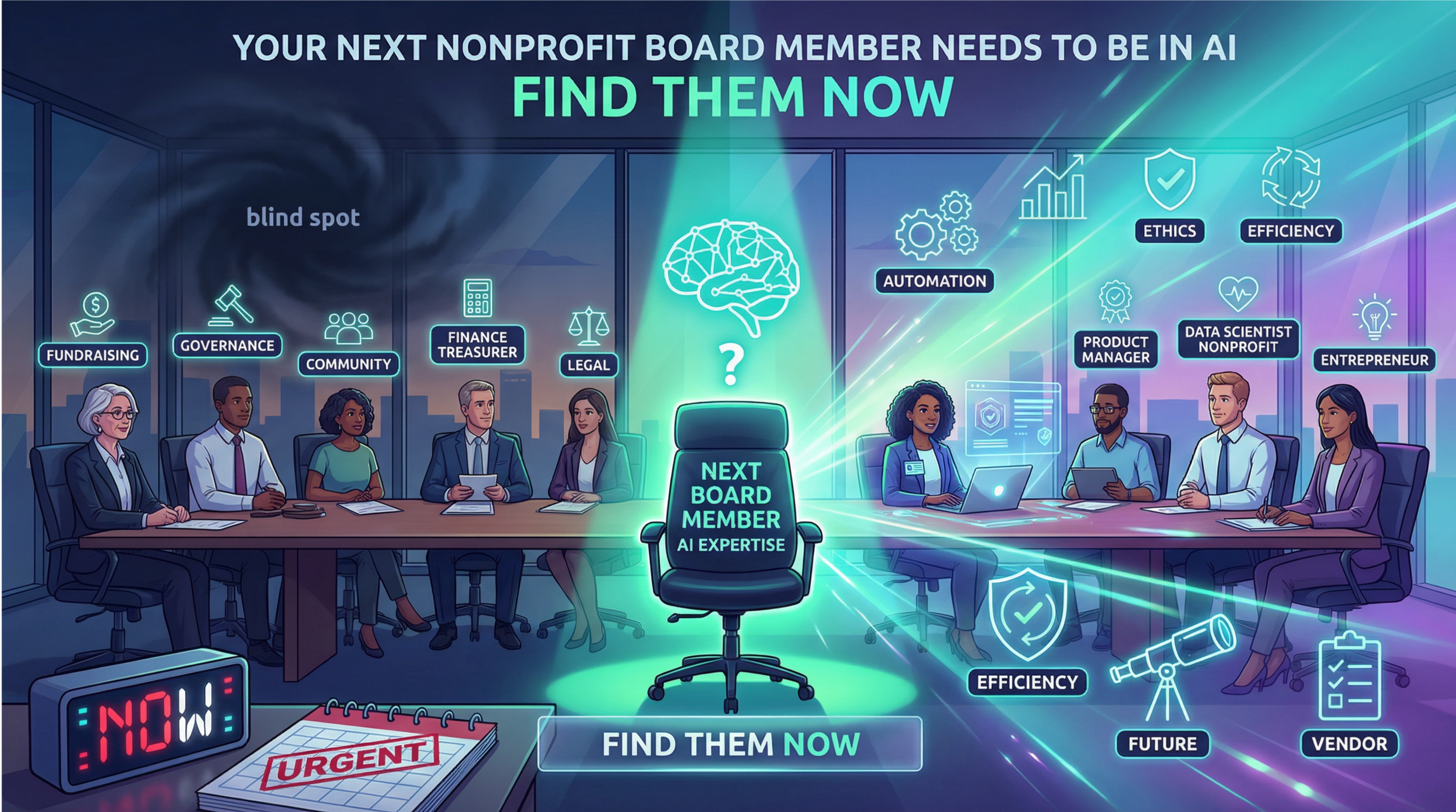
Why Most Nonprofits Are Getting AI Wrong (And How the 4D Framework Fixes It)
AI, Nonprofit Leadership & Innovation Kenny Kane AI, Nonprofit Leadership & Innovation Kenny Kane

Why Most Nonprofits Are Getting AI Wrong (And How the 4D Framework Fixes It)

Most nonprofits I talk to are stuck in one of two places with AI.

Either they're paralyzed, worried about misinformation, security, or just not knowing where to start. Or they're rushing in without guardrails, letting staff use whatever tool they found on LinkedIn, with no sense of what could go wrong.

Neither approach works.

The paralyzed organizations fall behind. The reckless ones create liability. And both groups miss what AI could actually do for them: amplify their mission without replacing the humans who make that mission real.

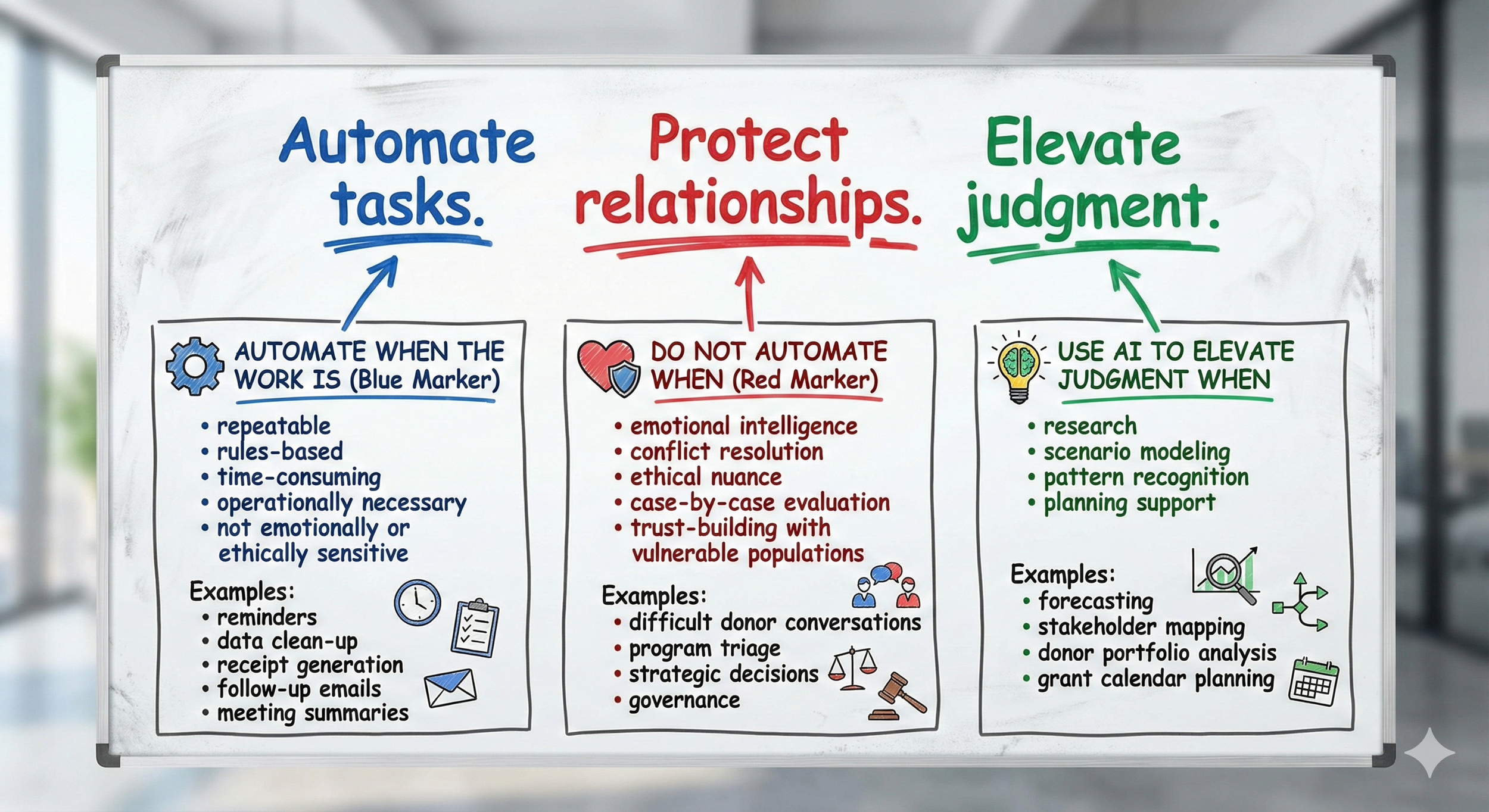
After working with AI across commercial real estate, health tech, and cancer advocacy for the past two years, I've found a framework that cuts through the chaos. It's called the 4D Framework for AI Fluency, developed by Professor Rick Dakan at Ringling College of Art and Design and Professor Joseph Feller at University College Cork.
Read More
How AI Can Strengthen Nonprofit Operations Without Replacing Human Relationship Work

How AI Can Strengthen Nonprofit Operations Without Replacing Human Relationship Work

When I first started at Stupid Cancer, I took the CEO’s Outlook contacts from years of his personal advocacy work and manually entered every single one into SugarCRM. Line by line. Name, email, organization, phone number. Copy, paste, save. It took hours. And none of it felt connected to the mission. It was my first real glimpse into something every nonprofit eventually discovers. The work you care about is always competing with the work you can’t avoid.

For years, that kind of administrative drag was just part of the job. You powered through it. You made peace with the backlog. You assumed the operational chaos was permanent. The calls you didn’t return. The follow ups you meant to send. The donor updates that slipped because your CRM was a mess. It was constant.

Read More
The Problem With Giving Tuesday: Noise, Fatigue, And Burnout

The Problem With Giving Tuesday: Noise, Fatigue, And Burnout

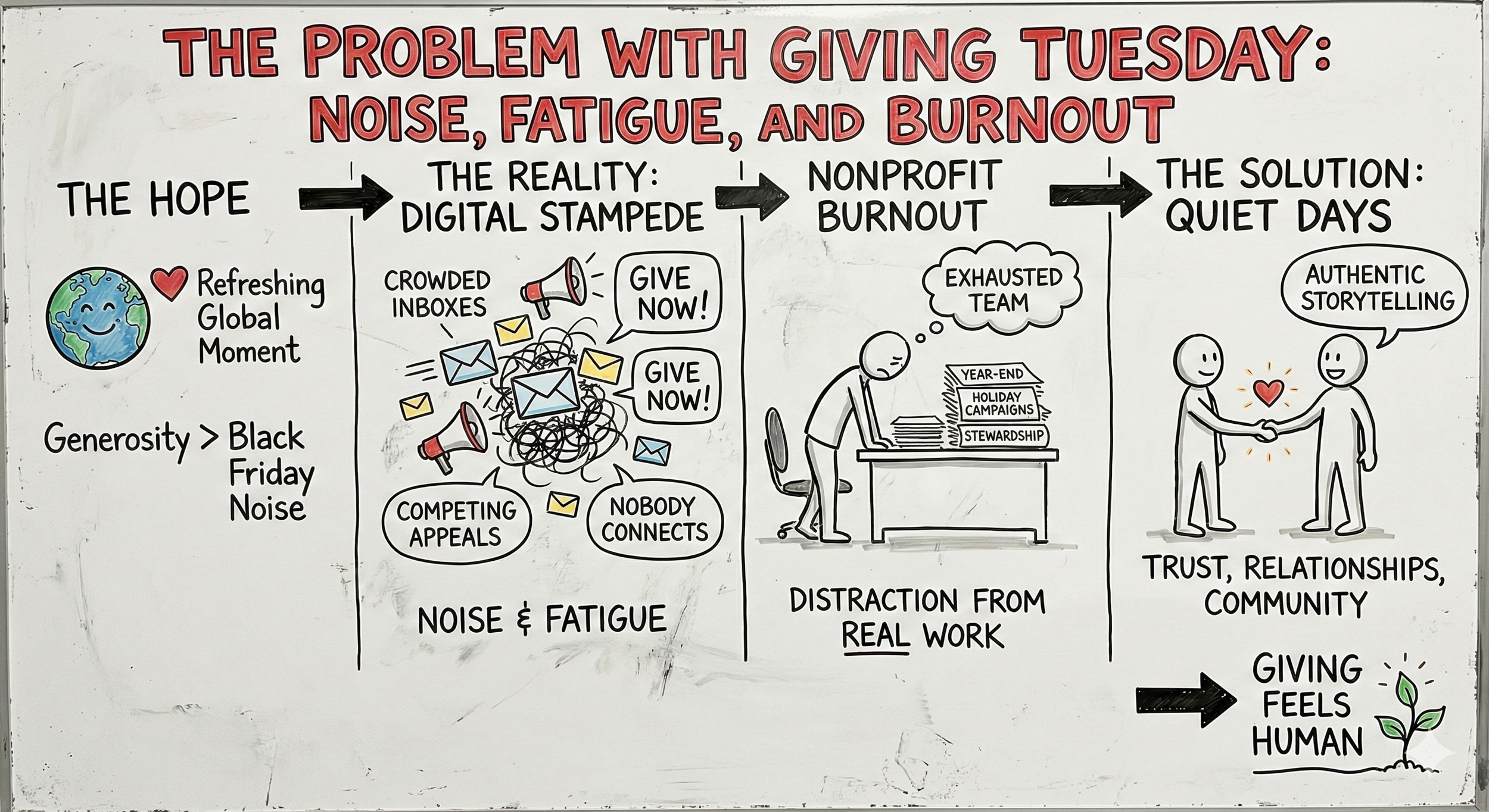
I remember when Giving Tuesday first appeared on the scene. Back then I was at Stupid Cancer, running operations, building digital infrastructure, and trying to hold together a national movement with passion, long nights, and whatever technology we could afford. The idea of Giving Tuesday felt refreshing. A global moment where generosity could rise above the noise of Black Friday and Cyber Monday. It felt like the kind of thing a young nonprofit ecosystem needed.

But even in those early years, something became obvious. The noise did not disappear. It got louder.

Read More
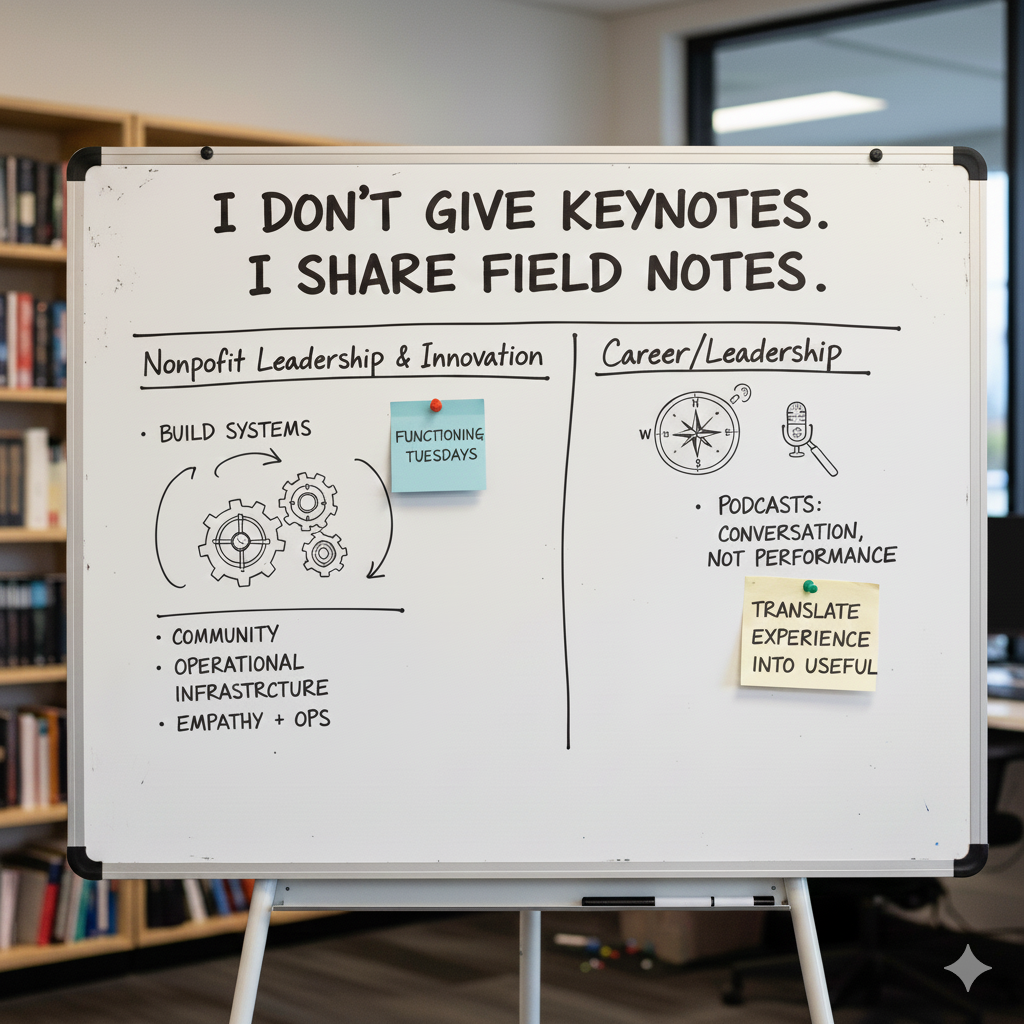
I Don’t Give Keynotes. I Share Field Notes.

I Don’t Give Keynotes. I Share Field Notes.

Someone asked me recently why I am not a public speaker on a more regular basis. They had listened to me on a podcast, seen me moderate sessions at Stupid Cancer events, and watched me speak at Testicular Cancer Foundation gatherings. Their assumption was that speaking was something I pursued. It is not.

I do not speak on public stages very often. Not because I avoid it, but because most of my career has been spent building organizations, communities, and operational systems rather than talking about them from a podium. I have never thought of myself as a professional speaker. I do not go on a speaking circuit. I do not sell ideas from the stage. But when the work required it, I have spoken. And those have always been the meaningful moments.

Read More

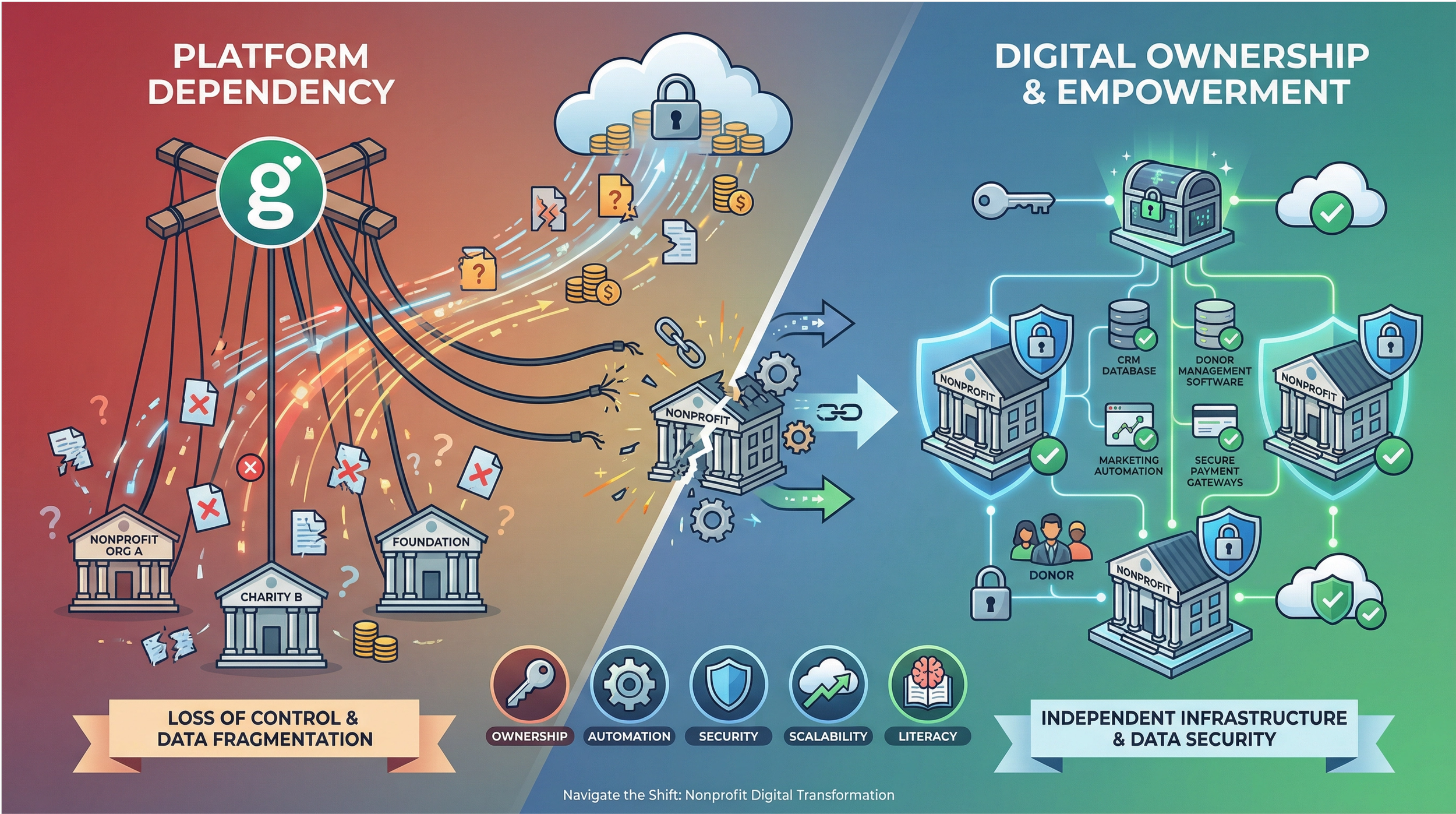
Beyond the Platform: What GoFundMe Taught Us About Nonprofit Tech Ownership

This week, headlines broke that GoFundMe quietly created fundraising pages for 1.4 million nonprofits across the U.S. Most of those organizations had no idea the pages even existed. It’s a perfect, if uncomfortable, illustration of where nonprofits stand today in the digital landscape. Tech platforms are moving faster than most organizations can keep up with, and if you don’t actively manage your digital presence, someone else will.

That’s not a dig at GoFundMe. Their intent was to make it easier for donors to find and give to nonprofits. But it highlights a bigger truth: digital transformation isn’t optional anymore. It’s not just about adopting tools; it’s about owning your identity, your data, and your narrative in an increasingly automated world.

Read More