
Areas of Work
Nonprofit Leadership
I have spent more than fifteen years in and around mission-driven organizations, six of them at Stupid Cancer and the rest at the Testicular Cancer Foundation and Gryt Health. This page covers what that work actually involves and what I have learned about keeping small organizations running.
Running a small organization
Small nonprofits do not usually fail for lack of commitment. They fail when the work outgrows the systems holding it, and everything that used to be in one person’s head becomes a bottleneck nobody has time to unpick. The response is unglamorous: repeatable processes, honest governance, written procedures, and technology chosen because it removes work rather than because it is new.
That is the subject of The Accidental Nonprofiteer — how the systems get built, and what happens to them when the people who built them leave.
What I have built
At Stupid Cancer I built and ran the merchandise operation, which grew from a single twenty-dollar t-shirt into a six-figure store funding national programs. That operation is documented in detail in Mission-Driven Ecommerce, including the parts that only worked because they were written down.
At the Testicular Cancer Foundation, the work has been direct patient support, modernizing the education resources, and rebuilding the organization’s technology so a very small team can maintain it. The platform rebuild is a reasonable illustration: it was fast because the underlying content and structure had already been documented, not because anyone worked heroically.
How I operate
Define the problem, build the system, stay close enough to the work to know whether the system is holding. In a small organization the executive is often also the person who will notice the process breaking, which is an argument for staying close rather than a philosophy of leadership. I have written more about that on executive leadership.
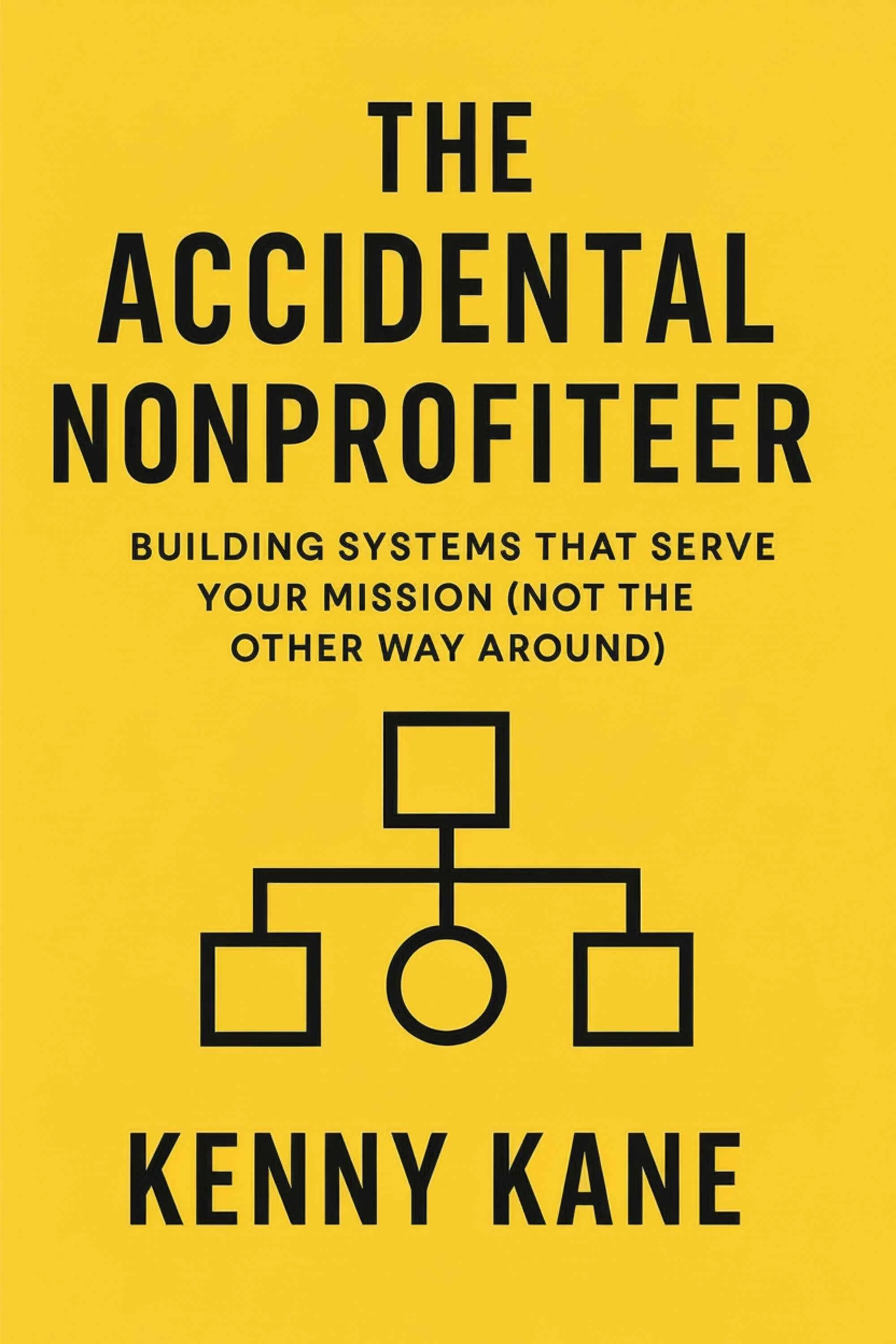
The Accidental Nonprofiteer
Building the systems a small organization runs on, and what happens to them when people leave.
Where this connects to the research
Nonprofits show the problem I study in its sharpest form. Staff are thin, institutional memory often sits with one or two long-tenured people, boards turn over on a fixed cycle, and a founder’s departure can take a decade of judgment with it. In August 2026 I began doctoral study at Texas State University’s McCoy College of Business, where my research interests are in organizational durability and executive dependency. The questions will narrow as the coursework does.
Go deeper
- The TCF Platform Rebuild
- How I Came to Work at Stupid Cancer
- Degree vs. On-the-Job Experience
- What GoFundMe Taught Us
- Chasing Stars vs. Connection
- Giving Tuesday Fatigue
- From Automation to Augmentation
- Books
More areas of work: Executive Leadership · Health Technology