
Areas of Work
Executive Leadership
I run organizations and stay close to how they actually work. This page covers the operating roles I hold, the problem that keeps recurring across all of them, and the shorthand I use to describe the kind of executive the work requires.
What I run
As CEO of Firmspace, a premium private office and executive suite company with locations in Austin, Denver, Houston, and Atlanta, I am responsible for national operations: finance, HR, compliance, legal, IT, AV, security, construction, and facilities. As CEO of the Testicular Cancer Foundation and Co-Founder, Board Member, and Chief Technology Officer of Gryt Health, I do comparable work in nonprofit and health technology settings — smaller organizations, tighter constraints, the same underlying questions.
The problem underneath the work
Across nearly two decades of operating roles, the same failure keeps appearing in different clothes. An organization’s capacity to execute concentrates in a small number of people. What they know is rarely written down in a form anyone else can use. When they leave — and they always leave — the process survives and the judgment does not.
Most of what I do day to day is a response to that: writing procedures down, designing systems that do not require a specific person to run them, and building the kind of documentation that transfers. It is unglamorous work, and it is the difference between an organization that outlasts its operators and one that does not.
Chief Executive Operator
This is the shorthand I use for an executive who sets direction and stays close enough to the work to diagnose and repair it — someone who can move between the board conversation and the system that is failing without needing a translator for either. It is a practitioner’s description of a working posture, not a title and not a credential.
The reason it is worth naming is practical. An executive too far from the work cannot tell which parts of it are load-bearing, which makes it very hard to know what needs documenting before someone walks out the door.
The Chief Executive Operator
The essay the term comes from — the collapsed skill stack, the middle layer, and the operator-executive posture.
Studying it formally
In August 2026 I began doctoral study at Texas State University’s McCoy College of Business. My research interests are in organizational durability and executive dependency: why execution capacity concentrates in individuals, and what documentation, process design, and technology actually transfer when those individuals leave. The questions will narrow as the coursework does. The practitioner record came first.
Go deeper
- The Chief Executive Operator
- Collapsing the Skill Stack
- The Rise and Flux of the Chief Automation Officer
- Hospitality Is Reliability
- Books
- About Kenny Kane
- Press & Media
More areas of work: Nonprofit Leadership · Health Technology
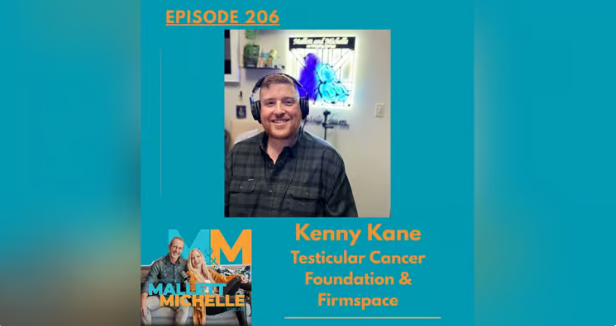
In May 2024, I joined the Flex World Series panel hosted by OfficeRnD to talk about hospitality in flex workspace. The core idea still holds true today: hospitality isn’t what you add, it’s what you remove. Remove friction, remove uncertainty, and deliver reliability every single day.