
Insights on Building Mission-Driven Organizations
Practical lessons from 15+ years of leadership across nonprofits, real estate, and healthtech. Topics include AI implementation, nonprofit operations, business systems, and what it takes to scale organizations without losing your mission.
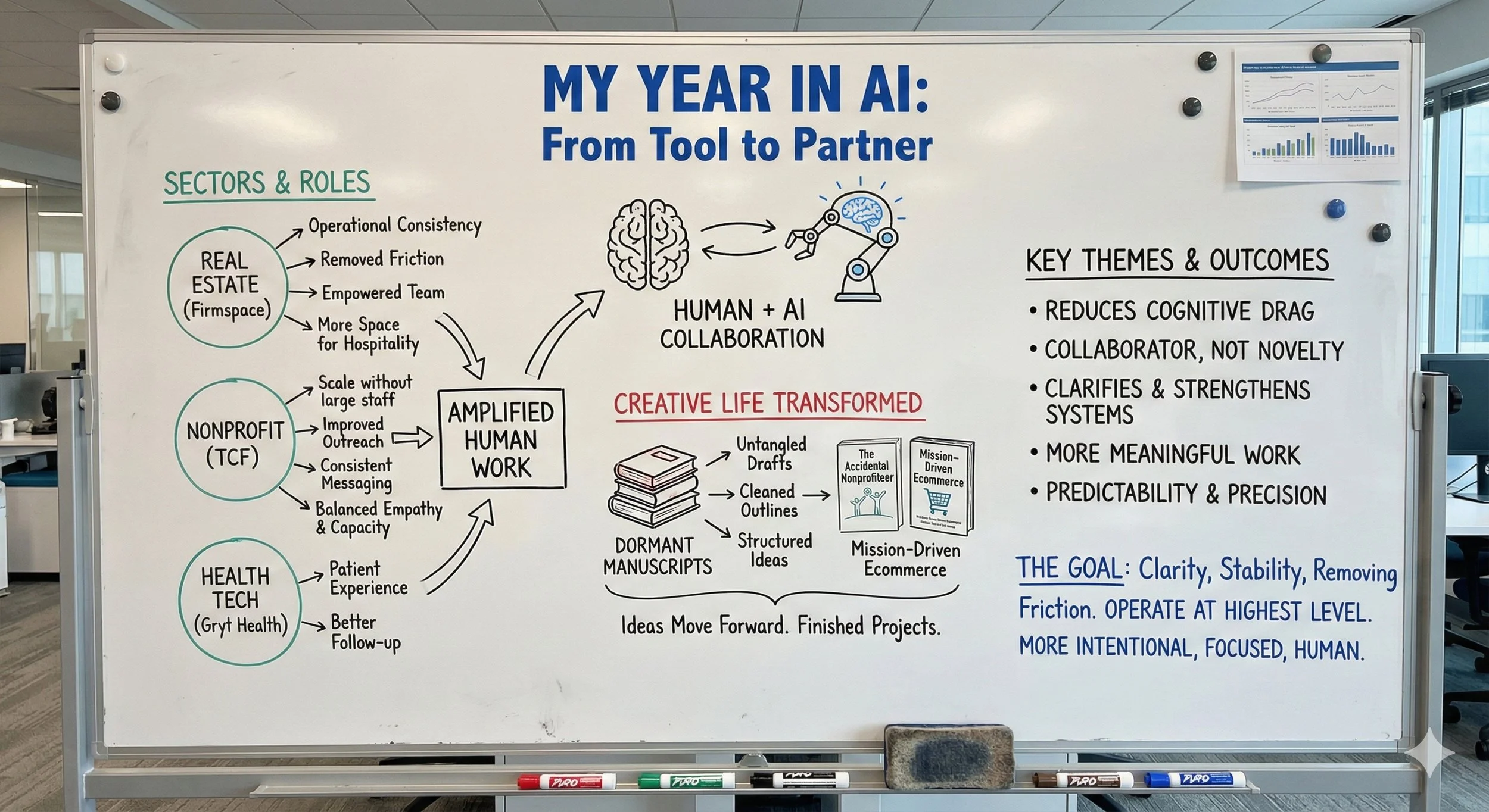
My Year in AI
This year was the first time artificial intelligence stopped feeling like a tool and started feeling like a partner. It was the first time I saw it not as something we bolt onto existing workflows but as something capable of reorganizing how my organizations think, operate, and scale. I entered the year curious. I am leaving it with a clear sense that my companies, my work, and even my personal operating rhythm have fundamentally changed.
My AI journey has been shaped by the fact that I work across different sectors. I run a real estate company that relies on operational consistency. I lead a national health nonprofit where trust and empathy matter more than efficiency. I collaborate on Gryt Health, a health tech organization focused on improving the patient experience in oncology. These roles should be worlds apart, yet AI made them feel connected. The same capabilities that helped a cancer survivor receive better follow-up also helped a Firmspace member get faster service. The common thread was not the technology itself. It was the intentional design of systems that amplified human work rather than replaced it.
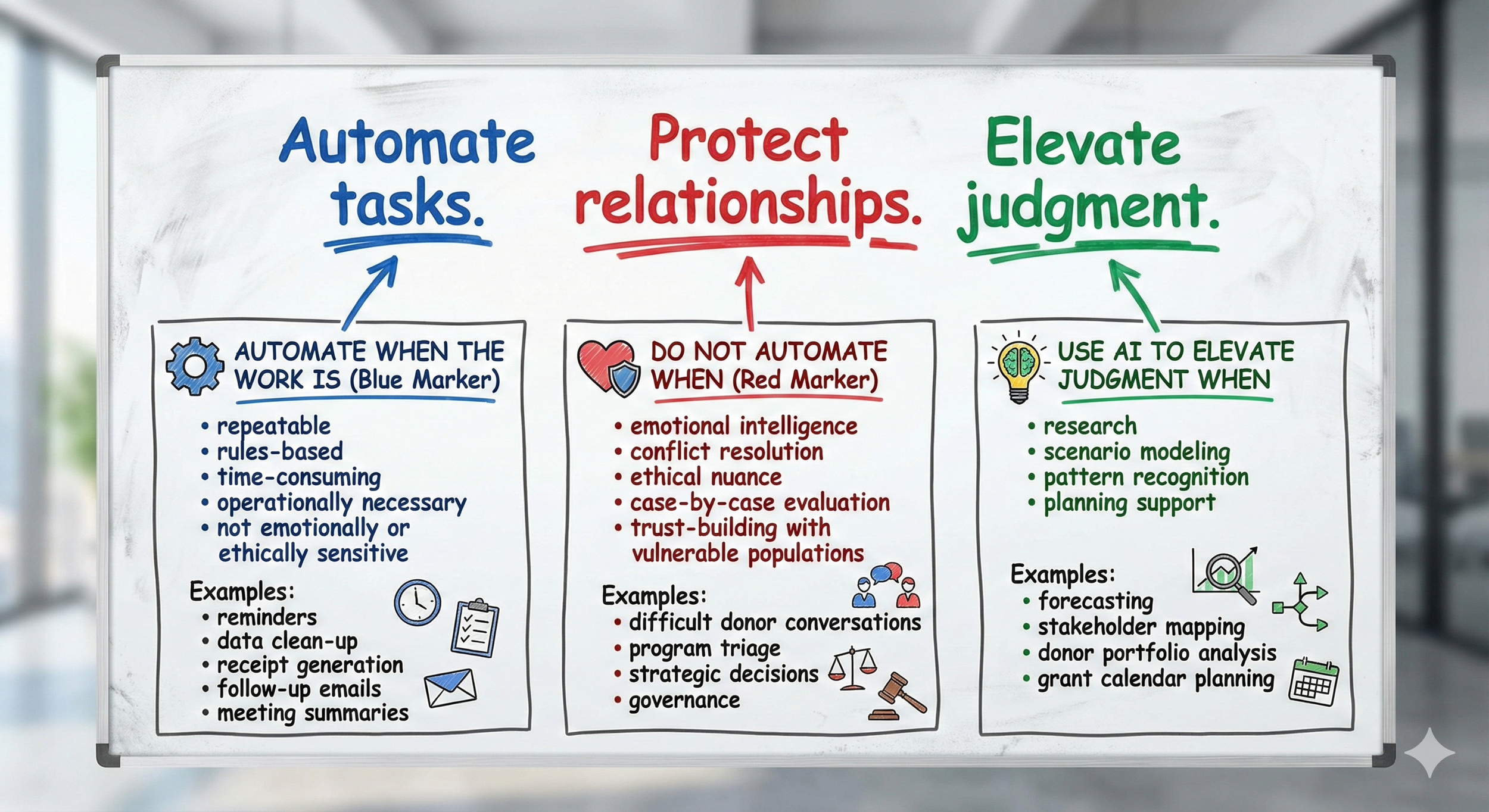
How AI Can Strengthen Nonprofit Operations Without Replacing Human Relationship Work
When I first started at Stupid Cancer, I took the CEO’s Outlook contacts from years of his personal advocacy work and manually entered every single one into SugarCRM. Line by line. Name, email, organization, phone number. Copy, paste, save. It took hours. And none of it felt connected to the mission. It was my first real glimpse into something every nonprofit eventually discovers. The work you care about is always competing with the work you can’t avoid.
For years, that kind of administrative drag was just part of the job. You powered through it. You made peace with the backlog. You assumed the operational chaos was permanent. The calls you didn’t return. The follow ups you meant to send. The donor updates that slipped because your CRM was a mess. It was constant.