The Chief Executive Operator

Early in my career, a mentor gave me the advice every rising executive gets eventually.

"Your job isn't to do the work anymore. Your job is to get out of the way."

Let go. Delegate. Stay out of the weeds. Hire people smarter than you and trust them. Every leadership book, every MBA course, every board member repeats some version of it. It's treated as gospel.

I think it's about to be wrong. In many cases, it already is.

The advice made sense, for a while

That advice was built for a world with friction. When shipping anything required a writer, a designer, a developer, an analyst, and a project manager to coordinate them all, of course the executive had to step back. You couldn't hold the whole stack in your hands. Nobody could. Delegation wasn't a leadership philosophy. It was a physical constraint dressed up as one.

So we built a management class around the constraint. Executives set direction. Middle layers translate. Specialists execute. Information travels up through summaries and down through meetings, losing fidelity at every hop.

Then AI collapsed enough of the skill stack that the old constraint stopped being universal.

I've written about what that collapse looks like in practice: one person moving from idea to asset to deployment without opening five apps or waiting on five inboxes. What I want to name here is what the collapse does to the executive role itself.

It splits it in two. And only one half survives.

The dangerous middle layer

Here's the uncomfortable part.

When one operator with good tools can do the work of a coordinating team, the layer that exists purely to translate between "the people who decide" and "the people who do" starts losing its reason to exist. Not the people. The layer. The standing meetings that exist to move context around. The status decks that summarize work nobody senior ever touches. The role whose entire function is relaying intent downward and progress upward.

To be clear: managers who coach people, resolve ambiguity, develop talent, and make judgment calls remain essential. The vulnerable layer is coordination that exists only because information and production once moved slowly.

That layer was never the value. It was the tax we paid for friction. Much of the friction is disappearing, and the tax is still being collected.

The executives most at risk right now are not the ones who never learned AI. They're the ones who followed the advice perfectly. They let go so completely that they can no longer touch the work at all. They can set direction but they can't ship, can't verify, can't prototype, can't tell whether the thing they're being shown is excellent or merely confident. They've outsourced their judgment's connection to reality.

That's not leadership. That's narration.

What replaces it

The role that's emerging, the one AI is forcing into existence, is the Chief Executive Operator.

Not a CEO who micromanages. Not an operator who lacks vision. A leader who can both set direction and ship. Someone who holds the strategy and keeps their hands close enough to the work to know what's true.

I live this across three organizations. At Firmspace, I'm the CEO. I also build the automations, write the SOPs, and touch the systems that run our spaces. At the Testicular Cancer Foundation, I set the strategy. I also rebuilt the digital presence myself, in weeks, with AI tools. At Gryt Health, I sit on the board. I still work directly with the product.

Ten years ago that would have made me undisciplined. A leader who "couldn't let go." Today it's the whole advantage. When I make a strategic decision, it's informed by contact with the actual work, not a summary of a summary. When I ask for something, I know what it costs. I could build enough of the first version myself before lunch to test the premise, expose the tradeoffs, and make a better decision about what comes next. The point isn't replacing the specialist. The point is shrinking the distance between an idea and evidence.

Direction without execution is a guess

The Chief Executive Operator model rests on one claim: in an AI-leveraged organization, the distance between deciding and doing is a liability, not a virtue.

Vision still matters. More than ever, actually, because AI gives you speed, not intent. But vision that can't be tested against real execution is just a well-formatted opinion. The executives who can prototype their own ideas, interrogate their own data, and ship their own first drafts will out-decide the ones waiting for the deck.

This doesn't mean doing everything yourself. Knowing what to touch and what to hand off is the skill. A useful model here is Rick Dakan and Joseph Feller's 4D Framework for AI fluency, which I've written about before. Its four competencies are Delegation, Description, Discernment, and Diligence: decide what AI should handle and what needs a human, communicate the work precisely, evaluate what comes back critically, and act responsibly with what ships. The Chief Executive Operator isn't allergic to delegation. They're allergic to distance.

Operating also doesn't replace the human work of leadership. Building trust, developing people, allocating capital, and holding the organization together still belong to the executive. Staying close to the work makes that leadership more credible, because the decisions stay grounded in how the organization actually functions.

The window is open

Every organization I know is quietly renegotiating this right now, whether they admit it or not. Headcount conversations that used to be about capacity are becoming conversations about leverage. Boards are starting to ask why a team of forty produces what a team of six produces elsewhere.

The leaders who thrive through that renegotiation will be the ones who reclaimed their connection to the work before they were forced to. The ones who treated "stay out of the weeds" as advice from a world that no longer exists.

They told you to let go.

Pick it back up.

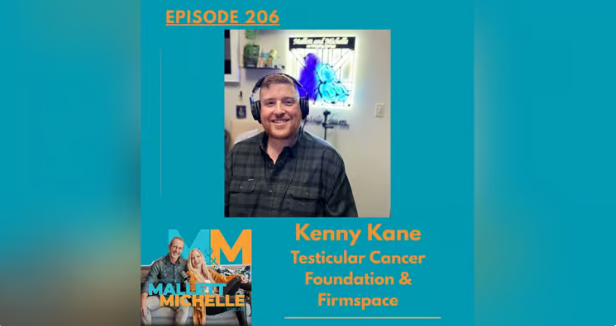
Kenny Kane

Kenny Kane is an entrepreneur, writer, and nonprofit innovator with 15+ years of experience leading organizations at the intersection of business, technology, and social impact. He is the CEO of Firmspace, CEO of the Testicular Cancer Foundation, and CTO/co-founder of Gryt Health.

A co-founder of Stupid Cancer, Kenny has built national awareness campaigns and scaled teams across nonprofits, health tech, and real estate. As an author, he writes about leadership, resilience, and building mission-driven organizations.

https://kenny-kane.com/
Next
Next

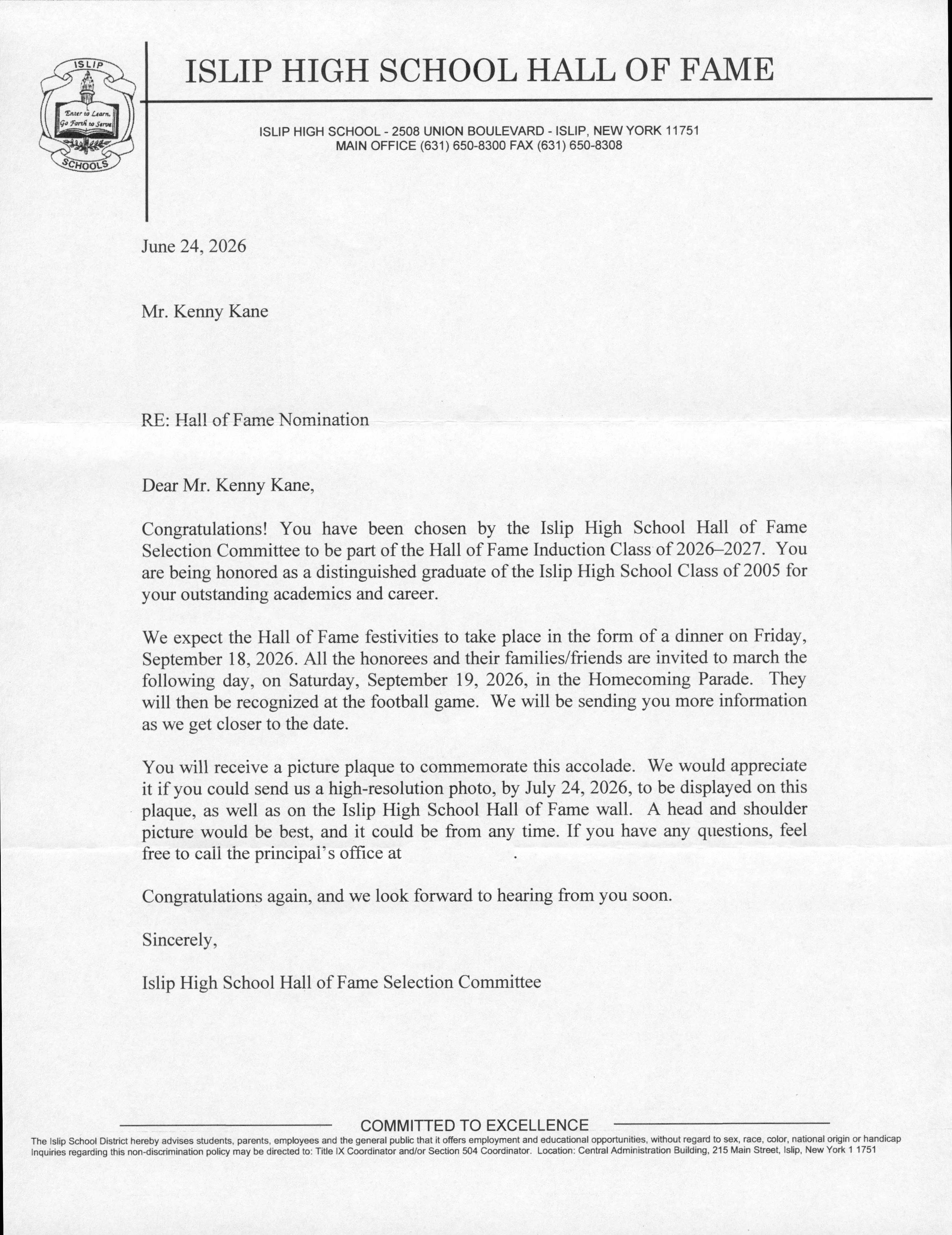
Inducted into the Islip High School Hall of Fame