Areas of Work
Executive Leadership
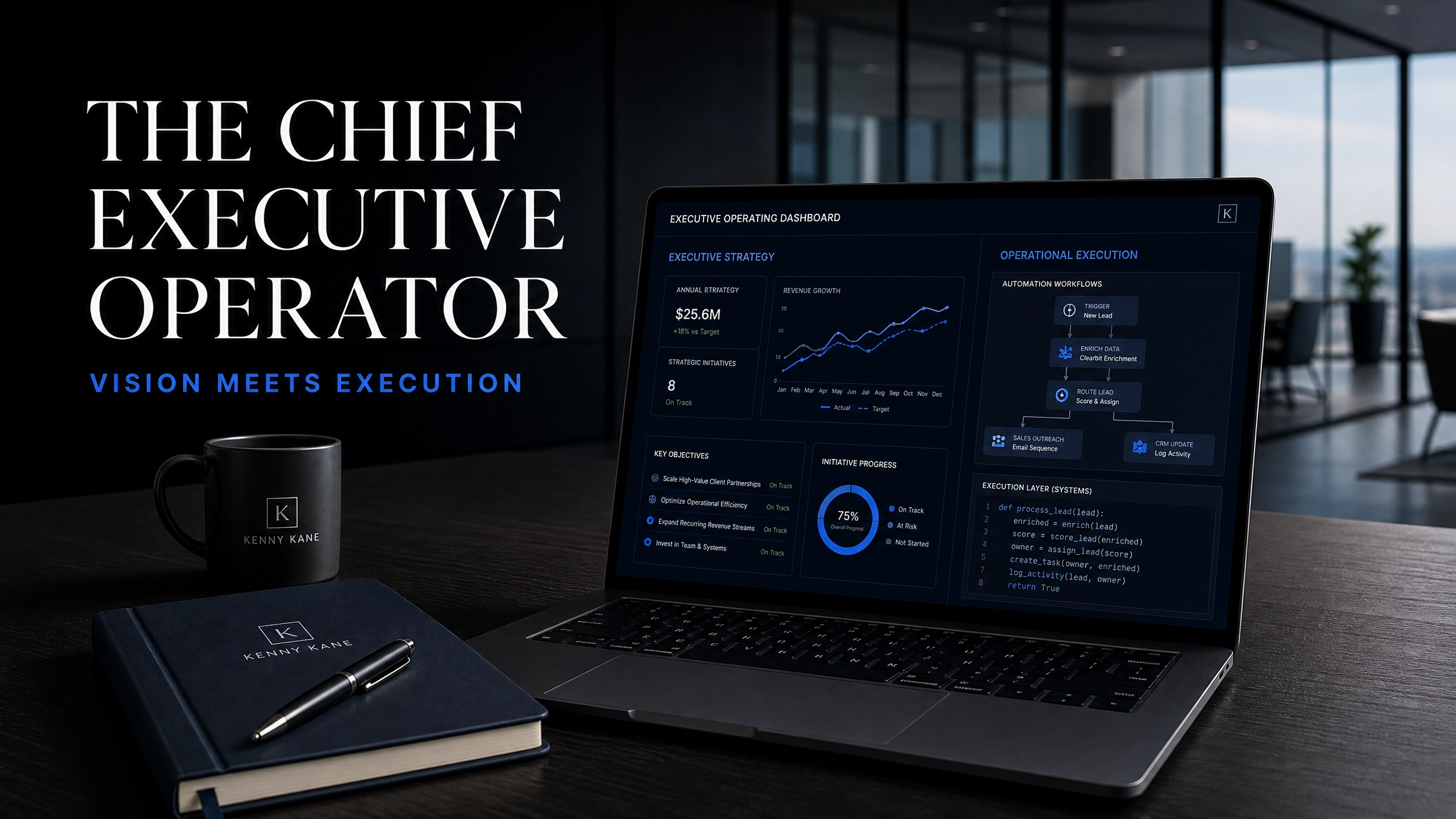
I lead as a Chief Executive Operator — an executive who sets direction and stays close enough to the work to improve it. This page explains what that means, why it matters now, and how it shows up in the organizations I run.
What is a Chief Executive Operator?
A Chief Executive Operator is an executive who can set strategy while also producing, diagnosing, designing, and fixing. Not a ceremonial CEO who primarily raises capital and manages a public profile — an operator who understands how the machinery works and moves comfortably between the boardroom and the build. The core promise is simple: I do not confuse leadership with distance from the work.
Why does this matter now?
AI is collapsing the traditional distance between strategy and execution. The next generation of effective executives won’t simply delegate better — they’ll know when to delegate, when to intervene, when to create directly, and how to use AI to widen their personal range without becoming organizational bottlenecks. I wrote about an early version of this shift in The Rise and Flux of the Chief Automation Officer.
Where do I practice this?
As CEO of Firmspace, I oversee national operations for a premium flexible office company — finance, HR, compliance, legal, IT, AV, security, construction, and facilities — guided by member experience and long-term operational direction. As CEO of the Testicular Cancer Foundation and CTO of Gryt Health, I apply the same operating principles in nonprofit and health technology contexts. Different sectors, one philosophy: clarity, accountability, and trust.
The Chief Executive Operator
The essay that defines the term — the collapsed skill stack, the dangerous middle layer, and the operator-executive model.
Go deeper
- The Chief Executive Operator
- The 4D Framework
- Collapsing the Skill Stack
- Hospitality Is Reliability
- My Perfect Job Description
- About Kenny Kane
- Press & Media
More areas of work: Nonprofit Leadership · Health Technology · AI & Digital Identity