
What I’m Too Young For This! Cancer Foundation Really Was
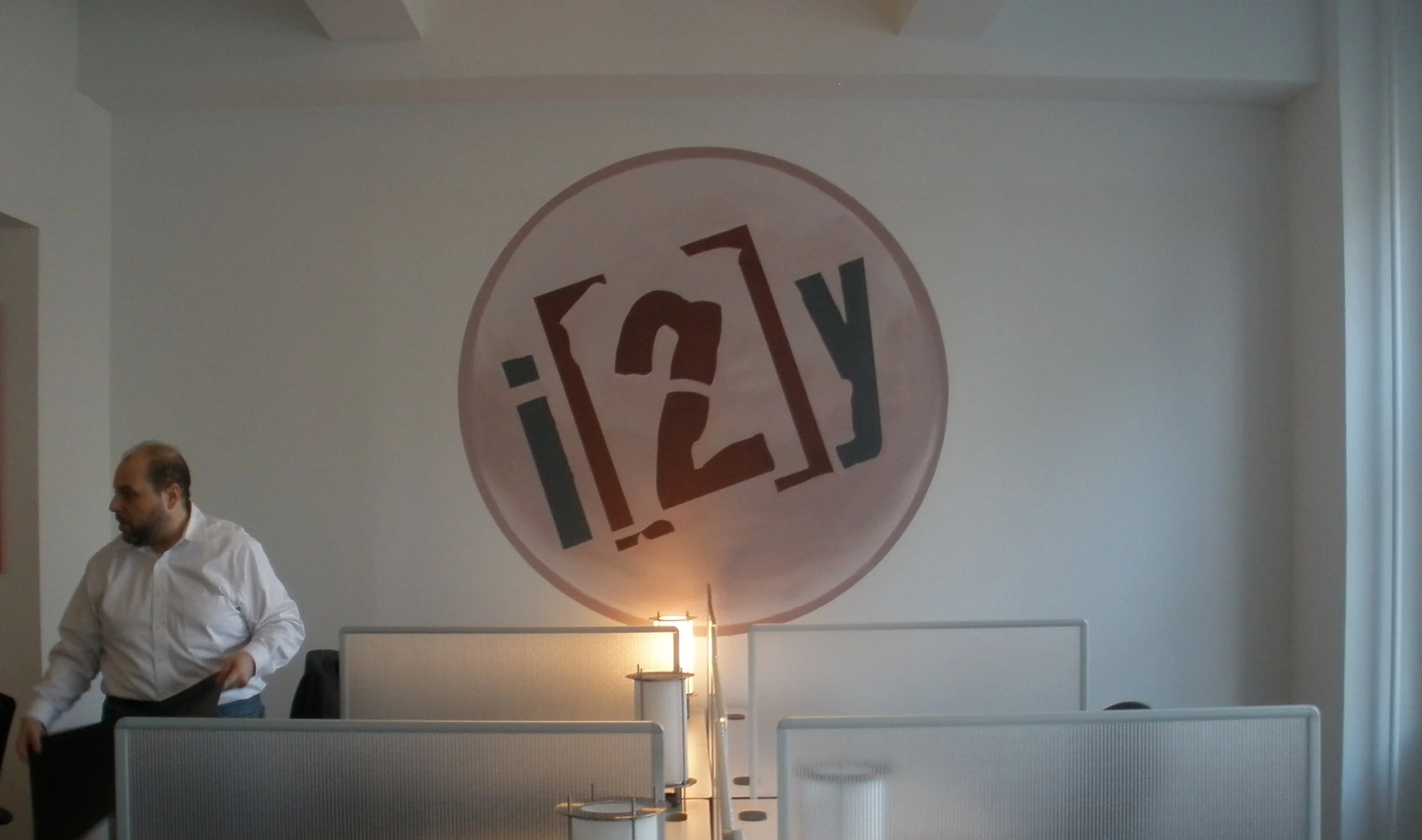
Before it was Stupid Cancer.
Before it had a national summit, a recognizable brand, or a seat at policy tables.
Before the language of AYA oncology entered the mainstream.
I’m Too Young For This! was a refusal.
It was a refusal to accept that young adults with cancer should quietly disappear into the space between pediatric and adult care. A refusal to accept isolation as normal. A refusal to believe that survivorship only counted if you were old enough to be taken seriously.
When Matthew Zachary launched i2y (also stylized as i[2]y) in 2006, it wasn’t because there was a roadmap. It existed because there was nowhere to go if you were 21, scared, and suddenly fluent in pathology reports and chemo regimens. There were no age-appropriate resources. No peers who understood. No acknowledgment that cancer at this stage of life didn’t just threaten your body, but interrupted the entire arc of who you were becoming.
So i2y began the way many necessary things do, with anger, honesty, and the internet.
i2y.com circa January 2010
Naming the Gap
For decades, young adults diagnosed between 15 and 39 had been functionally invisible. Survival rates lagged behind those of children and older adults. Research dollars bypassed them. Support systems assumed you either lived with your parents or had already settled into retirement.
i2y didn’t fix that overnight. But it did something radical at the time. It named the gap out loud and invited people to stand in it together.
The website became a gathering place. TIME Magazine naming it one of the Best 50 Websites in 2007 wasn’t about polish or scale. It was recognition that something new was happening. Survivors weren’t being talked at. They were talking to one another.
That shift mattered more than we realized.
Community Without Permission
What made i2y different wasn’t just the resources. It was the tone.
Happy hours instead of support circles. Blogs instead of brochures. A radio show instead of a PSA. It trusted young adults to define their own survivorship, to bring humor, anger, sexuality, grief, and ambition into the same conversation.
The Young Adult Leadership Council wasn’t symbolic. It gave survivors real agency to build community where they lived. The Stupid Cancer Happy Hours weren’t networking events dressed up as outreach. They were places where cancer didn’t have to be the loudest thing in the room.
For many people, it was the first time they felt seen as more than a patient.
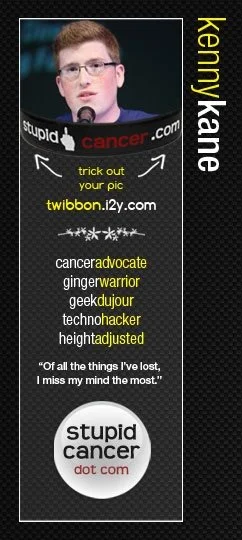
My Twitter background in 2010.
Culture Before Infrastructure
Long before policy caught up, i2y changed the culture.
Through media, art, storytelling, and unfiltered conversation, it made young adult cancer impossible to ignore. The blog, the radio show, the creative coalitions, these weren’t side projects. They were how a generation claimed visibility and refused to sanitize their experience for comfort.
By the time the organization formally rebranded as Stupid Cancer in 2011, the shift wasn’t a pivot. It was an evolution. The name matched what the community had already become, louder, bolder, and less interested in asking permission.
i’m too young for this was the realization.
stupid cancer was the declaration.
What i2y Left Behind
It’s tempting to measure success in numbers, users reached, chapters launched, cities activated. But that’s not what i2y ultimately was.
It was proof that young adults didn’t need to wait for institutions to catch up. It was evidence that survivorship is not just a medical outcome, but a social one. And it was the foundation, emotional, cultural, and organizational, on which everything that followed was built.
i2y didn’t disappear. It transformed.
But for those of us who were there, building it, finding it, surviving alongside it, I’m Too Young For This! will always represent the moment young adults with cancer stopped being quiet, stopped being grateful for scraps, and started creating something of their own.
Not because we were ready.
But because we had to.
