Grabbing Life by the Balls: A Conversation on Cancer, Work, and Building Things That Last
I recently joined Mallet & Michelle for a conversation that ended up covering a lot more than testicular cancer, even though that is where my story usually starts. What made this one different was how naturally it moved between personal history, work, leadership, and the experiences that quietly shape how we show up in the world.
My connection to testicular cancer is personal. When I was a high school senior, my dad was diagnosed. There was no long lead-up or time to process it emotionally. He found a lump, saw a doctor, and within days was in surgery. That summer, which was supposed to be about graduation and getting ready for college, turned into chemo appointments and hospital visits. Like a lot of families who go through cancer, we figured things out as we went. You do what needs to be done and worry about the rest later.
(The conversation starts around the 28-minute mark.)
I recently joined Mallet & Michelle for a conversation that ended up covering a lot more than testicular cancer, even though that is where my story usually starts. What made this one different was how naturally it moved between personal history, work, leadership, and the experiences that quietly shape how we show up in the world.
My connection to testicular cancer is personal. When I was a high school senior, my dad was diagnosed. There was no long lead-up or time to process it emotionally. He found a lump, saw a doctor, and within days was in surgery. That summer, which was supposed to be about graduation and getting ready for college, turned into chemo appointments and hospital visits. Like a lot of families who go through cancer, we figured things out as we went. You do what needs to be done and worry about the rest later.
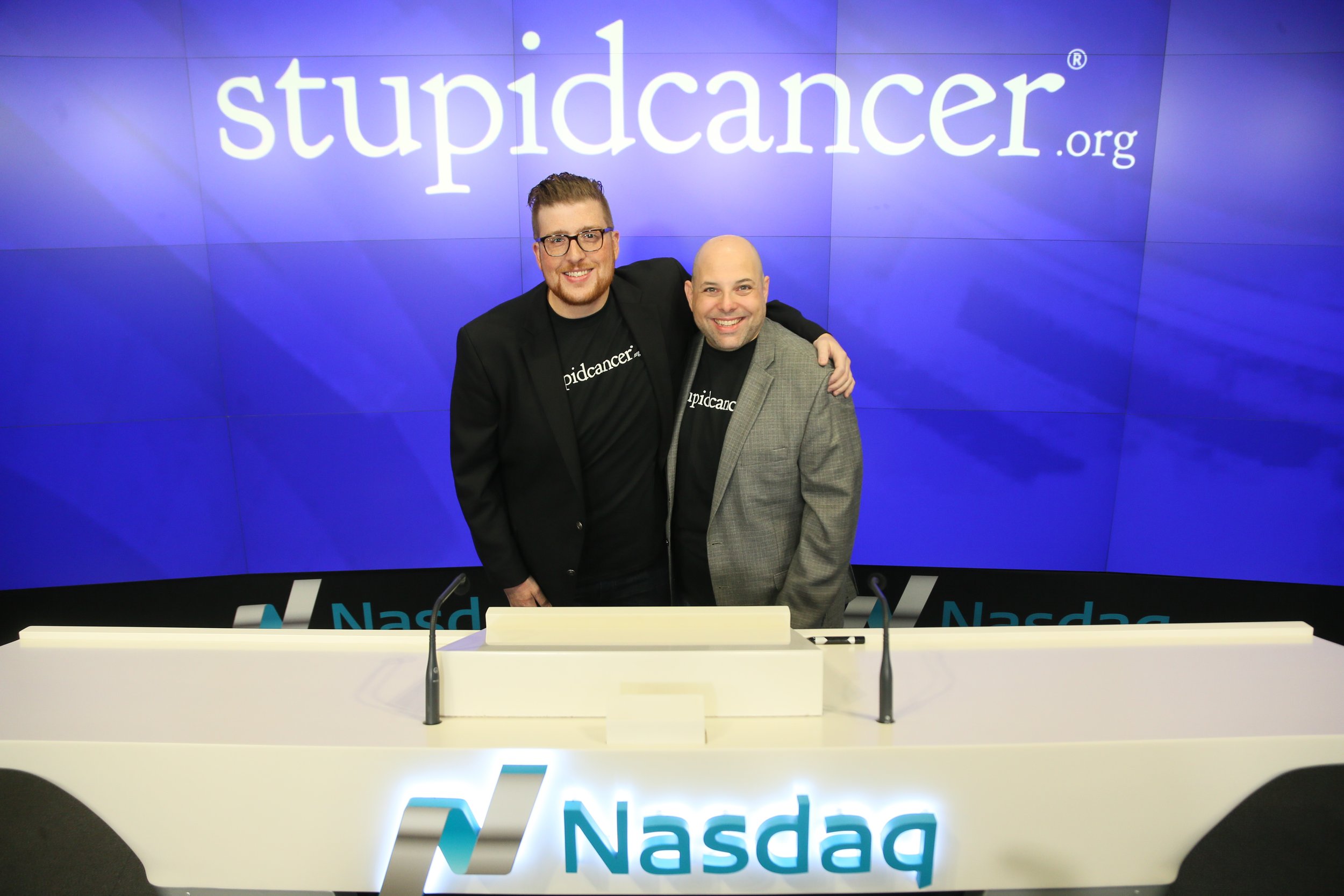
That experience stuck with me. It pulled me into nonprofit work long before I had any idea what a career was supposed to look like. It eventually led me to Stupid Cancer and later to the Testicular Cancer Foundation, where I have now been CEO for almost a decade. What I have learned over the years is that survivorship is not just about medicine. It is about timing, access, language, and whether someone feels comfortable enough to say something feels wrong before it is too late.
Testicular cancer has one of the highest cure rates of any cancer, especially when it is caught early. And yet embarrassment and lack of awareness still get in the way. At TCF, a lot of our work is about removing those barriers. We focus on education, early detection, and making sure newly diagnosed patients and their families can talk to someone who has been there before. The goal is simple. Catch it earlier. Reduce the intensity of treatment. Help people get back to their lives.
The conversation also went into leadership and work, especially how my nonprofit background influenced how I think about building companies. On the surface, a national cancer nonprofit and a premium private-office company could not be more different. In reality, they run on the same principles. Trust matters. Systems matter. People notice when things work and they notice even faster when they do not.
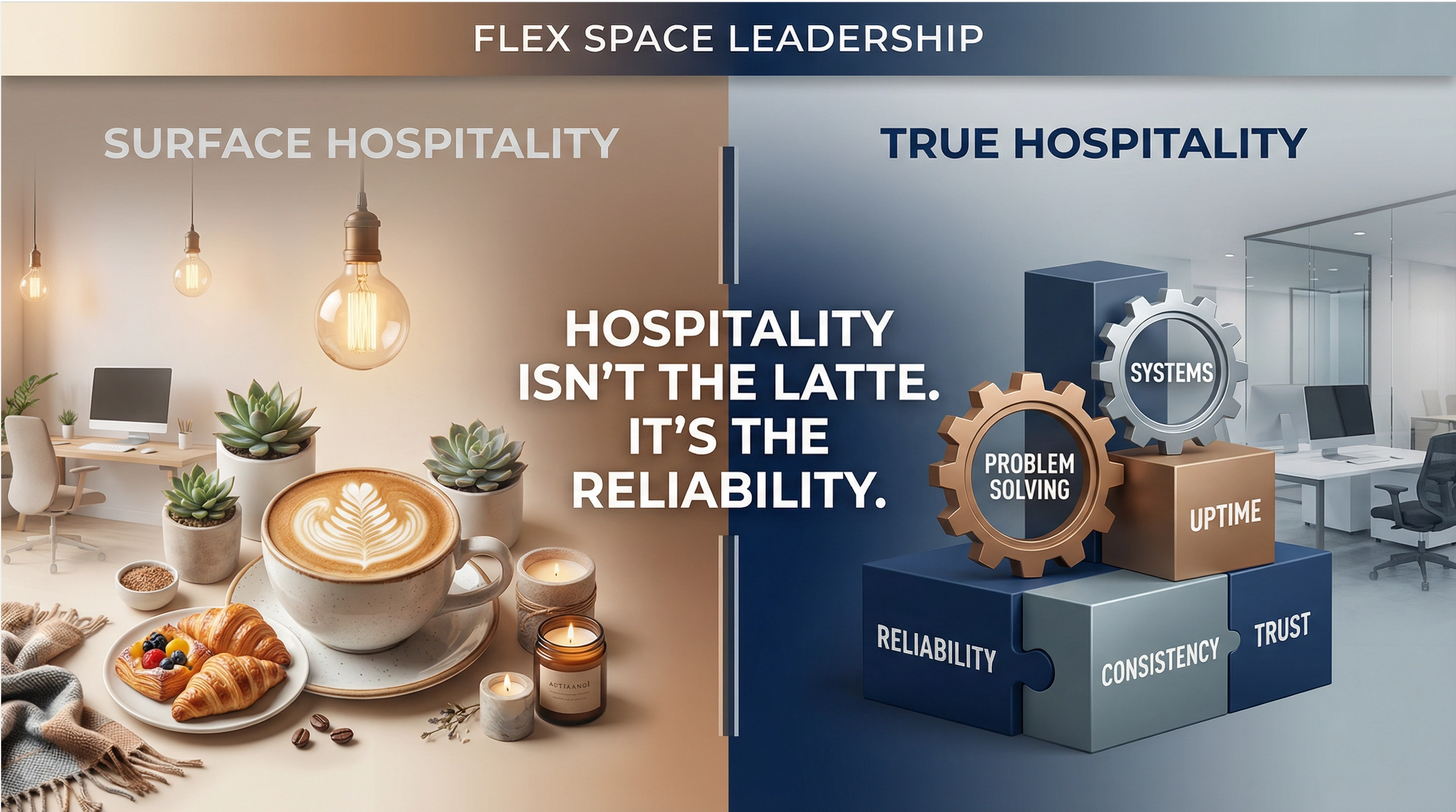
At Firmspace, that shows up in privacy, sound control, hospitality, and details most people do not consciously think about but absolutely feel. At TCF, it shows up in how quickly someone hears back after reaching out or how clearly they are guided through a confusing moment. Different missions, same operating mindset.
We also talked about writing and artificial intelligence and why I finally published The Accidental Nonprofiteer. I never set out to work in nonprofits, and I certainly was not trained for it. What I did have was early experience working in a pharmacy, learning how to deal with people who were scared, sick, or overwhelmed. That shaped how I approached leadership long before I had language for it.
AI did not write my book for me, but it helped me organize years of lived experience into something usable. Like any tool, it reflects the intent behind it. Used thoughtfully, it can help people who have something to say finally say it.
What I appreciated most about this conversation was how real it felt. We talked about cancer without turning it into a slogan. We talked about work without pretending there is a perfect formula. And we talked about leadership as something learned over time, usually through mistakes.
At the end of the day, whether it is a nonprofit, a company, or a single conversation, the work is the same. Show up. Pay attention. Build things that make life a little easier for the next person who comes along.
My Year in AI
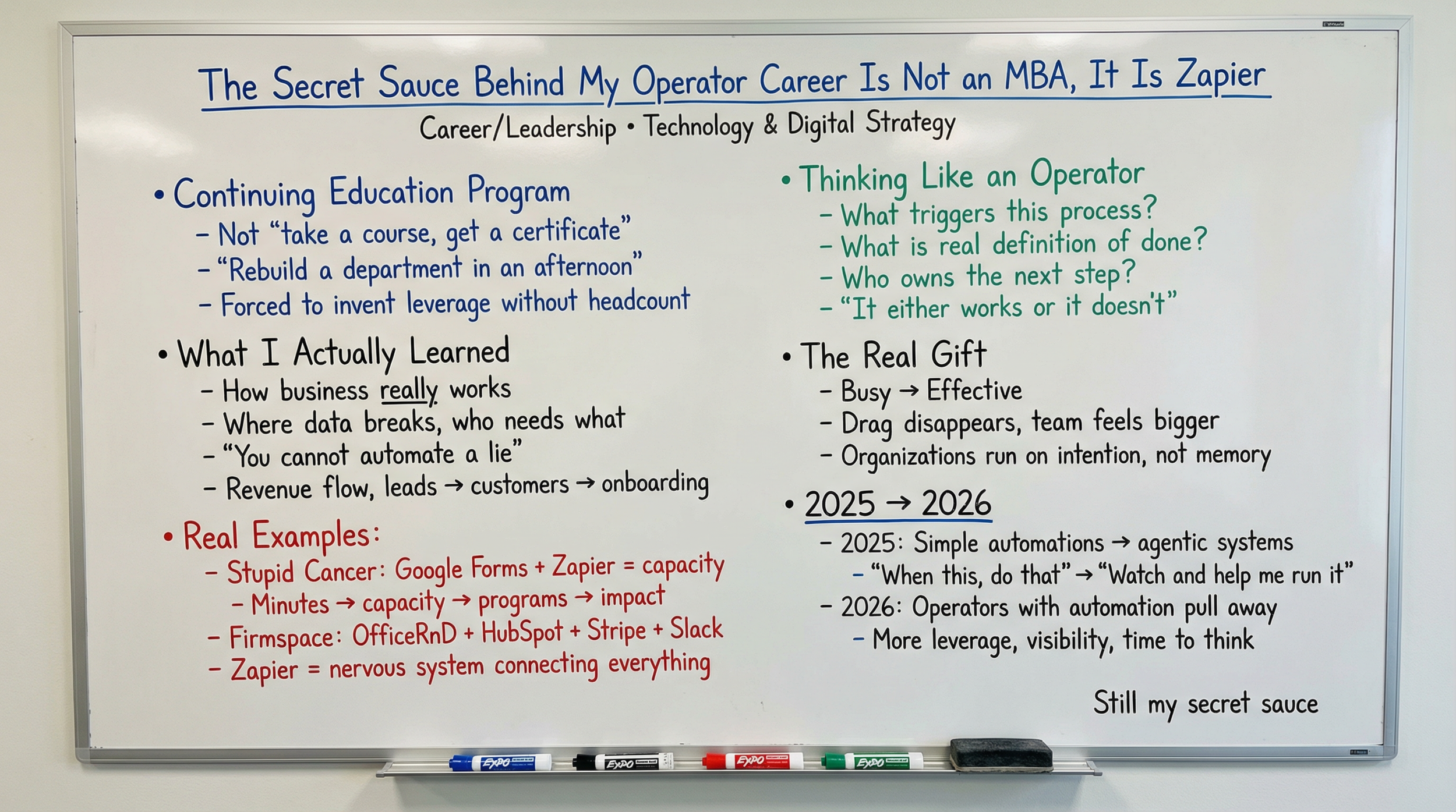
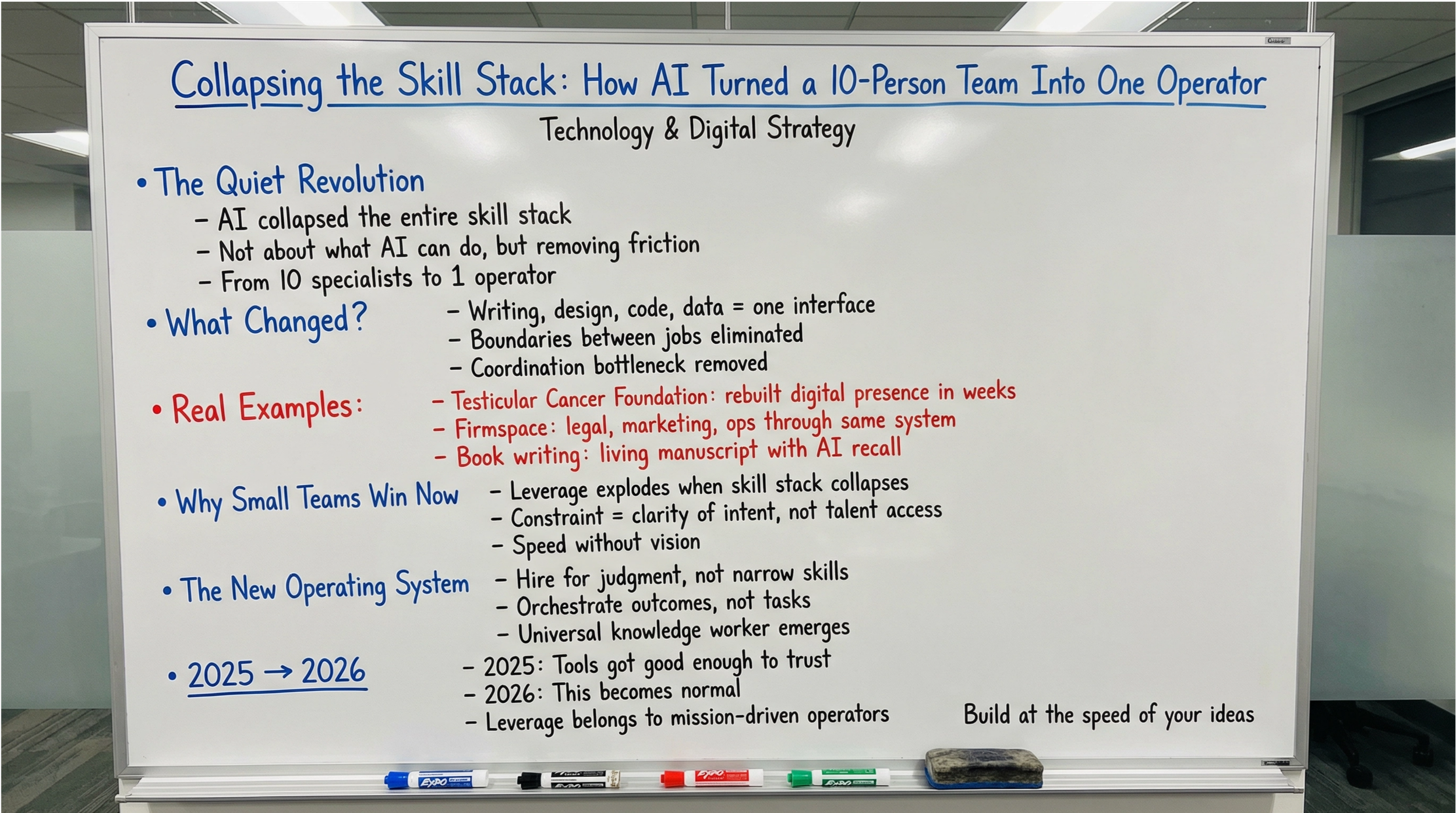
This year was the first time artificial intelligence stopped feeling like a tool and started feeling like a partner. It was the first time I saw it not as something we bolt onto existing workflows but as something capable of reorganizing how my organizations think, operate, and scale. I entered the year curious. I am leaving it with a clear sense that my companies, my work, and even my personal operating rhythm have fundamentally changed.
My AI journey has been shaped by the fact that I work across different sectors. I run a real estate company that relies on operational consistency. I lead a national health nonprofit where trust and empathy matter more than efficiency. I collaborate on Gryt Health, a health tech organization focused on improving the patient experience in oncology. These roles should be worlds apart, yet AI made them feel connected. The same capabilities that helped a cancer survivor receive better follow-up also helped a Firmspace member get faster service. The common thread was not the technology itself. It was the intentional design of systems that amplified human work rather than replaced it.
(Image generated from the contents of this blog post using Gemini Nano Banana Pro.)
This year was the first time artificial intelligence stopped feeling like a tool and started feeling like a partner. It was the first time I saw it not as something we bolt onto existing workflows but as something capable of reorganizing how my organizations think, operate, and scale. I entered the year curious. I am leaving it with a clear sense that my companies, my work, and even my personal operating rhythm have fundamentally changed.
My AI journey has been shaped by the fact that I work across different sectors. I run a real estate company that relies on operational consistency. I lead a national health nonprofit where trust and empathy matter more than efficiency. I collaborate on Gryt Health, a health tech organization focused on improving the patient experience in oncology. These roles should be worlds apart, yet AI made them feel connected. The same capabilities that helped a cancer survivor receive better follow-up also helped a Firmspace member get faster service. The common thread was not the technology itself. It was the intentional design of systems that amplified human work rather than replaced it.
At Firmspace, AI became a quiet force behind the reliability we promise. It removed the friction that used to slow our teams down and strengthened the consistency of our operations. AI now supports member communications, intake routing, service auditing, and the creation of materials for sales and engagement. It helped us refine quality control frameworks, sharpen internal documentation, and build knowledge systems that match the high-trust environment we offer. What surprised me most was how AI empowered our team. It cleared away administrative drag and created more space for hospitality, relationships, and thoughtful service, which sit at the center of proworking.
At the Testicular Cancer Foundation, AI allowed us to operate with a level of scale that would require a much larger staff. It improved donor follow-up, educational outreach, and creative content. It helped us stay ahead of the needs of men who reach out scared, uncertain, or newly diagnosed. It strengthened our national campaigns and partnerships by keeping our messaging consistent and timely. Capacity increased without diluting empathy, which is the tension every health nonprofit faces. AI made that balance possible.
The most unexpected transformation happened in my creative life. I began revisiting manuscripts that had been sitting untouched for years. Old ideas that once felt too heavy or time consuming suddenly had momentum. AI helped me untangle drafts, clean up outlines, and turn scattered notes into chapters. It brought structure to ideas that had been dormant. That shift is what allowed me to publish two books this year. These projects lived in fragments across documents, notebooks, and voice memos. AI helped me unify them and finish them. Publishing them was more than a milestone. It reflected a deeper change in how I work. Ideas now move forward instead of stalling.
Throughout the year I developed new habits. I used voice driven drafting, automatic transcription, structured writing workflows, and research support that made my thinking sharper. AI helped me refine my website, plan marketing funnels, and consolidate years of operational knowledge across every role I hold. I became faster not because AI did the work for me but because it removed the distractions that normally slow creative and strategic work.
Looking back, two themes stand out. AI reduces cognitive drag, giving people the space to do their best work. And it works best when treated as a collaborator rather than a novelty. It is not magic and not a shortcut. It clarifies. It strengthens. It exposes weak points in systems and supports the parts that already function well.
Across my organizations, the outcome was the same. More time for meaningful work. More predictability in areas that used to be chaotic. More capacity without more staff. More precision without more overhead. It brought alignment to teams and coherence to my own thinking.
The year ahead will shift from exploration to integration. AI will move deeper into the core of each organization, not as an experiment but as infrastructure. Teams will learn to lead with it and alongside it. The goal is not more automation. The goal is clarity, stability, and the removal of unnecessary friction so people can operate at their highest level. AI gives us room to be more intentional, more focused, and more human.
My AI journey this year was never about technology. It was about operating with care and precision. It was about building organizations that are capable of meaningful work at scale. It was about becoming an operator whose tools finally keep pace with his ideas. The work ahead is to shape this new layer of intelligence into something durable, ethical, and aligned with the missions I serve.
How AI Can Strengthen Nonprofit Operations Without Replacing Human Relationship Work
When I first started at Stupid Cancer, I took the CEO’s Outlook contacts from years of his personal advocacy work and manually entered every single one into SugarCRM. Line by line. Name, email, organization, phone number. Copy, paste, save. It took hours. And none of it felt connected to the mission. It was my first real glimpse into something every nonprofit eventually discovers. The work you care about is always competing with the work you can’t avoid.
For years, that kind of administrative drag was just part of the job. You powered through it. You made peace with the backlog. You assumed the operational chaos was permanent. The calls you didn’t return. The follow ups you meant to send. The donor updates that slipped because your CRM was a mess. It was constant.
(Image generated from the contents of this blog post using Gemini Nano Banana Pro.)
When I first started at Stupid Cancer, I took the CEO’s Outlook contacts from years of his personal advocacy work and manually entered every single one into SugarCRM. Line by line. Name, email, organization, phone number. Copy, paste, save. It took hours. And none of it felt connected to the mission. It was my first real glimpse into something every nonprofit eventually discovers. The work you care about is always competing with the work you can’t avoid.
For years, that kind of administrative drag was just part of the job. You powered through it. You made peace with the backlog. You assumed the operational chaos was permanent. The calls you didn’t return. The follow ups you meant to send. The donor updates that slipped because your CRM was a mess. It was constant.
AI doesn’t erase the work. What it does is give you time back. And time is the one thing every nonprofit is starved for.
Where AI Actually Helps: Clearing the Path for Human Work
I didn’t start using AI because I wanted to innovate. I used it because I needed oxygen. Most nonprofit leaders know the feeling. You are always playing defense against your own to-do list.
So I started small. The first tool that surprised me was Granola, which creates AI-powered meeting minutes automatically. I stopped leaving meetings with a pile of handwritten notes and half-remembered tasks. Granola captured action items, decisions, and next steps so I could stay present with the people in the room instead of worrying about documentation.
From there, the shift snowballed.
Notion became my notes app, my wiki, my process library, and eventually my operations brain. I wrote less. I searched more. The information actually lived somewhere.
Zapier’s AI tools stepped in next. If something was repetitive, Zapier often had a way to automate it. Tagging donors. Routing form submissions. Generating reminders. Small tasks that add up fast.
And of course, there were the writing tools. ChatGPT and Claude help me with first drafts, summaries, event recaps, donor messages, and complicated emails that require more clarity than I can muster at 6 p.m. They do not replace my voice. They amplify it.
Then I added Manus, which handles the more complex digital work. Website updates. Micro landing pages for campaigns. Simple design tasks that used to require a freelancer. Manus can generate the first version so I can spend my time tightening the message instead of figuring out how to start.
None of these tools replaced the relationship-driven parts of my job. They simply cleared the debris.
Real Examples From the Field
Here is what this looks like in the real world.
A donor gives. Instead of waiting days for a thank you, an AI assistant can look at their history, draft a personalized message, update the CRM, and suggest the next follow up. You still approve it. But you didn’t lose the hour.
You run a workshop. Granola captures the meeting notes. Notion stores the feedback, agenda, and takeaways in one place. Zapier sends follow up messages to participants. You didn’t spend your entire afternoon chasing loose ends.
You prepare a grant report. Claude helps turn raw data into a draft. ChatGPT helps rework the narrative. Manus turns that story into a simple landing page to share outcomes with your community. You still shape the final product. You just start miles ahead.
None of these examples are theoretical. They are the difference between drowning in tasks and having the capacity to show up for people.
The Ethical Side: Staying Thoughtful While Moving Fast
Even with all these tools, the responsibility stays with you. People deserve transparency. Sensitive data should stay protected. Automated messages should be reviewed by a human before they go out. And no AI system should decide program eligibility or support access.
AI is a powerful partner. But you’re still the decision maker.
A Simple Framework for What To Automate
Over time, I’ve landed on a simple framework that keeps things grounded.
Automate the tasks. Protect the relationships. Elevate the judgment.
If something is repeatable, rules based, time consuming, and low risk, automation helps. If something requires emotional intelligence, conflict navigation, trust, or nuance, it belongs with a person. And if something involves thinking, planning, or storytelling, tools like ChatGPT, Claude, or Manus can strengthen your judgment without replacing it.
You build a better organization by freeing people to do the work that only people can do.
A More Human Sector Is Within Reach
I think back to that day with the Outlook contacts often. Back then, I didn’t know how much administrative work would shape my understanding of nonprofit life. I didn’t know how much it would pull me away from the people we were trying to serve.
AI won’t fix everything. But it gives us something we rarely get. Space. Time. Breathing room. It creates the conditions for better relationships, better thinking, and better leadership.
We do this work because we care about people. AI doesn’t replace that. It creates space for it.
If you suddenly got five hours back every week, where would you put them?
Listening to Your Emails and Messages Makes You a Better Communicator
For most of my career, I’ve moved fast. I’ve relied on instinct, momentum, and the ability to figure things out on the fly. In small teams or early-stage environments, that approach works. You don’t have to explain every step or provide perfect clarity—you just build, adjust, and keep going. But as the organizations around me grew, the cost of unclear communication started to show up in ways I couldn’t ignore. I’d send a message that made perfect sense in my head, only to realize later it didn’t land the way I intended. Or I’d fire something off quickly and it would accidentally create more work or confusion for someone else. That’s when I started using a small Mac feature that unexpectedly became one of the most effective productivity habits I’ve ever built: Speak Selection.
(Image generated from the contents of this blog post using Gemini Nano Banana Pro.)
For most of my career, I’ve moved fast. I’ve relied on instinct, momentum, and the ability to figure things out on the fly. In small teams or early-stage environments, that approach works. You don’t have to explain every step or provide perfect clarity—you just build, adjust, and keep going. But as the organizations around me grew, the cost of unclear communication started to show up in ways I couldn’t ignore. I’d send a message that made perfect sense in my head, only to realize later it didn’t land the way I intended. Or I’d fire something off quickly and it would accidentally create more work or confusion for someone else. That’s when I started using a small Mac feature that unexpectedly became one of the most effective productivity habits I’ve ever built: Speak Selection.
On my computer, I’ve set it to Option + Escape. I highlight the text, hit the keys, and my Mac reads it back to me. I originally used it for dense or long-form content I wanted to listen to instead of read. But when I tried it on a message I was about to send—just out of curiosity—it completely changed how I communicate. Hearing your own words out loud forces you to experience them the way someone else will. It reveals the places where you ramble, where you assume too much context, where your tone is sharper than you meant, or where you simply aren’t as clear as you think. Something that feels tight and logical in your head can sound scattered when read aloud by a voice that isn’t carrying all your internal shorthand.
Listening before I send has made me write with more empathy and precision. It’s a ten-second pause that keeps me from creating accidental work or friction for someone else. It turns vague ideas into cleaner sentences. It catches tone issues that I would never see by reading silently. And it helps me slow down long enough to think, “If I were receiving this, would I know exactly what the sender means?” That small moment is all it takes to turn communication from a reflex into an operational discipline. It’s not about perfection—just alignment. Speak Selection has become one of the simplest and most unexpectedly powerful tools in my workflow. And if you’ve ever felt like your communication doesn’t always match your intent, this tiny shortcut might be the easiest habit to adopt.
The Problem With Giving Tuesday: Noise, Fatigue, And Burnout
I remember when Giving Tuesday first appeared on the scene. Back then I was at Stupid Cancer, running operations, building digital infrastructure, and trying to hold together a national movement with passion, long nights, and whatever technology we could afford. The idea of Giving Tuesday felt refreshing. A global moment where generosity could rise above the noise of Black Friday and Cyber Monday. It felt like the kind of thing a young nonprofit ecosystem needed.
But even in those early years, something became obvious. The noise did not disappear. It got louder.
(Image generated from the contents of this blog post using Gemini Nano Banana Pro.)
I remember when Giving Tuesday first appeared on the scene. Back then I was at Stupid Cancer, running operations, building digital infrastructure, and trying to hold together a national movement with passion, long nights, and whatever technology we could afford. The idea of Giving Tuesday felt refreshing. A global moment where generosity could rise above the noise of Black Friday and Cyber Monday. It felt like the kind of thing a young nonprofit ecosystem needed.
But even in those early years, something became obvious. The noise did not disappear. It got louder.
Our Giving Tuesday campaigns at Stupid Cancer never really took off. Not because the mission lacked urgency. Not because the community lacked passion. It was the environment itself. The day quickly became so crowded that inboxes turned into a wall of competing appeals. Every nonprofit, national and local, was sending emails at the exact same moment. We were all telling people that today was the day to give, and the result was that very few messages were actually heard.
Our emails would go out. And then they would vanish into a digital stampede of similar subject lines and similar language, all competing for the same seconds of donor attention. It became clear that when everyone talks at the same time, nobody truly connects. That is the paradox of Giving Tuesday. The energy that was meant to unite the sector created a tidal wave that made it harder for authentic storytelling to land. It trained donors to expect a single day of marketing pressure instead of a year of meaningful engagement.
After 10 years at Testicular Cancer Foundation, I see the same patterns even more clearly. Our strongest support comes from conversations, relationships, and stories that move at the pace of real human connection. The people who support TCF do it because they believe in the urgency of early detection, because they lost someone they loved, because they survived, or because they know a young man who needed help. Those moments do not happen because of a global countdown clock. They happen because of trust.
Giving Tuesday often pulls attention away from that trust. It asks donors to give impulsively, surrounded by competing messages, and that kind of giving rarely translates into long-term commitment. The truth is that the donors who stay with us, the ones who make our work possible, almost never join us because of Giving Tuesday. They join because of a story that reached them at the right moment. They join because someone educates them. They join because they were ready to hear us. None of that has anything to do with a specific Tuesday in late November.
There is another reality too. Larger organizations with major marketing budgets dominate the Giving Tuesday landscape. They have more ads, more staff, more matches, more media. Smaller nonprofits like the ones I have spent most of my career running cannot outshout them. The day amplifies existing inequities. It rewards whoever already has the biggest digital footprint. It becomes a race where the starting line is not the same for everyone.
And for nonprofit teams, especially lean ones, Giving Tuesday is exhausting. It hits right when year-end fundraising is already underway, when staff are working on holiday campaigns, annual reports, donor stewardship, and the final push of the year. The pressure to perform on one prescribed day often distracts from the quieter, more effective work that actually drives mission outcomes.
Looking back, neither Stupid Cancer nor TCF ever saw measurable traction from Giving Tuesday. What we saw were short-lived spikes, small one-time gifts, and a kind of artificial urgency that did not strengthen donor relationships. The long-term supporters, the ones who show up every year, never came from that moment. They came from real conversation, thoughtful timing, and the consistent work of building community.
I still believe in generosity. I believe in the idea behind Giving Tuesday. But I also believe that generosity grows best on quieter days. The days when our message stands alone. The days when supporters hear one story, not fifty. The days when giving feels like connection instead of competition.
Those were the days that mattered at Stupid Cancer. Those are the days that matter now at Testicular Cancer Foundation. And those are the days when generosity feels most human.
I Don’t Give Keynotes. I Share Field Notes.
Someone asked me recently why I am not a public speaker on a more regular basis. They had listened to me on a podcast, seen me moderate sessions at Stupid Cancer events, and watched me speak at Testicular Cancer Foundation gatherings. Their assumption was that speaking was something I pursued. It is not.
I do not speak on public stages very often. Not because I avoid it, but because most of my career has been spent building organizations, communities, and operational systems rather than talking about them from a podium. I have never thought of myself as a professional speaker. I do not go on a speaking circuit. I do not sell ideas from the stage. But when the work required it, I have spoken. And those have always been the meaningful moments.
Someone asked me recently why I am not a public speaker more often. They had heard me on podcasts, seen me moderate sessions at Stupid Cancer events, and watched me speak at Testicular Cancer Foundation gatherings. They assumed speaking was something I pursued. It is not.
I do not speak on stages frequently, not because I avoid it, but because I have spent my career building organizations, communities, and operational systems, rather than talking about them. I do not consider myself a professional speaker. I do not tour, sell from a stage, or deliver rehearsed keynotes. But when the work has required it, I have spoken, and those moments have always felt meaningful.
My first real speaking experience was not at a conference someone invited me to. It was at one we created. In the early days of Stupid Cancer, there were no playbooks, no speaker rosters, and no formal stages. Sometimes the stage was a dinner table, a community center, a hospital classroom, or even a parking lot during a road trip. Speaking never felt like presenting. It felt like building something with the people in front of me.
As the movement grew, those rooms turned into conferences with hundreds of survivors, caregivers, and professionals. We never spoke at people. We spoke with them. It was never a performance. It was a conversation.
Over the years, at both Stupid Cancer and Testicular Cancer Foundation, I have spoken at summits, retreats, gatherings, and workshops. My goal has never been to inspire. It has been to translate experience into something useful. I have talked about building systems that protect humans, digital infrastructure that can scale, and how empathy and operations can and should coexist. These were never speeches. They were field guides.
I have always felt more comfortable in podcast environments than on polished stages. Podcasting matches how I develop ideas, in conversation, open to revision. It allows nuance, curiosity, and real learning instead of performance.
I do not chase speaking opportunities. I speak when there is a real problem to solve and when the audience is made up of builders, operators, and practitioners. I prefer rooms where people take notes because they found a framework, not because they felt inspired.
When I do speak, I talk about what I have learned from building infrastructure, membership experiences, and mission centered organizations. I talk about how systems protect people. I talk about how organizations do not just need vision. They need functioning Tuesdays.
My speaking has never been measured by audience size. It is measured by clarity. If someone walks away knowing what they can build next, then it was worth saying.
How I Built a Google Knowledge Panel in One Day
If you have ever Googled yourself and found incomplete or incorrect information, you know what it feels like to have your digital identity misrepresented. Especially for entrepreneurs, authors, executives, and professionals, a Google Knowledge Panel is not a vanity feature. It is a core pillar of credibility, discoverability, and digital authority. It is also one of the most trusted sources used by search engines, AI models, and voice assistants.
Last week, I completed a full Google Knowledge Panel optimization project for my personal entity. I created a structured Wikidata entry, updated my website’s schema, connected my Google Knowledge Graph ID, fixed disambiguation issues, and built an identity verification loop across Google, Wikidata, and my site. And I completed it in one day.
If you have ever Googled yourself and found incomplete or incorrect information, you know what it feels like to have your digital identity misrepresented. Especially for entrepreneurs, authors, executives, and professionals, a Google Knowledge Panel is not a vanity feature. It is a core pillar of credibility, discoverability, and digital authority. It is also one of the most trusted sources used by search engines, AI models, and voice assistants.
Last week, I completed a full Google Knowledge Panel optimization project for my personal entity. I created a structured Wikidata entry, updated my website’s schema, connected my Google Knowledge Graph ID, fixed disambiguation issues, and built an identity verification loop across Google, Wikidata, and my site. And I completed it in one day.
Why a Knowledge Panel Matters
Your website shows what you say about yourself. Your Knowledge Panel shows what the internet believes about you.
Search engines do not rely on your personal website alone. They depend on structured data from trusted sources like Wikidata, Google Knowledge Graph, schema markup, and verified identity links across platforms. These sources work together to prove your credibility, confirm what you are known for, and distinguish you from others with similar names.
In my case, Google partially recognized me but sometimes confused me with a fictional character from a novel. That confusion diluted my identity and reduced the accuracy of search results. I fixed this by supplying structured, verifiable truth.
What Was Completed in One Day
Task Status Created a professional-grade Wikidata entity for myself Completed Added 22 structured statements with more than 45 authoritative references Completed Connected my Google Knowledge Graph ID to Wikidata Completed Updated my website’s schema markup to include identity connections Completed Added a visible Wikidata link in my website footer Completed Created or connected organization entity pages for TCF and Gryt Health Completed Established full identity validation loop between Google, Wikidata, and my site Completed
The Identity Validation Loop
The most important concept in Knowledge Panel optimization is the validation loop.
Your Website ↔ Wikidata ↔ Google Knowledge Graph
Google trusts your identity when all three sources confirm the same information, using structured, machine readable links. When this loop is established, Google begins improving your Knowledge Panel, your entity disambiguation, and your authority.
What Went Into the Wikidata Entry
Here are the types of information that were added in structured format:
Core Identity
Human
Male
Citizen of the United States
English as primary language
Professional Roles
Chief Executive Officer
Author
Chief Technology Officer
Employment
CEO at Firmspace
CEO at Testicular Cancer Foundation
CTO at Gryt Health
Education
MBA from LSU Shreveport
Marketing degree from Farmingdale State College
Location
Work location listed as Austin, Texas
Online Identity Identifiers
LinkedIn
Twitter
Instagram
Crunchbase
Goodreads
Google Knowledge Graph ID
Official website
Official blog URL
Each of these was entered using structured fields, with sources, references, and entity links rather than text strings.
How I Accelerated Google Recognition
Google typically takes three to six months to recognize and process a new Wikidata entry. I reduced that timeline to an estimated two to four weeks by using these targeted steps:
Requested re indexing for my website in Google Search Console
Used Google’s sitemap ping service for the new Wikidata entity
Verified schema markup using Rich Results Test
Claimed my Knowledge Panel to establish ownership
Added my Wikidata URL visibly in my site footer
Posted and shared it on LinkedIn and social platforms, creating external backlinks and validation signals
Expected Timeline for Improved Knowledge Panel Visibility
Stage Estimated Timing Google re crawl begins 1 to 2 days Entity processing begins 3 to 7 days Initial Knowledge Panel changes appear 2 to 4 weeks Full integration and disambiguation 1 to 2 months
The Larger Lesson
Google already has a version of you in its Knowledge Graph. The question is whether that version is accurate.
You do not get a Knowledge Panel by writing an impressive bio. You earn it by making structured, machine readable truths available across trusted platforms that can verify each other.
Your website tells your story to people.
Your Knowledge Panel tells your story to machines.
Final Thought
You do not need a Wikipedia page, a marketing agency, or viral press to earn a Knowledge Panel. You need reliable, structured information that can be verified by trusted sources. Once you teach Google who you are, it begins to reflect it.
I completed this in one day. The benefits will last for years.
When the Origin Story No Longer Represents the Organization
There is a moment in the life of a maturing organization when the nostalgic version of how it all started no longer reflects the organization that exists today. What begins as a small group around a table becomes a disciplined organization with governance, systems, brand standards, and culture. Along the way, roles evolve. Titles change. Some contributors step away. Others step fully into the responsibilities required for scale. What used to be a story becomes an enterprise.
As that evolution happens, leaders gain a new responsibility. It is to protect the accuracy of the organization’s history while ensuring that history does not become confused with identity. Someone may have been present in the beginning, but that does not mean they shaped what the organization ultimately became.
Contribution is not the same as governance. Proximity is not the same as leadership. Being part of the early story is not the same as shaping the current one.
There is a moment in the life of a maturing organization when the nostalgic version of how it all started no longer reflects the organization that exists today. What begins as a small group around a table becomes a disciplined organization with governance, systems, brand standards, and culture. Along the way, roles evolve. Titles change. Some contributors step away. Others step fully into the responsibilities required for scale. What used to be a story becomes an enterprise.
As that evolution happens, leaders gain a new responsibility. It is to protect the accuracy of the organization’s history while ensuring that history does not become confused with identity. Someone may have been present in the beginning, but that does not mean they shaped what the organization ultimately became.
Contribution is not the same as governance. Proximity is not the same as leadership. Being part of the early story is not the same as shaping the current one.
The Leadership Tension
Over time, a form of narrative drift can emerge. Someone who contributed in the early days might later be remembered or described as a leader. A vendor, broker, advisor, or supporter might be mistakenly elevated to the status of founder. The line between someone who was involved at one point and someone who represents the organization starts to blur.
Most of the time this is unintentional. Stories naturally evolve. Roles get remembered more generously. People recall their contribution through the lens of time. But as the organization grows, the stakes also grow. What was once harmless nostalgia can become real confusion for members, media, investors, partners, or employees. When clarity is lost, trust is put at risk.
That is when leadership must step in. Not to publicly correct or diminish anyone’s contribution. But to quietly protect the integrity of the organization’s reality.
Honoring History Without Confusing Identity
It is possible to respect and appreciate someone’s contribution without elevating their role beyond its truth. It is possible to acknowledge their presence in the early story while making it clear that they do not represent the organization today. Mature leadership is knowing how to protect both truth and respect.
Recognizing someone’s involvement does not automatically elevate their role or give them ownership of the narrative. Showing gratitude for history does not require rewriting it. Honoring the past does not mean allowing it to define the present.
Why Integrity of the Story Matters
In businesses built on trust, such as private office space, real estate, law, finance, healthcare, and professional services, clarity of identity is not a technical detail. It is part of the brand. Clients and members are not just trusting a product. They are trusting your standards, your judgment, your discretion, and your consistency.
Not every person connected to the early days is part of the organization today. That is not disloyal. It is disciplined. Organizations grow into structures, values, and standards that not everyone carries forward.
From People to Principles
There is a point in organizational maturity when the central question shifts. Are we building a personality driven story, or a principles driven organization. In the early days it is often centered on people. But lasting organizations move toward accountability, reliability, integrity, standards, and culture.
Leadership means reinforcing the truth gently and consistently. We can honor our past without outsourcing our identity. We can appreciate contributions without overstating them. We can respect personal stories without allowing them to overshadow the organization’s truth.
The Heart of Leadership
Leadership is not only about culture, team, vision, or growth. Sometimes it is about protecting the accuracy of the story. Organizations do not grow away from people as much as they grow away from misalignment. With maturity comes the need for clarity. And with clarity comes trust.
Not every contributor becomes a steward of the brand. Not every early helper remains part of the identity. Not every origin story belongs in the public narrative.
And that is okay.
Organizations should not be built around personalities. They should be built around principles.
Final Thought
Organizations do not outgrow people. They outgrow inaccurate stories. Leadership is making sure that the story that remains is honest. Clear. Respectful. And grounded in what the organization truly is.
Should AI Get a Cover Credit?
Here's a question I've been wrestling with: if I use Claude to help me write a book, should that go on the cover?
Not buried in the acknowledgments between my coffee maker and my dog. On the cover. Like those black-and-white Parental Advisory stickers that started appearing on albums in the 90s — a warning label signaling that something inside might be... different.
Here's a question I've been wrestling with: if I use Claude to help me write a book, should that go on the cover?
Not buried in the acknowledgments between my coffee maker and my dog. On the cover. Like those black-and-white Parental Advisory stickers that started appearing on albums in the 90s — a warning label signaling that something inside might be... different.
It sounds absurd when I put it that way. But the conversation around AI and writing has gotten so charged that I think we've lost the plot on what "assistance" actually means.
Where exactly is the line?
I used Grammarly for years. It catches typos, suggests restructuring sentences, occasionally flags that I've used "actually" four times in one paragraph. Nobody has ever suggested Grammarly deserves a co-author credit.
When I wrote for BigCommerce and Practical Ecommerce, my editors did far more invasive work on blog posts — restructuring arguments, cutting sections that weren't landing, pushing me to rethink how I was framing things. The published piece was better because of them. Sometimes significantly better. But the byline was still just my name. That's how editing works.
And then there's the ghostwriting industry, which has quietly existed for decades. Business books, celebrity memoirs, thought leadership from executives who definitely didn't write their own 200 pages. The ghostwriter's name rarely appears anywhere. We've collectively decided that's fine.
So when I use Claude to talk through ideas, to unstick myself when I'm staring at a blank page, to ask "what's the emotional core of this chapter?" — is that fundamentally different? Or are we just spooked because the assistant isn't human?
What AI actually does (at least for me)
I should be specific about how I work with Claude, because I think the discourse has gotten murky. I don't type "write me a book about nonprofit leadership" and paste whatever comes back.
What I do is closer to having a thinking partner. I explain my ideas out loud. Claude asks questions. I realize I haven't thought something through. I talk it out. I write. I get stuck. I describe what I'm trying to say. Claude helps me find the thread.
The ideas are mine. The stories are mine. The perspective comes from fifteen years of building things and screwing things up and learning from both. Claude didn't live that. I did.
But Claude helped me get it onto the page. And I'm genuinely unsure whether that requires a disclaimer.
The warning label problem
Here's what bothers me about the "slap a label on it" approach: it frames AI assistance as something to warn people about. Like explicit lyrics. Like something potentially harmful that consumers need to be protected from.
But those Parental Advisory stickers tell an interesting story. They were meant as warnings, but artists started wearing them as badges. The sticker signaled edge, authenticity, an unwillingness to sanitize. Tipper Gore wanted to protect kids; instead she created a marketing tool.
Would an "AI-Assisted" label work the same way? Would it become a signal that the author is forward-thinking, working at the edge of what's possible? Or would it tank sales because readers assume the book isn't "real"?
I don't know. But I do know that the framing matters enormously.
The question underneath the question
I think the real anxiety isn't about disclosure. It's about authenticity. It's the worry that if AI helped, the work isn't really yours.
But I've never written anything alone. I've had conversations that shaped my thinking. Read books that gave me frameworks. Had editors push back on weak arguments. Collaborated with co-founders who sharpened my ideas through friction.
Writing has always been collaborative, even when only one name goes on the cover. The collaboration just used to be invisible.
Maybe AI makes the assistance more visible, and that visibility is what's uncomfortable. We've been pretending the lone genius author exists. AI pulls back the curtain on a process that was never as solitary as we told ourselves.
Where I've landed (for now)
I don't think AI assistance requires a warning label. I don't think it requires a co-author credit. I think it requires honesty — with yourself about what you actually contributed, and with readers if they ask.
If someone asks me whether I used AI to help write my book, I'll tell them yes. I'll tell them it was like having a really good editor and thinking partner available at 2am when I couldn't sleep and needed to work through a chapter. I'll tell them the ideas and experiences are mine, and Claude helped me articulate them.
But I'm not putting a sticker on the cover.
At least not a warning. Maybe a thank you.
Claude AI for Writing: The Complete Guide for Authors and Content Creators
The rise of AI writing tools has changed how we think about authorship. For most creators, the challenge isn’t whether AI can write—it’s how to make it work with your process, not against it.
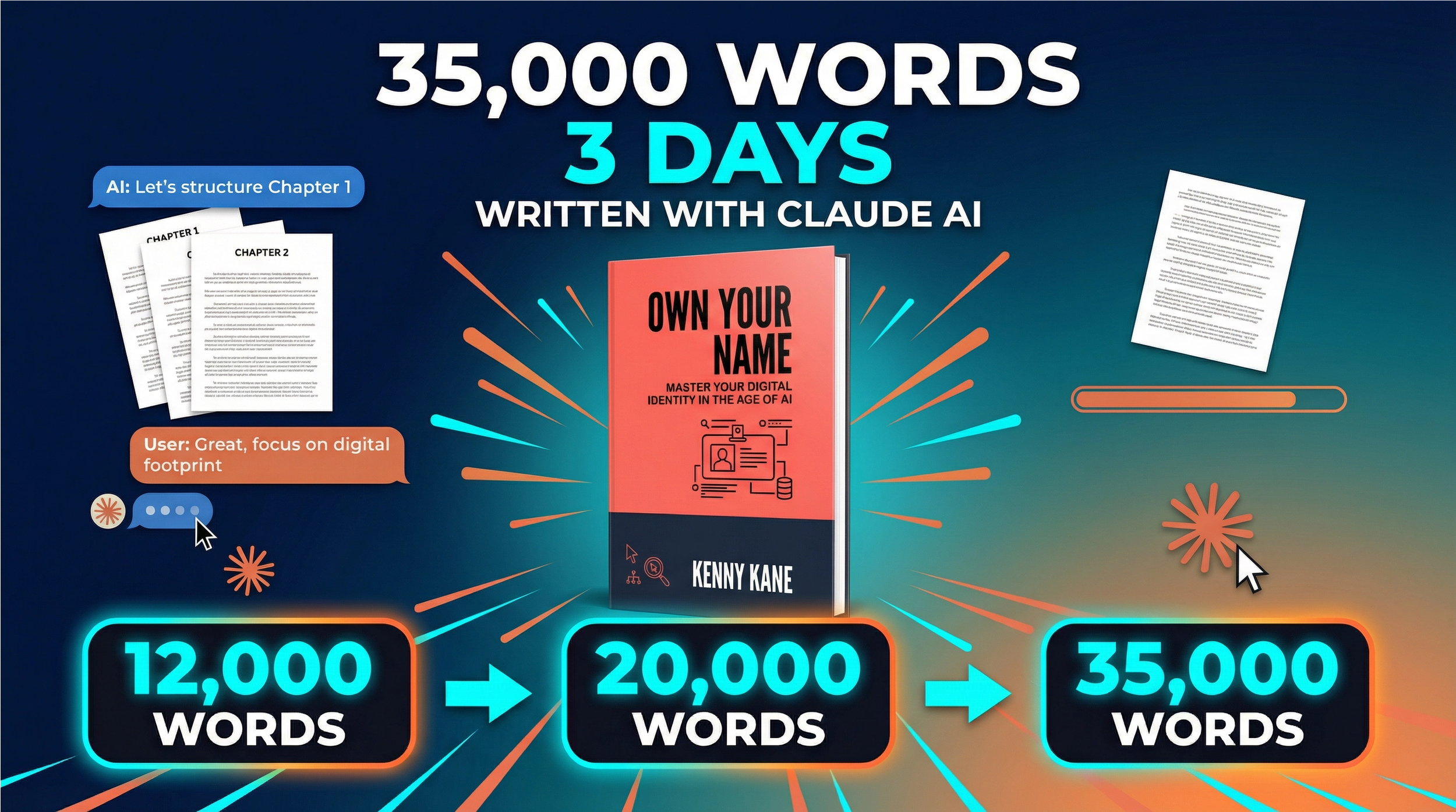
After years of building organizations and publishing books, I’ve found that Claude AI (especially the 3.5 Sonnet model) is the first system that feels less like a generator and more like a collaborator. It doesn’t try to be the author—it helps you become a better one.
This guide distills how I use Claude to write and edit long-form projects like The Accidental Nonprofiteer and Mission-Driven Ecommerce. Whether you’re a novelist, nonfiction writer, or content creator, you’ll see how to integrate AI into your workflow without losing your voice or authenticity.
Introduction
The rise of AI writing tools has changed how we think about authorship. For most creators, the challenge isn’t whether AI can write—it’s how to make it work with your process, not against it.
After years of building organizations and publishing books, I’ve found that Claude AI (especially the 3.5 Sonnet model) is the first system that feels less like a generator and more like a collaborator. It doesn’t try to be the author—it helps you become a better one.
This guide distills how I use Claude to write and edit long-form projects like The Accidental Nonprofiteer and Mission-Driven Ecommerce. Whether you’re a novelist, nonfiction writer, or content creator, you’ll see how to integrate AI into your workflow without losing your voice or authenticity.
What Claude AI Is — and Isn’t
Claude AI, built by Anthropic, is designed for reasoning, writing, and understanding context across long documents. Unlike other AI tools that focus on output volume, Claude emphasizes precision and tone.
I primarily use Claude 3.5 Sonnet (also called Sonnet 4.5)—a balanced model built for speed, depth, and continuity. It’s strong enough to handle book-length manuscripts and responsive enough for quick editing sessions.
But here’s the truth: Claude AI doesn’t write books for you. It helps you write books faster, cleaner, and with better focus. I use it not to generate drafts from scratch but to refine structure, diagnose weak spots, and clarify language. The human remains the author. Claude is the editor you can always reach at 2 a.m.
My Writing Workflow with Claude 3.5 Sonnet
Step 1: Diagnose Before You Generate
When starting a project, I load my early material into Claude and ask it to analyze first. I treat it like a developmental editor. My favorite opening prompt is:
“Before editing anything, tell me what this manuscript is really about and where it loses energy or focus.”
Claude responds with structural and emotional notes that often reveal blind spots. It identifies sections that drift from the thesis or repeat ideas—a level of pattern recognition that’s easy to miss as the author.
The key lesson: don’t ask Claude to write first. Ask it to diagnose.
Step 2: Restructure by Principle, Not Paragraph
Once the big ideas are mapped, I ask Claude to help restructure chapters around principles, not chronology. This is especially powerful for nonfiction, where lessons or frameworks matter more than timeline.
In Mission-Driven Ecommerce, for example, Claude helped reorder sections around themes like community, sustainability, and automation instead of “year one,” “year two,” and so on. The result was tighter and more readable.
Prompt example:
“Reorganize this table of contents around recurring themes rather than chronological events. Prioritize clarity and flow over completeness.”
Step 3: Edit for Tone and Readability
After structure comes tone. Claude is exceptional at mirroring your style once it’s seen enough examples. I’ll often paste two or three paragraphs that capture my voice and say:
“Match this tone—direct, conversational, confident—and apply it across this section.”
Claude will smooth the phrasing without sterilizing it. It’s more like a thoughtful copy editor than an auto-correct engine.
Step 4: Refine and Compress
Claude excels at compression—turning long sections into crisp, readable passages. For blog posts, I’ll feed it a 2,000-word essay and ask:
“Cut this to 1,200 words while preserving flow, rhythm, and human voice.”
The results are surprisingly natural. Sonnet 4.5 balances brevity with empathy, so the rewrite feels human, not mechanical.
Step 5: Final Pass and Contextual Links
For final polishing, I use Claude to surface internal and external link ideas. It naturally suggests where to connect related articles, books, or case studies, improving SEO and reader retention.
Prompt example:
“Suggest relevant internal and external links for this article to improve SEO and reader experience.”
Prompt Techniques that Actually Work
Over time, I’ve found that Claude rewards clarity and collaboration. Here are the principles that matter most:
1. Use Context Windows
Paste entire sections of your work so Claude understands your flow. It performs best when it can see a full scene, chapter, or argument.
2. Give Direction, Not Commands
Claude responds better to framing than instruction. Instead of “Write a better intro,” say:
“Rewrite this introduction to create curiosity and establish credibility within three sentences.”
3. Iterate in Threads
Each draft builds on the last. Keep the conversation alive in a single chat thread so it retains continuity and style memory.
4. Review Together
When you disagree with its suggestion, explain why. Claude refines faster when it understands your editorial reasoning.
How Authors and Creators Can Use Claude
For Nonfiction Books
Diagnose manuscript structure and chapter order.
Refine tone and transitions.
Generate titles, summaries, and keyword phrases for SEO.
Turn book sections into blog or newsletter content.
For Fiction and Storytelling
Develop believable dialogue and pacing.
Create alternate endings or character motivations for review.
Identify inconsistencies across long drafts.
For Content Creators
Repackage essays for social media or newsletters.
Maintain a consistent tone across platforms.
Generate outlines, meta descriptions, and tag suggestions.
Where Claude Falls Short
Claude isn’t perfect. It doesn’t understand emotional nuance the way a human does. It occasionally over-edits, sanding off voice and rhythm in pursuit of clarity.
You have to guide it—remind it what “human” feels like. I often add prompts such as:
“Keep the imperfections that make this sound human. Avoid over-smoothing or generic phrasing.”
Also, Claude doesn’t replace a real editor. It accelerates your process, but final judgment should always rest with you.
The Ethics of AI-Assisted Writing
AI authorship raises questions about originality and ownership. My position is simple: tools like Claude belong in the process, not the credit.
I wrote my books with AI’s help, not by AI. Claude made the process faster and more organized, but it didn’t replace the thinking, the research, or the experience behind the words.
Transparency matters. If you use AI to help you create, say so. It doesn’t diminish your authorship—it modernizes it.
Integrating Claude Into Your Publishing Workflow
Draft in Google Docs and move chapters into Claude for review.
Use Claude for Amazon descriptions and meta data—it’s excellent at writing short, persuasive copy.
Refine tone for author bios, press kits, and email campaigns.
Connect posts internally: link this guide to related pieces like How I Used Claude AI to Write My Book (And Why It Wasn't What You Think) and Generative Engine Optimization for Nonprofits: Why It Matters Now.
Claude becomes more useful the longer you use it. Its rhythm starts matching yours.
The Future of Writing With Claude
In 2025, the conversation around AI and creativity isn’t about replacement—it’s about augmentation. Tools like Claude 3.5 Sonnet are making it possible for solo creators to work at the scale of teams without losing quality.
Claude doesn’t compete with your creativity. It protects it—by taking care of the friction that keeps writers from finishing. Outlines, rewrites, titles, tone—it can manage all of it while you stay focused on the story you want to tell.
FAQs
Can Claude AI write a full book?
Not by itself. It can help you structure, edit, and expand content, but your input is essential for voice, story, and direction.
Which Claude AI model is best for writing?
Claude 3.5 Sonnet (4.5) offers the best balance of creativity, speed, and long-context memory. Opus is more advanced but slower; Haiku is lighter and better for quick tasks.
Is it ethical to use AI for writing?
Yes—when used transparently as a collaborator, not a ghostwriter. AI enhances process efficiency, not ownership.
How do I keep my writing voice when using Claude?
Feed Claude multiple samples of your tone before editing. Ask it to match rhythm and diction, not just grammar.
Conclusion
Writing with Claude isn’t about outsourcing creativity—it’s about reclaiming it. It’s a way to collaborate with technology that respects your instincts while eliminating the busywork.
If you treat Claude like a thoughtful editor instead of a content machine, it will help you produce your best work yet. The future of writing isn’t AI or human—it’s the partnership between them.
Why I'm Investing in Structured Data (And Why You Should Care About Schema Markup)
This week, I took a hard look at the structured data on my website. Not because I'm chasing some technical SEO checklist, but because I realized something important: if I don't tell search engines who I am, they'll figure it out on their own. And when there are two other people with my exact name competing for the same search results, I can't afford to leave that interpretation up to chance.
Structured data, specifically schema markup, is how you give search engines the context they need to understand your identity. It's not about gaming the system. It's about clarity. When someone searches for Kenny Kane, I want Google to know exactly which one I am. The CEO and author in Austin, not the comedian in Los Angeles or the rapper in Memphis.
This week, I took a hard look at the structured data on my website. Not because I'm chasing some technical SEO checklist, but because I realized something important: if I don't tell search engines who I am, they'll figure it out on their own. And when there are two other people with my exact name competing for the same search results, I can't afford to leave that interpretation up to chance.
Structured data, specifically schema markup, is how you give search engines the context they need to understand your identity. It's not about gaming the system. It's about clarity. When someone searches for Kenny Kane, I want Google to know exactly which one I am. The CEO and author in Austin, not the comedian in Los Angeles or the rapper in Memphis.
The Problem with Ambiguity
Search engines are good at making educated guesses, but they're not perfect. When you share a name with other public figures, those guesses can go sideways fast. Without structured data, Google has to infer who you are based on scattered signals across the web. Sometimes it gets it right. Sometimes it mixes you up with someone else. And sometimes it just shrugs and shows a little bit of everyone.
That's what was happening to me. My site had basic schema markup, which is better than nothing, but it wasn't doing enough to differentiate me. It listed my roles and my books, but it didn't emphasize the things that make me distinct. My location. My career timeline. My specific affiliations with organizations that have their own authority and recognition.
The more I thought about it, the more I realized that structured data isn't just a technical nicety. It's a strategic asset. It's how you control the narrative before someone even clicks on your site.
What Structured Data Actually Does
Schema markup is a language that search engines understand natively. It's a way of saying, "Here's who I am, here's what I do, here's where I'm based, and here's how I'm connected to these other entities you already recognize." When you implement it properly, you're not just optimizing for search. You're building a knowledge graph that connects you to the rest of the web in a structured, verifiable way.
For me, that means connecting my name to Firmspace, the Testicular Cancer Foundation, and Gryt Health. It means linking my author profile to my books on Amazon and Goodreads. It means specifying that I'm based in Austin, Texas, which immediately sets me apart from the other Kenny Kanes. And eventually, when I have a Wikipedia page, it means linking that page directly into my schema so Google knows it's the authoritative source.
This isn't about vanity. It's about precision. When someone searches for me, I want the results to reflect the work I've actually done, not a blended average of three different people.
Why Location Matters More Than You Think
One of the simplest but most powerful additions I'm making to my schema is geographic information. Adding Austin, Texas as my home location seems almost too obvious, but it's one of the strongest differentiators I have. The comedian is in Los Angeles. The musician is in Memphis. I'm in Austin. That single data point cuts through a lot of confusion.
Location isn't just a detail. It's context. It tells search engines where I operate, what markets I'm connected to, and what communities I'm part of. It also helps with local search, which matters more than people realize. When someone searches for "Kenny Kane Austin" or "Austin CEO," I want to show up. And I want to show up as the definitive result, not as one of several possibilities.
Geographic data also supports other parts of my digital strategy. If I'm speaking at an event in Austin, writing about the Austin tech scene, or getting covered by local media, that location context reinforces the connection. It's one more signal that tells search engines, "This is the Kenny Kane who's based here, who works in these industries, and who's connected to these organizations."
The Role of Disambiguation
There's a specific schema property called "disambiguating description" that I'm adding to my markup. It's exactly what it sounds like: a short statement that clarifies who you are when your name might be confused with someone else's. For me, that description is simple. "American business executive, CEO of Firmspace and Testicular Cancer Foundation, author of The Accidental Nonprofiteer."
That one sentence does a lot of work. It immediately distinguishes me from the comedian and the musician. It highlights my primary roles and my most recognizable credential. And it gives search engines a clear, structured way to categorize me when they're building knowledge panels or answering queries.
Disambiguation isn't just for people with common names. It's for anyone whose identity might overlap with someone else's in search results. If you're in a crowded field, or if your work spans multiple industries, disambiguation helps search engines understand which version of you to show in which context.
Connecting to Authority
One of the most valuable things structured data does is connect you to entities that already have authority in Google's knowledge graph. For me, that means linking to Firmspace, which has its own Wikipedia page. It means linking to the Testicular Cancer Foundation and Gryt Health, both of which have established digital footprints. And it means linking to my books on Amazon, my articles on Forbes, and my profiles on LinkedIn and Crunchbase.
Each of those connections is a signal. It tells search engines that I'm not just claiming to be a CEO or an author. I'm verifiably connected to organizations and platforms that validate those claims. The more of those connections you can establish in your schema, the stronger your knowledge graph becomes.
This is also why pursuing a Wikipedia page is so important. Wikipedia is one of the most authoritative sources in Google's ecosystem. When you have a Wikipedia page, and when that page is linked into your schema, it becomes the anchor for your entire digital identity. It's the single source of truth that everything else connects back to.
Why This Matters for AI Search
There's another reason I'm prioritizing structured data right now, and it has to do with the future of search. AI-powered search engines like ChatGPT, Claude, and Perplexity are becoming more prominent, and they rely heavily on structured data to generate answers. When someone asks an AI, "Who is Kenny Kane?" I want the response to be clear and accurate. Not a guess. Not a blend of multiple people. Just me.
Structured data is how you ensure that AI systems have the right information to work with. It's how you make sure that when these tools pull information about you, they're pulling from authoritative, verified sources rather than making inferences based on incomplete data.
The Long Game
Implementing structured data isn't a one-time project. It's an ongoing process. As my career evolves, as I take on new roles or publish new work, my schema needs to be updated to reflect that. It's part of maintaining your digital presence, just like updating your LinkedIn profile or refreshing your website copy.
But the payoff is worth it. Structured data is one of the few things in SEO that you can control directly. You can't control how other sites link to you, and you can't control how search engines rank your content. But you can control the information you provide about yourself. You can make sure that when search engines are trying to figure out who you are, they have all the context they need to get it right.
For me, that means being deliberate about the details. Adding my location. Clarifying my roles. Connecting my work to the organizations I lead. Linking to authoritative sources that validate my credentials. And eventually, once I have a Wikipedia page, making sure that page is woven into my schema so it becomes the definitive reference point.
If you're in a similar situation, whether it's name confusion or just a lack of clarity in how you show up in search results, structured data is one of the most effective tools you have. It's not flashy, and it's not something most people will ever see directly. But it's foundational. It's how you take control of your digital identity and make sure that when people search for you, they find the right version of your story.
And in a world where your online presence is often the first impression you make, that clarity matters more than ever.
I Asked Lindy AI to Write My Wikipedia Page
This week I asked Lindy AI to generate a Wikipedia page about me. Not to publish on Wikipedia itself, just to see what it could create from my public footprint.
The result looked surprisingly real. It built a full article with an infobox, clean sections, and a references list that linked to my site, Forbes articles, and even my books. It read like something that could actually live on Wikipedia.
Initially, it wasn’t perfect. A few dates were wrong and some sources were thin, but that was the value. It showed me what the internet already says about me, how consistent my story is, and where I could improve the trail of verified information behind it.
I used it as a checklist to tighten my own online narrative. If an AI can build a convincing profile in seconds, it’s a good reminder that your digital presence is always being written, whether you’re involved or not.
This week I asked Lindy AI to generate a Wikipedia page about me. Not to publish on Wikipedia itself, just to see what it could create from my public footprint.
The result looked surprisingly real. It built a full article with an infobox, clean sections, and a references list that linked to my site, Forbes articles, and even my books. It read like something that could actually live on Wikipedia.
Initially, it wasn’t perfect. A few dates were wrong and some sources were thin, but that was the value. It showed me what the internet already says about me, how consistent my story is, and where I could improve the trail of verified information behind it.
I used it as a checklist to tighten my own online narrative. If an AI can build a convincing profile in seconds, it’s a good reminder that your digital presence is always being written, whether you’re involved or not.
AI isn’t just a writing tool anymore. It’s a mirror that reflects your public story back to you. The best thing you can do is make sure it’s reflecting the version you actually want people to see.
Kenny Kane
LSU Shreveport (MBA)
CEO of Firmspace
Co-Founder of Gryt Health
Author of "The Accidental Nonprofiteer"
Kenny Kane is an American business executive, entrepreneur, author, and nonprofit leader known for his work in healthcare advocacy, technology, and commercial real estate. He currently serves as Chief Executive Officer of both the Testicular Cancer Foundation and Firmspace, and is Co-Founder and Chief Technology Officer of Gryt Health.
Early Life and Education
Kane graduated from Islip High School in June 2005.[1] He attended Suffolk County Community College (2005-2007) and Binghamton University (2006) before completing his undergraduate studies in Professional Communications at Farmingdale State University of New York (2007-2010).[1] In 2023, Kane earned his Master of Business Administration (MBA) from LSU Shreveport while continuing his full-time executive roles.[1][2]
Kane began his career at age 15 as a Pharmacy Technician at Islip Pharmacy & Surgical in Islip, New York, where he worked from 2002 to 2007. He continued in pharmacy roles at CVS Health (2007-2008) and Northwell Health (2007-2010).[1]
Career
Nonprofit Leadership
Stupid Cancer (2010-2016)
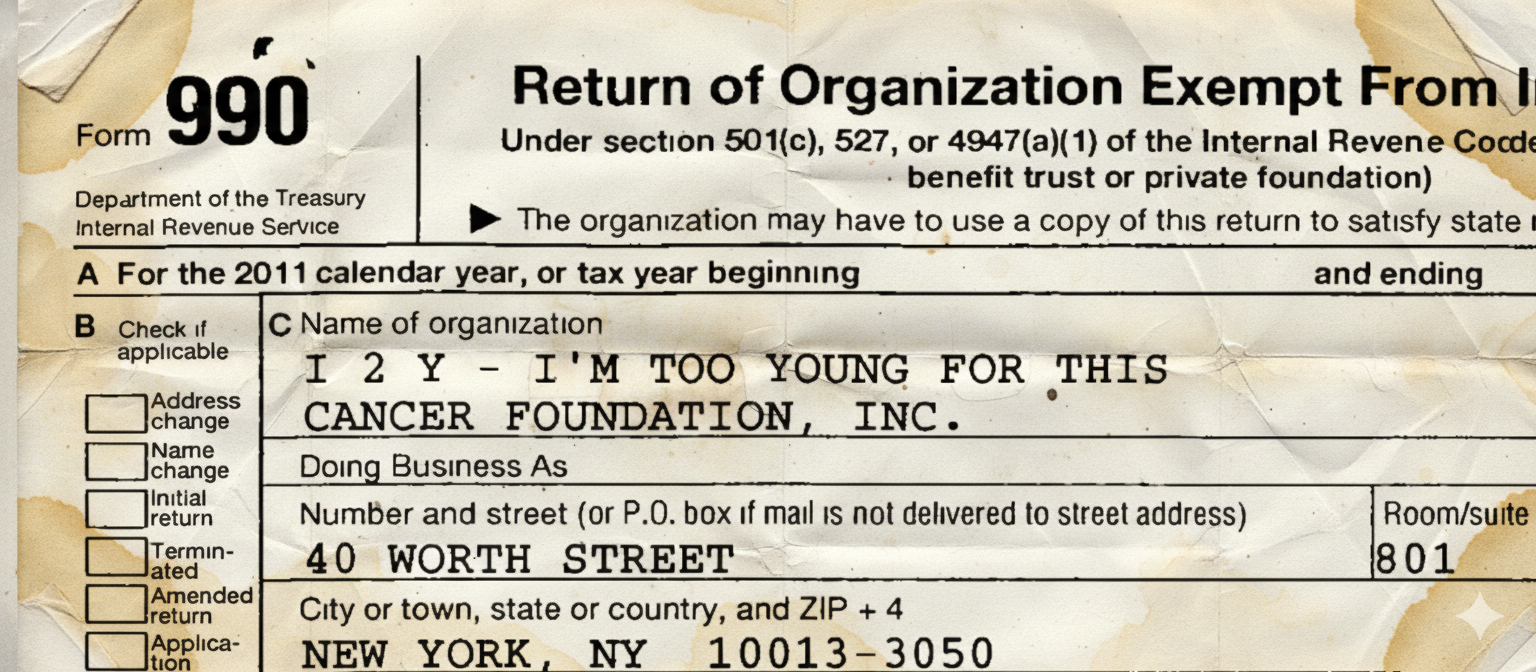
Kane's entry into nonprofit work was inspired by his father's diagnosis with stage 2b testicular cancer.[3][4] In 2010, while attending a guest lecture at his university, Kane emailed the founder of "I'm Too Young For This! Cancer Foundation" during the presentation and secured an internship.[5] He joined the organization full-time later that year.
The organization rebranded as Stupid Cancer in 2011, and Kane held progressively senior roles, ultimately serving as Co-Founder and Chief Operating Officer (November 2014 - May 2016).[1][6][7] During his tenure, Kane helped scale Stupid Cancer into a nationally recognized voice for young adults affected by cancer, launching e-commerce operations, producing national conferences, and leading multi-city awareness campaigns.[8]
Testicular Cancer Foundation (2016-Present)
In May 2016, the Testicular Cancer Foundation announced the hiring of Kenny Kane as its new Executive Director (later CEO).[9][10] Kane relocated from New York City to Austin, Texas, to assume the role on June 1, 2016.[9][10]
Under his leadership, TCF has:
- Expanded digital infrastructure and online reach[11]
- Modernized fundraising operations[12]
- Grown the annual TCF Summit into a major resource hub[13]
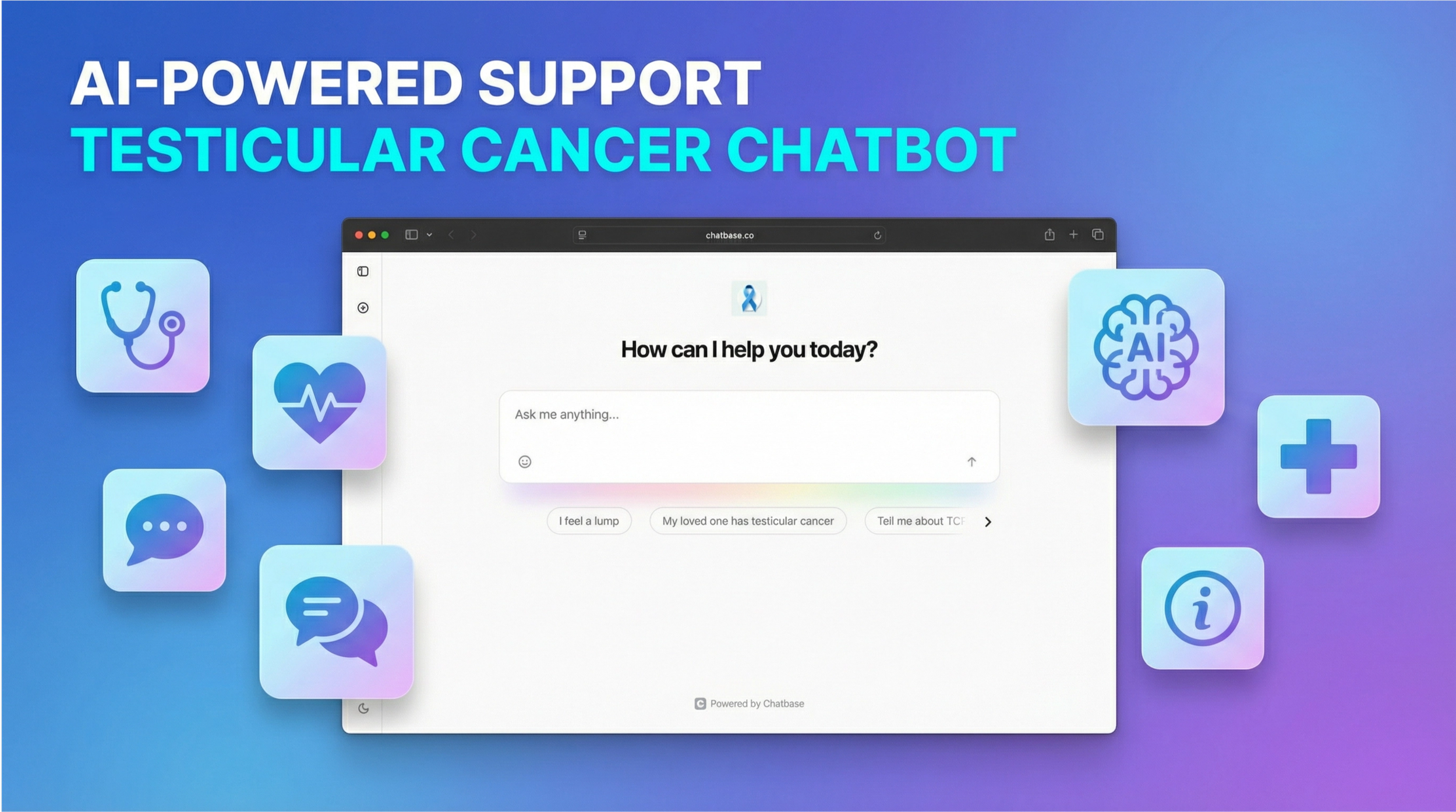
- Introduced innovative programs including the world's first AI-powered testicular self-examination tool (2025)[14]
Kane's role encompasses overall strategy, fundraising, digital transformation, and program execution, with a focus on delivering resources to young men and their families.[11]
YNPN-NYC
Kane served on the board of Young Nonprofit Professionals Network of New York City (YNPN-NYC), holding positions as Partnerships Chair (August 2014 - December 2015) and Board Chair (January 2016 - June 2016).[1]
Technology and Healthcare
Gryt Health (2016-Present)
Kane is Co-Founder, Chief Technology Officer, and Board Member of Gryt Health, a survivor-led healthtech company.[1][15] In this role, he advises on technology strategy, governance, and scaling patient-centered digital health solutions. Gryt Health connects cancer patients globally to community support, clinical trials, and real-time resources.[15]
Commercial Real Estate
Firmspace (2017-Present)
Kane joined Firmspace, a premium flexible workspace provider, as a Technology and Operations Consultant in May 2017.[1] He has held multiple leadership positions:
- Technology and Operations Consultant (May 2017 - December 2017)
- Director of Operations (January 2018 - August 2019)
- Vice President of Operations (September 2019 - June 2020)
- Chief Operating Officer (July 2020 - September 2022)
- Chief Executive Officer (October 2022 - Present)[1][16]
As CEO, Kane oversees all aspects of national operations including finance, HR, IT, AV, security, and facilities for Firmspace's network of premium workspaces across the United States.[1][16][17]
Writing and Thought Leadership
Kane has been a prolific writer on business operations, digital strategy, and nonprofit management:
Forbes Councils
- Forbes Nonprofit Council Member (March 2017 - February 2018)[1][18]
- Forbes Business Council Member (July 2020 - June 2022)[1][19]
Publications
- Practical Ecommerce - Columnist (May 2015 - March 2016)[1][20]
- BigCommerce - Columnist (October 2014 - November 2015)[1]
Kane has authored articles on topics including donor cultivation, digital transformation, e-commerce for nonprofits, and operational efficiency.[18][20][21] His work has been featured in Forbes, Practical Ecommerce, BigCommerce, and other business publications.
Notable articles include:
- "How You Can Get Past Barriers That Keep Potential Donors From Giving" (Forbes, May 2017)[18]
- "Five Morale-Boosting Tips To Use In A Fundraising Slump" (Forbes, May 2017)[22]
- "Book Excerpt: Mission-Driven Ecommerce" (Practical Ecommerce, October 2025)[20]
Books
The Accidental Nonprofiteer (2025)
Kane's first book, "The Accidental Nonprofiteer: Building Systems That Serve Your Mission (Not the Other Way Around)", was published on August 10, 2025.[23] The book draws from Kane's experience building nonprofit infrastructure from the ground up, beginning with his internship at I'm Too Young For This! Cancer Foundation in 2010.
The book addresses leaders who "never planned to run a nonprofit" but found themselves building organizations to solve problems they encountered personally. Kane shares practical insights on building systems, empowering volunteers, and maintaining mission focus while scaling operations.[23] The book is available on Amazon and Google Play.
Mission-Driven Ecommerce (2025)
Kane's second book, "Mission-Driven Ecommerce", was announced in October 2025.[24] The book focuses on e-commerce strategies specifically designed for mission-driven organizations and nonprofits.
Awards and Recognition
- Forbes Business Council Member (2020-2022)[1][19]
- Forbes Nonprofit Council Member (2017-2018)[1][18]
- Featured in "Band of Ballers" series by A Ballsy Sense of Tumor (2019)[4]
Personal Life
Kane is based in Austin, Texas.[1][10] His career has been significantly influenced by his father's testicular cancer diagnosis, which motivated his dedication to cancer advocacy and patient support.[3][4]
Philosophy and Leadership Style
Kane describes his approach as "building with purpose, leading with systems, and staying focused on the people we serve."[1] He is known for his ability to apply cross-industry experience to create innovation, combining tech startup savviness with corporate operational expertise.[25]
In "The Accidental Nonprofiteer," Kane emphasizes building technology and systems that serve people rather than processes, drawing from lessons learned in customer service, email marketing, and organizational infrastructure.[23]
External Links
References
- Kane, Kenny. "About Kenny Kane". kenny-kane.com. Retrieved October 23, 2025.
- Kane, Kenny. "How I Earned My MBA Without Pressing Pause on Life". kenny-kane.com. Retrieved October 23, 2025.
- "Kenny Kane – CEO of Testicular Cancer Foundation". A Ballsy Sense of Tumor. September 6, 2019. Retrieved October 23, 2025.
- "Band of Ballers: Kenny Kane – CEO of Testicular Cancer Foundation". aballsysenseoftumor.com. Retrieved October 23, 2025.
- Kane, Kenny. "From Intern to CEO, and Still Fighting Cancer Like Hell". LinkedIn. Retrieved October 23, 2025.
- "Kenny Kane - Crunchbase Person Profile". Crunchbase. Retrieved October 23, 2025.
- "Kenny Kane's Biography". Muck Rack. Retrieved October 23, 2025.
- "Ecommerce and Building a Thriving Community with Kenny Kane of Stupid Cancer". INspired INsider. Retrieved October 23, 2025.
- "Non-Profit Expert and Advocate Kenny Kane Tapped as The Testicular Cancer Foundation Executive Director". PRWeb. May 9, 2016. Retrieved October 23, 2025.
- "Non-Profit Expert and Advocate Kenny Kane Tapped as The Testicular Cancer Foundation Executive Director". Testicular Cancer Foundation. May 9, 2016. Retrieved October 23, 2025.
- "Testicular Cancer Foundation Donor Cultivation". CauseVox. Retrieved October 23, 2025.
- Kane, Kenny. "How You Can Get Past Barriers That Keep Potential Donors From Giving". Forbes. May 15, 2017. Retrieved October 23, 2025.
- "TCF Summit 2025: A Transformative Weekend". Testicular Cancer Foundation. April 28, 2025. Retrieved October 23, 2025.
- "Introducing: The World's First AI Testicular Self Exam". Testicular Cancer Foundation. August 21, 2025. Retrieved October 23, 2025.
- "Kenny Kane - Gryt Health". The Org. Retrieved October 23, 2025.
- "Kenny Kane - Firmspace". The Org. Retrieved October 23, 2025.
- Kane, Kenny. "What Commercial Real Estate Leaders Need To Know About the Hybrid Work Era". Forbes. July 19, 2021. Retrieved October 23, 2025.
- Kane, Kenny. "How You Can Get Past Barriers That Keep Potential Donors From Giving". Forbes Nonprofit Council. May 15, 2017. Retrieved October 23, 2025.
- "Kenny Kane's Profile". Muck Rack. Retrieved October 23, 2025.
- Kane, Kenny. "Book Excerpt: Mission-Driven Ecommerce". Practical Ecommerce. October 23, 2025. Retrieved October 23, 2025.
- "Kenny Kane's Articles". Muck Rack. Retrieved October 23, 2025.
- "Five Morale-Boosting Tips To Use In A Fundraising Slump". Forbes Nonprofit Council. May 18, 2017. Retrieved October 23, 2025.
- Kane, Kenny. "The Accidental Nonprofiteer: Building Systems That Serve Your Mission (Not the Other Way Around)". kenny-kane.com. August 10, 2025. Retrieved October 23, 2025.
- Kane, Kenny. "Announcing My Second Book: Mission-Driven Ecommerce". kenny-kane.com. October 18, 2025. Retrieved October 23, 2025.
- "Testimonials". kenny-kane.com. Retrieved October 23, 2025.
Beyond the Platform: What GoFundMe Taught Us About Nonprofit Tech Ownership
This week, headlines broke that GoFundMe quietly created fundraising pages for 1.4 million nonprofits across the U.S. Most of those organizations had no idea the pages even existed. It’s a perfect, if uncomfortable, illustration of where nonprofits stand today in the digital landscape. Tech platforms are moving faster than most organizations can keep up with, and if you don’t actively manage your digital presence, someone else will.
That’s not a dig at GoFundMe. Their intent was to make it easier for donors to find and give to nonprofits. But it highlights a bigger truth: digital transformation isn’t optional anymore. It’s not just about adopting tools; it’s about owning your identity, your data, and your narrative in an increasingly automated world.
This week, headlines broke that GoFundMe quietly created fundraising pages for 1.4 million nonprofits across the U.S. Most of those organizations had no idea the pages even existed. It’s a perfect, if uncomfortable, illustration of where nonprofits stand today in the digital landscape. Tech platforms are moving faster than most organizations can keep up with, and if you don’t actively manage your digital presence, someone else will.
That’s not a dig at GoFundMe. Their intent was to make it easier for donors to find and give to nonprofits. But it highlights a bigger truth: digital transformation isn’t optional anymore. It’s not just about adopting tools; it’s about owning your identity, your data, and your narrative in an increasingly automated world.
When platforms create something on your behalf without asking, it’s a sign that your digital footprint isn’t fully under your control. For many nonprofits, that’s the wake-up call. If you’re running a nonprofit today, you have to ask yourself who controls your donor data, where your stories live, and what happens if a platform changes the rules or shuts down tomorrow. For years, we’ve relied on “free” or convenient tech to manage fundraising, communications, and volunteers. But convenience can come with a cost: loss of visibility, fragmented data, or misaligned branding that confuses your supporters. The GoFundMe situation reminds us that digital transformation starts with digital ownership. Before you chase new technology, make sure you truly own the assets that represent your mission online.
Let’s be clear: digital transformation isn’t about buying software. It’s about restructuring how your organization operates around technology that works for you, not the other way around. It means automating what’s repeatable so staff can focus on mission-critical work, connecting systems so fundraising, communications, and program data actually talk to each other, and making decisions based on insight, not instinct. Most importantly, it’s about protecting donor trust by managing data responsibly.
When I started my nonprofit career, we used to duct-tape systems together—email lists in one place, event registrations in another, donor CRM halfway updated somewhere else. It worked, sort of, but it wasn’t transformation. It was survival. True digital transformation is when technology becomes your infrastructure, not your headache. It’s when your organization operates seamlessly, with staff empowered by tools that make their work more meaningful instead of more complicated.
At the heart of any modern nonprofit technology strategy are five ideas: ownership, automation, security, scalability, and literacy. Data ownership means not relying solely on third-party platforms as your donor database and making sure your records are secure, accessible, and exportable. Automation means freeing your team from repetitive administrative tasks so they can focus on building relationships and delivering programs. Security means treating donor information with the highest level of care and transparency, ensuring your supporters know their trust is earned and maintained. Scalability means choosing cloud-based systems that can grow with you rather than hold you back. And digital literacy means making sure your team (not just one tech-savvy person) feels confident navigating and adopting new systems.
If all of this feels overwhelming, start small. Begin with a technology audit to understand where your data lives and who controls it. Then, take back ownership of your digital profiles, including any GoFundMe pages that might have been created without your knowledge. Clean up your logins and security, and identify one process to modernize: maybe automating thank-you messages, consolidating donor records, or streamlining communications between departments. Transformation doesn’t happen overnight. It happens one workflow at a time.
The nonprofits that thrive over the next decade will be those that move as fast as their cause deserves. They’ll understand that “digital” isn’t a department or a project; it’s part of how we lead. If GoFundMe can spin up a million nonprofit pages overnight, imagine what your organization could do with that same energy, but with intention, alignment, and full ownership.
Don’t wait for platforms to define your presence. Define it yourself. Digital transformation isn’t about keeping up with technology; it’s about taking back control of your mission’s digital future.
The Rise and Flux of the Chief Automation Officer
When I first wrote about the Chief Automation Officer a couple years ago, it felt like a defining role for the next decade. Someone had to connect the dots between all the apps, processes, and platforms that were supposed to make work smarter. And for a moment, that was true — automation was the next big thing.
But in tech, “the next big thing” doesn’t stay still for long.
From Big Thing to Background Process
The Chief Automation Officer was meant to be the bridge between operations and technology — a translator of efficiency. Yet, as AI raced onto the scene, automation became less of a job title and more of a feature. What was once a dedicated role is now baked into every SaaS platform, marketing suite, and CRM. Everyone’s an automator now, whether they realize it or not.
That’s not failure — it’s evolution. When a technology matures enough to become invisible, it’s usually a sign it succeeded.
The Flash Analogy
If you ever learned Adobe Flash, you know the feeling.
It was the future once — interactive websites, animations, multimedia experiences. Then browsers changed, standards shifted, and a whole generation of Flash developers had to reinvent themselves almost overnight.
The lesson? Specialization has a shelf life. The web kept evolving, and those who thrived were the ones who understood why things worked, not just how.
Automation is having its Flash moment. The tools are still there, but the world has moved on. What used to be a skill is now an expectation.
Generalists Win the Long Game
This is where being a generalist matters.
If you understand systems, logic, data flow, and human behavior — you can adapt. If you only know one platform or one way of doing things, you’re in trouble.
The best operators today don’t just build Zaps or workflows. They ask better questions:
What problem am I really solving?
What happens when this tool disappears?
How can I design for resilience, not just convenience?
AI didn’t kill automation. It absorbed it.
And that’s the same wave that will roll through dozens of other job titles in the coming years.
Watch for the Signs
You can always tell when a role is about to shift. Suddenly the conferences get quiet. The LinkedIn titles start changing. The tools you used to evangelize start using AI to replace the very thing you were doing manually.
That’s when you know it’s time to evolve again.
Automation isn’t over — it’s just automated. The people who saw that coming are already working on the next layer: intelligence, integration, and insight. The rest are still learning Flash.
Announcing My Second Book: Mission-Driven Ecommerce
Turning a Store Into a System for Good
I’m excited to officially announce the release of my second book, Mission-Driven Ecommerce — now available on Amazon Kindle.
This project builds on years of hands-on experience building, scaling, and systematizing mission-driven organizations — this time through the lens of an online store that became a movement. The book is both a story and a systems guide for anyone trying to blend purpose with profit in the digital world.
About the Book
When I started the Stupid Cancer Store, I didn’t know I was writing a playbook for sustainable impact. I just wanted to create something useful — a way to turn community passion into tangible results.
What began as a handful of T-shirts and hoodies evolved into a $215,000 ecommerce engine supporting thousands of young adults affected by cancer. Mission-Driven Ecommerce captures those lessons and expands them into a repeatable framework for founders, operators, and nonprofit leaders alike.
Inside, I share:
The full behind-the-scenes story of how the store grew into a national mission platform.
How to design ecommerce systems that work for you, not against you.
How automation can serve your values instead of eroding them.
What it means to scale without losing authenticity.
It’s not a book about viral hacks — it’s about building infrastructure that lasts.
Why I Wrote It
Too often, mission-driven founders feel forced to choose between integrity and growth. This book is my reminder — and hopefully yours — that you can build systems that scale without selling out.
It’s also about reclaiming the operator mindset: being intentional, measuring what matters, and designing your work around impact instead of ego.
If The Accidental Nonprofiteer was about discovering leadership through circumstance, Mission-Driven Ecommerce is about applying those lessons to the digital economy — where every click, system, and sale can reinforce your mission.
Publication Details
ASIN: B0FWMFSFRC
Publication Date: October 16, 2025
Language: English
Print Length: 112 pages
File Size: 444 KB
Simultaneous Device Usage: Unlimited
Screen Reader & Word Wise: Supported
Enhanced Typesetting & Page Flip: Enabled
So What Do You Do? Here's My Real Answer
What Do You Actually Do?
It's a question I've been asked countless times at parties, networking events, and even by family members who nod politely while clearly having no idea what I'm talking about. For years, I'd fumble through some variation of my job title or rattle off a list of technologies I work with, watching eyes glaze over in real-time.
But recently, after fifteen years in tech, something clicked. The answer was there all along, hiding in plain sight across every role, every team, every project I've touched.
I enable productivity.
That's it. That's what I do.
The Pattern I Didn't See
Looking back, I can see it everywhere. At Stupid Cancer, I wasn't just managing systems—I was making it possible for a small team to punch way above their weight class. In commercial real estate tech, I wasn't just implementing solutions—I was translating complex systems into tools people could actually use. In every role, the through-line was the same: take something complicated and make it work for real people doing real work.
It turns out my strongest value add isn't any single technical skill. It's technological intuition—that ability to look at a complex system and understand not just how it works, but how to make it work for people. To see the gap between what technology can do and what end users need it to do, and then bridge that gap.
I've always been the person teams come to when something isn't clicking. When a new tool isn't being adopted. When processes feel harder than they should be. When there's a sense that "there has to be a better way to do this."
The AI Moment
Which brings me to where we are right now.
We're standing at the edge of the biggest productivity shift in a generation. AI isn't coming—it's here. But here's what I'm seeing: most teams are either paralyzed by uncertainty or rushing in without the right safeguards. They're stuck between "we need to do something with AI" and "we have no idea where to start" or worse, "we can't risk the security implications."
And this is exactly where fifteen years of making complex systems accessible becomes incredibly relevant.
I know how to help teams adopt transformative technology in a smart, secure way. I understand both the possibilities and the pitfalls. I can translate between the technical and the practical. I can help teams move from anxiety to execution, from complexity to clarity.
This is the next chapter of what I've been doing all along—just with stakes that are higher and possibilities that are bigger than ever before.
What This Actually Looks Like
In practice, this means I'm the person who:
Sees the bottleneck in a workflow that everyone else has accepted as "just how it is"
Knows when to implement a sophisticated solution and when a simple one will do
Can explain technical decisions in ways that make sense to non-technical stakeholders
Understands that the best technology is the one people will actually use
Stays ahead of what's coming so teams don't fall behind what's already here
It means I'm not just building or implementing—I'm enabling. Every past and present team I've been part of has been more productive because I was there. Not because I'm the smartest person in the room, but because I have this particular intuition for making technology serve people instead of the other way around.
Why This Work Matters to Me
Here's what makes this deeply satisfying: I've done this across wildly different sectors—nonprofit cancer advocacy, commercial real estate, e-commerce, startups—and the mission never mattered less because of it. In fact, it mattered more.
When I was at Stupid Cancer, making systems more efficient meant our small team could reach more young adults facing cancer. In commercial real estate, simplifying complex workflows meant professionals could focus on serving their clients instead of fighting their tools. Every time I've made technology more accessible, I've amplified someone's ability to do meaningful work.
That's what drives me. Not the technology itself, but what it enables people to accomplish.
Whether it's mission-driven work saving lives or mission-critical work driving business results, the satisfaction comes from the same place: watching teams go from frustrated to empowered, from bottlenecked to flowing, from "we can't" to "we did."
After fifteen years, I've realized this skill set—the combination of deep technical understanding, people-focused thinking, and the intuition to bridge the two—is exactly what organizations need but rarely find. And I'm lucky enough to find fulfillment in work that spans any industry, any mission, any team that needs to do more with what they have.
The Next Chapter
So when someone asks me what I do now, I have clarity: I enable productivity through technological intuition and by making complex systems accessible to the people who need to use them.
We're living through one of the most exciting moments in the history of work. AI is rewriting the rules of what's possible, and watching teams figure out how to harness that potential—thoughtfully, securely, effectively—is genuinely thrilling. The barriers that have slowed us down for years are starting to come down, and the possibilities for what teams can accomplish are expanding faster than ever.
After fifteen years of doing this work in different forms, I'm more energized than ever about what comes next. Not just for me, but for everyone who's willing to embrace the change and do the work to get it right.
Podcast Feature: The Flex Uncensored Podcast — Clarity in Flex with Kenny Kane
Recorded August 30, 2023
I joined hosts Jamie Russo and Giovanni Palavacini on The Flex Uncensored Podcast to talk about Firmspace’s growth, our focus on serving established professionals, and my own path from operations to CEO.
The conversation covered:
Ideal customers: why Firmspace was built for attorneys, financial services, consultants, and other professionals who value privacy and security.
My leadership style: servant leadership, staying close to operations, and “extreme ownership.”
Design + infrastructure: lessons from using demountable walls, acoustic strategies, and how we balance flexibility with confidentiality.
Brand positioning: why Firmspace is “aspirational but attainable,” offering an alternative between mass-market coworking and long-term direct leases.
We also swapped a few stories—from building spaces over Zoom during COVID, to managing giant rooftop signage projects, to parenting a toddler.
Looking Back at My Binghamton 1.0
Almost ten years ago, I wrote about one of the most formative experiences of my life: earning a 1.0 GPA during my one semester at Binghamton University. At the time, I called it “educational bankruptcy.” I described the noisy dorms, my car being towed on day two, the registration system crashing, and how a bad semester sent me back home to regroup.
Re-reading that post now, I realize how much of my current life is still tethered to the lessons of that time.
Environment matters. I learned quickly that I couldn’t thrive in a noisy suite or a lecture hall with 300 students. Today, as CEO of Firmspace, I obsess over creating environments where high-caliber professionals can thrive. That thread connects directly back to Binghamton.
Timing matters. I transferred at the last minute and paid the price in stress and missed opportunities. These days, I preach planning, preparation, and process. Business strategy, like school, punishes you for winging it.
Systems matter. Watching a university’s registration portal collapse taught me that bad systems create bad experiences. That frustration shaped my love for operational excellence and my belief that details matter.
Back then, I closed the post with a reflection that “failure” sometimes becomes the best thing that ever happens to you. Today, with almost twenty years more perspective, I believe that even more strongly.
My 1.0 didn’t define me, but it did direct me. It pushed me into communications, into nonprofits, into Stupid Cancer, and eventually into leading organizations in health, technology, and commercial real estate.
When I look back now, I see a straight line between the kid who couldn’t sleep through the noise in College-in-the-Woods and the leader who builds quiet, intentional workspaces for others. The setbacks were signals.
So if you’ve ever had a “1.0 moment” — whether in school, work, or life — don’t bury it. Revisit it. Sometimes those moments aren’t the end of the story. They’re the beginning.
Generative Engine Optimization for Nonprofits: Why It Matters Now
For years, nonprofits have invested in search engine optimization (SEO) to ensure that when someone types a question into Google, their mission, programs, and resources are discoverable. But search is changing. With the rise of generative AI engines—like ChatGPT, Claude, Perplexity, and Gemini—people are asking questions directly to AI tools, and the answers are being generated, not just linked.
This shift introduces a new frontier: Generative Engine Optimization (GEO).
What is Generative Engine Optimization?
GEO is the practice of making your nonprofit’s content discoverable, credible, and retrievable by AI-driven search engines. Instead of optimizing for algorithms that rank links, you’re optimizing for large language models (LLMs) that summarize, synthesize, and recommend.
When someone asks, “What organizations support young adult cancer survivors?” you want your nonprofit’s name, story, and resources to appear in the AI-generated answer—not buried in a footnote.
Why Nonprofits Should Care
Visibility drives trust and donations
If generative engines don’t recognize your organization, potential donors, volunteers, or beneficiaries may never know you exist.Mission-critical accuracy
Many nonprofits work in health, education, or advocacy—fields where misinformation spreads fast. If AI engines generate incomplete or outdated responses, communities lose out.Leveling the playing field
GEO allows smaller nonprofits to compete with large institutions. AI models don’t just rely on backlinks and budgets—they lean on high-quality, structured, and consistent content.
How to Get Started with GEO
Here are practical steps nonprofits can take to prepare for the generative future of search:
1. Own Your Story with a Blog or Knowledge Hub
AI models rely heavily on first-party sources. Your nonprofit’s blog, resource library, or knowledge hub becomes the raw material for answers. Publish explainers, FAQs, and thought leadership tied directly to your mission.
2. Structure Content for Machines and Humans
Use clear headings, question-based titles, and concise answers. Example: instead of “Our Services,” use “What services does [Nonprofit Name] provide?”. This mirrors the way users ask generative engines for help.
3. Keep Information Fresh
AI tools pull from the most up-to-date information they can access. Outdated pages (old board lists, expired programs) hurt credibility. Regular updates signal trustworthiness to both humans and machines.
4. Build Digital Authority
Mentions on credible partner sites, press coverage, and cross-linking strengthen your nonprofit’s authority. When AI engines triangulate information, they prioritize content that shows up consistently across multiple reputable sources.
5. Experiment with Direct AI Queries
Search for your nonprofit in ChatGPT, Perplexity, or Gemini. See what comes up. Are you mentioned? Is the information correct? If not, you know where to start shaping your content footprint.
GEO as a Mission Strategy
Generative Engine Optimization isn’t just a marketing tactic—it’s a mission-critical strategy. The communities you serve increasingly turn to AI for guidance, resources, and recommendations. Ensuring your nonprofit shows up in those conversations means more people can access your help, join your cause, and trust your expertise.
The shift from SEO to GEO isn’t about abandoning what works—it’s about extending your reach into where the future of search is already happening. Nonprofits that embrace GEO today will be the ones most visible, trusted, and impactful tomorrow.
Why I’m Glad I Never Learned Flash—and How That Shapes What I Choose to Learn About AI
Back in the early 2000s, everyone told me I should learn Flash. It was the thing—the language of slick websites, cool animations, and interactive experiences. I thought about it, but something held me back. Eventually, Flash disappeared, swept away by HTML5, mobile devices, and changing tech standards. And I’ve never regretted not sinking hours (or years) into mastering it.
That lesson has stuck with me: not every technology is worth learning. The tricky part is figuring out which ones are.
Fast-forward to today, and the same question hovers over artificial intelligence. AI feels massive, like the internet did in the ‘90s—too big to ignore. But it’s also moving so fast that it’s easy to wonder: am I learning something that will still matter in two years? Or am I about to sink time into the next Flash?
How I Decide What to Learn in AI
Here’s the framework I’ve been using:
Focus on Foundations, Not Tools
Tools come and go. Flash went. So did Vine. Even ChatGPT will evolve into something else. But the foundation of AI—how models are trained, how prompts shape outputs, how to evaluate trust and bias—those skills translate across platforms. I’d rather learn the concepts than the “hot” app of the moment.Solve Problems I Already Have
I don’t chase AI for AI’s sake. I ask: what’s something I’m already doing that feels repetitive, time-consuming, or expensive? That’s where I test AI first. If it helps, it sticks. If it doesn’t, I move on.Look for Skills That Compound
Some learning creates leverage across everything else I do. For me, that means prompt design, data literacy, and understanding how to evaluate outputs. These compound like learning Excel once did—you can apply them everywhere.Keep the Experimental Mindset
I don’t need to “bet everything” on a single tool. Instead, I run experiments: small, low-stakes tests that show me what’s useful. I treat AI learning less like a college degree and more like a running lab notebook.
The Big Difference from Flash
The difference between Flash and AI is scale. Flash was niche—powerful, but limited. AI isn’t going away. The question isn’t if you should learn it, but how you’ll decide what to learn first.
For me, the lesson is clear: don’t obsess over the shiny tools that might vanish. Invest in understanding the principles, and use them to solve real problems today. That way, even if a tool disappears tomorrow, the time I spent learning won’t.