Claude for Writing a Book: How I Actually Use Claude to Draft, Revise, and Finish Books
Introduction
If you're researching whether Claude can help you write a book, you've probably found a lot of theoretical advice from people who haven't actually done it. I have. I've used Claude as a co-writing partner for multiple book projects, including business books and memoirs, and I can tell you exactly what works, what doesn't, and why most people get this wrong.
The short answer: Claude is an exceptional writing partner when you treat it as a system, not a shortcut. It excels at structure, iteration, and maintaining consistent voice across long-form projects. It fails spectacularly when you ask it to replace your thinking, experience, or editorial judgment.
This guide covers the complete end-to-end workflow I've developed through real book projects—not experiments or blog posts stretched to book length, but actual books with ISBNs that people buy and read. You'll see my exact process, the prompts I use, where Claude adds genuine value, and where I insist on human control.
If you're serious about writing a book with AI assistance, this is the system that actually gets you to publication.
I've shared my experience with Claude in How I Used Claude AI to Write My Book (And Why It Wasn't What You Think) and outlined broader principles in How to Use Claude AI for Writing Books and Content. Still, this guide consolidates everything into a complete, actionable system you can follow from concept to finished manuscript.
Can Claude Write a Book?
The honest answer: Yes, with significant caveats.
Claude can write a book in the same way a skilled assistant can draft chapters based on your outline and feedback. It cannot write a book that represents original insight, lived experience, or synthesized wisdom without you providing those elements.
Where Claude Excels in Book Writing
Structural consistency: Claude maintains narrative threads, tonal consistency, and structural logic across 50,000+ words better than most human first drafts. If you're writing a business book with recurring frameworks, Claude won't accidentally contradict chapter 3 in chapter 12.
Iterative revision: The real magic isn't the first draft—it's the revision cycle. Claude can take your editorial direction ("make this section more concrete," "this reads too academic," "add a transition here") and execute it faster than rewriting yourself.
Voice preservation: Once you calibrate Claude to your voice (more on this below), it maintains that voice with surprising consistency. This is especially valuable for memoirs and narrative nonfiction where tonal shifts destroy reader trust.
Overcoming blank page paralysis: Claude gives you something to react to. For many writers, editing 2,000 words of "pretty good" is easier than generating 500 words of perfect prose from nothing.
Where Claude Cannot Replace You
Original insight: Claude cannot think new thoughts. It can articulate, organize, and refine your ideas, but the actual intellectual contribution must come from you. If your book doesn't have a point of view that emerged from your experience or research, Claude will produce competent but hollow prose.
Lived experience: Memoir, case studies, and narrative nonfiction require specific details that only you possess. Claude can help you structure those details, but it cannot invent the moment your co-founder quit or the exact feeling of your first product launch.
Final judgment: Claude will confidently produce mediocre work if you don't catch it. You need the editorial eye to know when a section misses the mark, when an example falls flat, or when the pacing drags. AI assistance doesn't eliminate the need for craft—it amplifies it.
Ethical boundaries: If you're using Claude to write a book, you're using AI assistance. That's fine. But presenting AI-generated content as purely human-written, especially in memoir or expertise-based nonfiction, crosses an integrity line. Be transparent about your process when appropriate.
The Critical Distinction: Co-Writing vs. Ghostwriting
Think of Claude as a co-writer who needs constant direction, not a ghostwriter who takes your ideas and runs with them. Ghostwriters bring their own expertise and judgment. Claude brings execution speed and consistency, but you're the one providing direction, quality control, and the ideas worth writing about.
If you can't clearly articulate what your book is about, who it's for, and why you're the person to write it, Claude won't fix that. It will just help you produce a well-structured version of an unclear idea.
Why I Use Claude for Long-Form Writing (Not ChatGPT)
I've tested most major AI writing tools for book-length projects. Claude consistently wins for long-form work, and the reasons are specific enough that they matter for your decision.
Context Window Advantages
Claude's 200,000 token context window means I can keep an entire book manuscript, outline, and editorial notes in a single conversation. This is transformative for revision. When I ask Claude to "make chapter 8 align better with the framework from chapter 2," it actually remembers chapter 2 in detail—not as a vague summary, but with specific language and examples.
With smaller context windows, you're constantly re-explaining your book's structure, voice, and thesis. That overhead kills productivity and introduces inconsistency.
Revision Quality Over Generation Speed
ChatGPT generates prose faster. Claude revises prose better. For book writing, revision quality matters more than generation speed because you're not racing to publish—you're racing to publish something good.
Claude's revisions feel more considered. When I ask it to "tighten this section and add a concrete example," it doesn't just swap generic words or drop in a Wikipedia-level example. It reads the surrounding context and makes edits that genuinely improve the work.
Voice Preservation Across Sessions
I've written multiple books with Claude, and each required a distinct voice. Claude can hold that voice across weeks of work without drift. This isn't magic—it requires deliberate calibration (covered below)—but once calibrated, Claude doesn't suddenly shift from conversational to academic or from analytical to flowery.
This consistency is especially critical for memoirs and narrative nonfiction where voice is half the product.
Lower "Hallucinated Confidence" in Prose
Claude hedges more than ChatGPT, which sounds like a weakness but is actually a feature for book writing. When Claude doesn't know something, it tends to write around it or signal uncertainty rather than confidently inventing facts.
This matters because books require fact-checking and credibility. I'd rather edit cautious prose than chase down fabricated statistics or invented quotes that sound plausible.
For a deeper look at how Claude's iterative approach differs from generation-focused tools, see my analysis in How to Use Claude AI for Writing Books and Content.
My Actual Workflow for Writing a Book With Claude
This is the system I've refined through multiple book projects. It's not the only way to work with Claude, but it's the workflow that consistently gets me from concept to finished manuscript.
Stage 1: Concept Framing (Human-Led)
What I do: Before I touch Claude, I write a one-page concept document that answers:
What is this book's core argument or narrative?
Who is this book for, specifically?
What does the reader know/believe/do differently after reading it?
What makes me credible to write this?
What Claude does: Nothing yet. This stage is purely human thinking. If you can't answer these questions clearly, Claude will amplify your confusion, not resolve it.
Why this matters: Claude needs constraints to be useful. "Help me write a book about leadership" produces generic slop. "Help me write a book for nonprofit executive directors who are struggling with board dynamics, using my 15 years of nonprofit leadership experience as the foundation" gives Claude enough direction to be genuinely helpful.
Stage 2: Chapter Outline Generation (Collaborative)
What I do: I give Claude my concept document and ask it to generate a chapter-level outline. I'm explicit about book length (usually 40,000-60,000 words for business books), chapter count (typically 10-15), and structural preferences (do I want case studies? exercises? summaries?).
Example prompt:
I'm writing a [genre] book for [specific audience] about [core topic]. The book's thesis: [your one-sentence argument]The reader transformation: They currently [state A] and will finish [state B]Generate a 12-chapter outline where:- Each chapter builds logically on the previous- Chapters are 3,000-4,000 words each- Each chapter includes: key concept, supporting examples, and a practical takeaway- The first chapter hooks the reader, the last chapter sends them off with momentumHere's what I know about the topic: [your specific knowledge/experience]What Claude does: It produces a structured outline with chapter titles, main points, and flow. This first draft is rarely perfect, but it gives you architecture to react to.What I do next: I revise heavily. I move chapters, combine weak sections, add topics Claude missed, and delete anything that feels like filler. This edited outline becomes the book's skeleton.
Stage 3: Section Drafting (Claude Executes, I Direct)
What I do: I write the first chapter myself. This sets voice, depth, and quality expectations. Then I upload that chapter to Claude and say, "This is the voice and depth standard. Now draft chapter 2 following the outline."
Example prompt:
Using the voice and structure from chapter 1, draft chapter 2: [chapter title]
Chapter 2 outline:
- [key point 1]
- [key point 2]
- [key point 3]
Include:
- One specific example from [domain/experience]
- Conversational tone, not academic
- Practical takeaway at the end
- 3,500 words
Avoid:
- Generic business speak
- Obvious advice
- Lists of more than 5 items
What Claude does: It drafts the chapter. Sometimes it's 80% right. Sometimes it's 40% right. Either way, I have raw material to work with instead of a blank page.
Critical move: I don't draft all chapters in sequence. I draft the hardest chapters first because that's where Claude's limitations surface earliest. If Claude can't handle chapter 9's complexity, I'd rather know that now than after I've drafted chapters 2-8.
Stage 4: Voice Calibration (Iterative Training)
What I do: After Claude drafts 2-3 chapters, I start giving it specific voice feedback:
This section is too formal. Rewrite it as if you're explaining this concept to a colleague over coffee.
This example is too generic. Replace it with a specific scenario from [industry/context] where [specific challenge] happens.
This paragraph buries the point. Lead with the insight, then support it.
What Claude does: It revises based on this feedback, and because of the context window, it starts applying these voice rules to future chapters automatically.
Why this works: You're essentially training Claude on your editorial preferences in real-time. By chapter 5, it's producing drafts that require less voice correction because it's learned what "too formal" or "too generic" means in your context.
Stage 5: Iterative Revision (Where Real Quality Emerges)
What I do: I don't accept any first draft. I read each chapter critically and give Claude specific revision directions:
Chapter 4, paragraph 3: This explanation is too abstract. Add a concrete example of what this looks like in practice.
Chapter 4, section 2: The transition from "why this matters" to "how to do it" is abrupt. Add a bridge sentence.
Chapter 4, conclusion: This feels like a summary, not a send-off. Rewrite it to point toward chapter 5's topic.
What Claude does: It executes these revisions with surprising precision. The more specific your feedback, the better the revision.
Time investment: I typically do 3-4 revision passes per chapter. First pass: structure and flow. Second pass: voice and examples. Third pass: polish and rhythm. Fourth pass (if needed): final tightening.
Stage 6: Human Synthesis Pass (Non-Negotiable)
What I do: After Claude has drafted and revised all chapters, I read the entire manuscript as a human reader and do a final synthesis pass where I:
Add personal anecdotes and insights Claude couldn't have
Verify all examples are accurate and well-chosen
Smooth transitions between chapters
Check that the book's argument builds coherently
Cut anything that feels like AI filler
What Claude does: Nothing. This is human-only time.
Why this matters: This is where you transform "a well-structured draft" into "your book." Claude can't synthesize lived experience, editorial taste, or the subtle judgment calls that separate good books from mediocre ones.
Time ratio: In my experience, Claude saves me about 60% of drafting time, but this synthesis pass still takes 20-30 hours for a 50,000-word book. You cannot skip this step.
Example Prompts I Use (Real, Not Generic)
These are actual prompts from my book projects. They work because they're specific, directive, and constrained.
Outline Generation Prompt
I'm writing a business book for [specific audience] about [specific problem].
Book thesis: [one clear sentence]
Reader transformation: They currently [struggle with X] and will finish [able to do Y]
Generate a 12-chapter outline where:
- Each chapter is 3,500 words
- Chapters follow this arc: problem → insight → solution → application
- First 3 chapters establish the problem
- Middle 6 chapters provide frameworks and tools
- Final 3 chapters address implementation and obstacles
Include chapter titles, 3-4 key points per chapter, and a one-sentence description of each chapter's goal.
What I bring: [your specific expertise/experience that differentiates this book]
Why this works: It gives Claude the book's architecture, audience, and constraints. The "what I bring" section reminds Claude this isn't a generic business book—it's grounded in specific experience.
Chapter Draft Prompt
Draft chapter [X]: [chapter title]
Voice reference: Match the tone and depth of chapter 1 (already uploaded)
Chapter goal: [what this chapter accomplishes in the book's overall argument]
Key sections:
1. [section name]: [what this section covers]
2. [section name]: [what this section covers]
3. [section name]: [what this section covers]
Requirements:
- 3,500 words
- Conversational but credible
- Include 2-3 specific examples from [industry/domain]
- Avoid: bullet lists longer than 5 items, generic advice, academic jargon
- End with a clear takeaway that bridges to chapter [X+1]
Context from previous chapters: [1-2 sentences summarizing what the reader already knows]
Why this works: The voice reference keeps consistency. The "context from previous chapters" prevents Claude from re-explaining concepts. The "avoid" list preempts common AI writing weaknesses.
Revision Prompt (Specificity Matters)
Revise chapter [X], section [Y]:
Issues:
1. Paragraph 2 is too abstract—add a concrete example of [specific scenario]
2. The transition between paragraphs 4 and 5 is abrupt—add a bridge sentence
3. The conclusion feels like a summary—rewrite it to create momentum toward chapter [X+1]
4. Overall tone is too formal—loosen it to match chapter 1's conversational style
Keep:
- The main argument
- The opening hook
- The structure of 3 key points
Length: Keep it close to current length (~800 words)
Why this works: I tell Claude exactly what to fix, what to keep, and what the success criteria are. Generic prompts like "make this better" produce generic revisions.
Voice Calibration Prompt
This chapter is close, but the voice isn't quite right. Here's what needs to change:
Current voice: [describe what you're seeing—e.g., "too academic," "too casual," "too list-heavy"]
Target voice: [describe what you want—e.g., "conversational but authoritative, like a experienced practitioner explaining to a smart colleague"]
Examples of good voice from this book:
- [paste 2-3 sentences from a chapter where the voice is right]
Examples of wrong voice:
- [paste 2-3 sentences from this draft that miss the mark]
Rewrite chapter [X] to match the target voice. Don't change the structure or key points—just adjust tone, sentence rhythm, and word choice.
Why this works: Claude learns voice through contrast. Showing it "right" vs. "wrong" examples from your own manuscript is more effective than abstract descriptions like "be more engaging."
Tools and Setup for Writing a Book With Claude
Beyond prompts, your technical setup matters. Here's what actually works for book-length projects.
Use Claude Projects for Manuscript Organization
How I use it: I create a dedicated Claude Project for each book. I upload:
The book outline (always accessible)
All drafted chapters as separate files
Editorial notes and voice guidelines
Any research documents or reference materials
Why this matters: Projects give you persistent context. I don't have to re-upload my outline every time I work on a new chapter. Claude remembers the book's structure, voice, and key arguments across all conversations within that project.
Practical benefit: When I'm revising chapter 10 and need to reference something from chapter 3, Claude can pull exact language from chapter 3 because it's already in the project context.
Use Artifacts for Chapter Management
How I use it: When Claude drafts or revises a chapter, I have it output the work as an Artifact. This gives me:
Clean, formatted text I can copy directly
Version history if I need to roll back
Side-by-side comparison when testing different approaches
Why this matters: Artifacts separate the draft from the conversation. I can give Claude messy, specific feedback in the chat while getting clean output in the artifact panel.
Workflow example:
Claude drafts chapter 4 → outputs as artifact
I read it, give 10 specific pieces of feedback in chat
Claude revises → outputs new version as artifact
I compare versions, cherry-pick the best parts
Version Control Approach
What I do: I don't rely solely on Claude for version control. After each major revision, I:
Copy the chapter from Claude's artifact
Paste it into a Google Doc named
[Book Title] - Chapter X - Draft [date]Keep a master document that compiles all current "best versions"
Why this matters: Claude conversations can get long and unwieldy. If I need to go back three revisions on chapter 7, I don't want to scroll through a 50-message thread. Separate docs give me clean snapshots.
Backup rationale: AI tools evolve, features change, and conversations can hit limits. Your book manuscript should never exist only inside a Claude conversation.
Export and Backup Workflow
End of each writing session:
Export current draft from Claude (copy from artifact)
Paste into Google Docs with date stamp
Save a local .txt backup on my computer
End of each week:
Compile all chapters into a single master document
Export as .docx
Save to Dropbox with version number (e.g.,
BookTitle_v1.3_2025-12-28.docx)
Why this paranoia: I've seen too many people lose work to technical glitches, account issues, or platforms changing features. Your book is too valuable to trust to a single system.
Formatting for Final Manuscript
Important: Claude outputs plain text or markdown. You'll need to:
Format in Word/Google Docs for proper typography
Add page breaks, headers, and footers
Apply consistent heading styles
Adjust spacing and margins for readability
This is not Claude's job. Use Scrivener, Vellum, or Atticus if you're self-publishing and need professional formatting.
Claude for Nonfiction vs. Fiction vs. Memoir
Claude's usefulness varies significantly by genre. Here's what I've learned from actual projects.
Nonfiction: Strongest Use Case
Why it works: Nonfiction books follow logical structures—frameworks, case studies, how-to guides, analysis. Claude excels at maintaining these structures across long manuscripts.
Best applications:
Business books (Claude handles frameworks and chapter flow well)
How-to guides (clear structure, repeatable patterns)
Technical explanations (Claude can simplify complex topics if you guide it)
Argument-driven books (Claude maintains thesis consistency)
Where you still lead: Original research, proprietary frameworks, case study selection, specific expertise that differentiates your book from competitors.
My experience: I've used Claude most successfully for business and operational nonfiction. The structure is predictable enough that Claude adds genuine value without requiring constant correction.
Memoir: Structure + Emotional Restraint Required
Why it's harder: Memoir lives in specific details and emotional truth. Claude cannot invent the moment your father said the thing that changed everything, or the exact feeling of walking into the hospital room.
Where Claude helps:
Structuring narrative arcs across chapters
Identifying pacing issues ("this section drags")
Drafting transitional passages between key scenes
Maintaining consistent narrative voice
Where you must control:
All specific memories and scenes (Claude cannot fabricate these)
Emotional authenticity (Claude will default to sentimentality if not constrained)
The decision of what to include/exclude (editorial judgment is deeply personal in memoir)
Critical constraint: Tell Claude, "Do not invent details. When I say 'I need a scene about X,' draft the structure and dialogue placeholders, but I'll fill in the specific memories and sensory details."
My experience: I used Claude for "Farewell to Stupid Cancer" (my memoir about leaving the nonprofit I co-founded). Claude helped with chapter structure and pacing, but every scene, conversation, and emotional beat came from my memory and journals.
Fiction: Limited But Helpful for Pacing and Revision
Honest assessment: Claude is weakest at fiction, especially character-driven literary fiction. It tends toward:
Predictable plot beats
Flat character voices
Generic descriptions
Telling instead of showing
Where it can help:
Outlining plot structure (three-act structure, scene sequencing)
Identifying pacing problems in early drafts
Generating dialogue options when you're stuck (though you'll rewrite most of it)
Revising for consistency (does character X's motivation track from chapter 2 to chapter 15?)
Where it fails:
Original character development
Distinctive voice and style
Subtext and implication
Literary prose that rewards close reading
Genre caveat: Claude works better for genre fiction (mystery, thriller, romance) than literary fiction because genre fiction follows more predictable patterns. If you're writing a cozy mystery with established tropes, Claude can help with structure. If you're writing experimental literary fiction, Claude will fight you at every turn.
My experience: I haven't written a novel with Claude, but I've tested it extensively for short fiction. It's useful for scaffolding and revision feedback, but not for generating prose I'd actually publish without heavy rewriting.
What Claude Should Never Do in Book Writing
Constraints build credibility. Here's where I draw hard lines about what Claude cannot do in my book writing process.
Never Outsource Your Core Insight
The rule: If the book's value depends on a unique insight, framework, or perspective, that must come from you. Claude can help you articulate it, structure it, and support it with examples—but it cannot generate the insight itself.
Why this matters: Books compete on ideas, not execution. A beautifully written book with generic ideas is still a generic book. Claude will default to conventional wisdom unless you feed it unconventional thinking.
Practical test: If you can't explain your book's core argument in two sentences without looking at notes, you're not ready to draft with Claude. It will amplify your clarity or your confusion—it won't create clarity from nothing.
Never Accept First Drafts Without Revision
The rule: Claude's first draft of a chapter is a starting point, not a finish line. I revise every chapter at least three times, often more.
Why this matters: First drafts from Claude are structurally sound but lack the nuance, rhythm, and surprise that make prose worth reading. If you publish Claude's first draft, you're publishing mediocre work.
Common trap: Claude drafts feel "pretty good" on first read, especially compared to a blank page. That "pretty good" feeling is dangerous—it lulls you into accepting work that won't stand out in a crowded market.
My standard: If I can't point to at least five substantial improvements I made to a Claude-drafted chapter, I haven't edited it enough.
Never Let Claude Define Your Book's Thesis
The rule: Claude can help you refine your thesis, stress-test it, or find better language for it. It cannot discover your thesis for you.
Why this matters: Your thesis is the book's reason for existing. If you don't know what you're arguing, Claude will generate a plausible-sounding but empty argument that doesn't hold up under scrutiny.
Warning sign: If your book's thesis came from asking Claude "What should I write about?", you're building on sand. The thesis must emerge from your experience, research, or obsession with a problem.
Example: I knew I wanted to write about nonprofit operations before I touched Claude. Claude helped me structure that knowledge into chapters and frameworks, but the decision to write that book—and the specific operational lessons I'd learned—came from 15 years of nonprofit leadership.
Never Use Claude to Fabricate Expertise
The rule: If you're writing a how-to book, you must have done the thing. Claude can help you explain what you know, but it cannot substitute for experience.
Why this matters: Readers can smell fake expertise. If you use Claude to generate a chapter about "how to scale a nonprofit" but you've never scaled a nonprofit, the advice will be generic, obvious, and unhelpful—even if the prose is smooth.
Ethical line: Using Claude to articulate expertise you possess is collaboration. Using Claude to fake expertise you don't possess is fraud.
My standard: I only write books in domains where I've spent years working. Claude helps me teach what I know—it doesn't let me teach what I don't.
Never Skip the Human Synthesis Pass
The rule: After Claude has drafted and revised all chapters, I read the complete manuscript as a human reader and do a final pass where I add, cut, and refine based on editorial judgment.
Why this matters: Claude optimizes locally (making each chapter good) but can miss global issues (does the book's argument build coherently? are there redundant sections? does the conclusion earn its authority?).
Time commitment: For a 50,000-word manuscript, this final synthesis pass takes me 20-30 hours. It's not optional. This is where "a well-structured draft" becomes "a book I'm proud of."
What I do in this pass:
Add personal stories and insights that only I can provide
Cut sections that feel like filler or AI-generated fluff
Smooth transitions between chapters so the book reads as a unified whole
Verify that examples are accurate and well-chosen
Ensure the book's voice is consistent and authentically mine
Never Present AI-Generated Content as Purely Human
The rule: If you used Claude meaningfully in your book's creation, be honest about it when appropriate (acknowledgments, author's note, conversations with readers).
Why this matters: Transparency builds trust. Misrepresenting AI-assisted work as purely human-written, especially in memoir or expertise-driven nonfiction, is an integrity violation.
Nuance: You don't need to put "Written with AI" on the cover or obsessively caveat every sentence. But in contexts where your process matters—interviews, acknowledgments, discussions with fellow writers—be straightforward about how you worked.
My approach: In acknowledgments, I note that I used AI as a writing partner for drafting and revision. I don't overstate or understate its role—I describe the actual process.
How This Fits Into My Broader Writing Stack
Claude is one tool in a larger system. Here's how it connects to the rest of my writing practice.
Human Thinking Comes First
Before I write anything with Claude, I spend significant time thinking on paper:
Journaling about the book's purpose
Outlining key arguments by hand
Identifying the experiences that make me credible to write this
Defining who the book is for and what they'll do differently after reading it
This thinking phase is where the book's value is created. Claude doesn't participate here—it can't. This is where I figure out what's worth saying.
AI as Amplifier, Not Originator
I think of Claude as an execution amplifier. It takes my ideas, experience, and editorial direction and helps me produce a manuscript faster and more consistently than writing alone.
It does not originate ideas. It does not replace research. It does not substitute for lived experience. It amplifies what I bring to the project.
This distinction matters because it determines what I ask Claude to do. I don't ask, "What should I write about?" I ask, "Here's what I want to say—help me structure and articulate it."
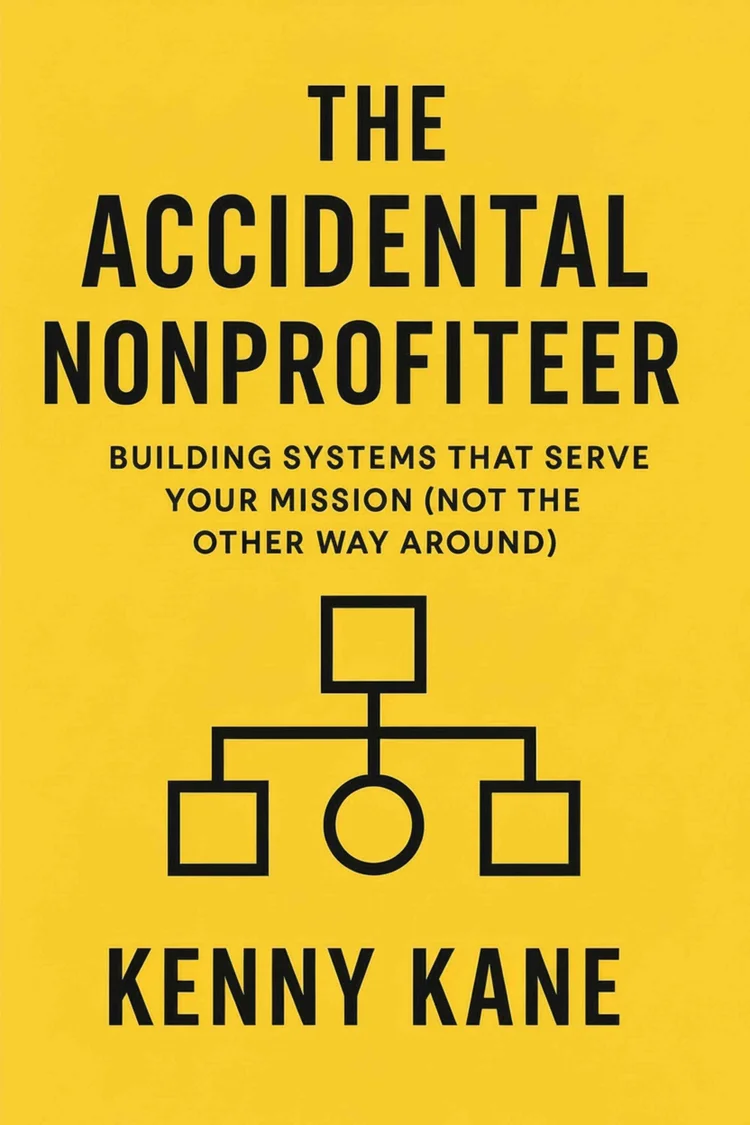
This became especially clear when I used Claude to finally complete 'The Accidental Nonprofiteer' after eight years of false starts: a process I detail in How I Used Claude AI to Write My Book (And Why It Wasn't What You Think). The book's value came from my decade building Stupid Cancer; Claude helped me organize and articulate that experience.
Tools as Systems, Not Shortcuts
Writing a book with Claude is not a shortcut. It's a different workflow that trades some types of effort (typing out 50,000 words) for other types of effort (giving clear direction, iterating on voice, synthesizing into a coherent whole).
My total time investment for a 50,000-word book using Claude: 80-100 hours. That's less than writing entirely by hand (which would take me 150-200 hours), but it's not trivial. The time savings come from Claude handling execution while I focus on direction and synthesis.
If someone tells you they wrote a book in a weekend using AI, they either:
Published a first draft (bad idea)
Wrote something very short (not really a book)
Are lying about the time investment
Good books take time, even with AI assistance.
The Feedback Loop With Traditional Writing
Using Claude has made me a better writer, not a lazier one. Here's why:
Editorial judgment improves: Revising Claude's drafts forces me to articulate exactly what's wrong with a sentence, paragraph, or section. This precision makes me sharper when I write without AI.
Structural thinking strengthens: Outlining a book for Claude requires clarity about how arguments build and chapters connect. That structural discipline carries over to all my writing.
Voice awareness increases: Calibrating Claude to match my voice requires me to clearly define what my voice is. Most writers have a vague sense of their voice; working with AI forces you to make it explicit.
Final Thoughts: What Makes This Approach Work
Writing a book with Claude isn't magic. It's a system that requires:
Clear thinking upfront: You must know what your book is about before Claude can help you write it.
Specific direction: Generic prompts produce generic work. The more precise your instructions, the better Claude's output.
Editorial judgment: Claude gives you material to work with, but you're the one deciding what's good, what's fixable, and what needs to be cut.
Iterative revision: First drafts are never final drafts. Budget time for 3-4 revision passes per chapter.
Human synthesis: The final pass—where you add your voice, experience, and editorial taste—is what transforms a draft into a book worth reading.
If you're willing to invest that effort, Claude is an exceptional co-writing partner. It won't replace your thinking, experience, or judgment, but it will help you execute faster and more consistently than writing alone.
The books I've written with Claude are genuinely mine—my ideas, my experience, my voice. Claude just helped me get them on the page without getting stuck, losing momentum, or burning out halfway through.
That's the real value: Claude removes the friction between having something worth saying and actually saying it.
FAQs
Can Claude write a book by itself?
1
No. Claude can draft chapters based on outlines you provide, but it cannot write a complete book without substantial human direction, revision, and synthesis.
Think of it this way: Claude can write sentences and paragraphs that sound competent, but it cannot decide what ideas are worth exploring, which examples support those ideas best, or how the book should evolve from concept to conclusion. Those decisions require editorial judgment, lived experience, and creative vision that AI doesn't possess.
If you ask Claude to "write a book about leadership," it will produce a generic manuscript that sounds like every other AI-generated business book. If you give Claude a clear thesis, detailed outline, voice guidelines, and iterate through multiple revisions, it can help you produce a book worth reading.
Is Claude good for book writing?
2
Yes, for specific use cases. Claude excels at:
Maintaining structural consistency across 50,000+ words
Executing revisions based on clear editorial direction
Preserving voice once calibrated
Helping you overcome blank page paralysis
Claude struggles with:
Generating original insights or arguments
Writing from lived experience (memoir, case studies)
Creating distinctive prose style
Replacing editorial judgment
If you have expertise, experience, and a clear thesis, Claude is an excellent co-writing partner. If you're hoping Claude will figure out what to write about, you'll be disappointed.
How long can a book be with Claude?
3
Claude's 200,000 token context window can handle approximately 150,000 words of combined content (outline + chapters + editorial notes). This is more than enough for most nonfiction books (40,000-80,000 words) and even many novels.
Practically, I've used Claude for books up to 60,000 words without hitting context limits. The key is keeping the project organized:
Use a Claude Project to maintain persistent context
Upload chapters as separate files
Keep the outline and voice guidelines accessible
Clean up the conversation periodically by starting fresh with compiled drafts
If you're writing an academic tome or sprawling novel over 100,000 words, you may need to work in sections (e.g., Part 1 in one project, Part 2 in another) and then synthesize them manually.
Is using Claude to write a book ethical?
4
Using AI as a writing tool is ethical, just as using spell-check, grammar software, or working with a human editor is ethical. The ethical line is transparency and honest representation of your work.
Ethical use:
Using Claude to draft and revise based on your expertise and experience
Being transparent about your process when appropriate (acknowledgments, interviews)
Ensuring the final work genuinely represents your ideas and knowledge
Doing substantial human synthesis and revision
Unethical use:
Presenting AI-generated content as purely human-written when the distinction matters (e.g., memoir, expertise-based nonfiction)
Using Claude to fabricate expertise you don't possess
Publishing first drafts without meaningful human revision
Claiming credit for insights or frameworks Claude generated from its training data
My rule: If the book's value comes from my experience, knowledge, or perspective, and I used Claude as an execution tool to articulate that value, I'm comfortable with the ethics. If the book's value came from Claude and I'm just packaging it, that's a problem.
Will Amazon reject AI-assisted books?
5
How much does it cost to write a book with Claude?
6
Do I need Claude Pro or will the free version work?
7
As of late 2024, Amazon does not prohibit AI-assisted books, but they do require disclosure of AI-generated content during the publishing process.
Current Amazon KDP policy:
You must disclose if your book contains "AI-generated" content
AI-assisted content (where a human substantially revises AI output) is generally acceptable
The distinction matters: books written with AI help are fine; books that are entirely AI-generated with no human input raise flags
Practical reality: Thousands of AI-assisted books are successfully published on Amazon. The key is ensuring your book meets quality standards and isn't obviously AI slop.
Quality filter: Amazon cares more about user experience than the specific tools you used. A well-edited, valuable book written with AI assistance is more likely to succeed than a poorly written book created entirely by hand.
My advice: Focus on making your book genuinely good, not on gaming disclosure rules. If you've done meaningful work—providing the expertise, directing the creation, and synthesizing the final product—you're on solid ethical and practical ground.
Claude subscription: $20/month for Claude Pro gives you access to Claude Sonnet 4.5 with significantly higher usage limits than the free tier. For a book project that might take 2-3 months, that's $40-60.
Comparison: Hiring a ghostwriter for a 50,000-word book typically costs $10,000-50,000. Hiring a developmental editor costs $2,000-5,000. Using Claude as a co-writing tool is dramatically cheaper.
Hidden costs: Your time. While Claude accelerates the process, you're still investing 80-100 hours for a quality 50,000-word book. That's not nothing.
ROI consideration: If your book is a business tool (establishing authority, generating leads, building your platform), the $60 investment in Claude is trivial compared to the potential return. If you're writing for pure creative satisfaction, evaluate whether the subscription cost is worth it for your specific project.
Claude subscription: $20/month for Claude Pro gives you access to Claude Sonnet 4.5 with significantly higher usage limits than the free tier. For a book project that might take 2-3 months, that's $40-60.
Comparison: Hiring a ghostwriter for a 50,000-word book typically costs $10,000-50,000. Hiring a developmental editor costs $2,000-5,000. Using Claude as a co-writing tool is dramatically cheaper.
Hidden costs: Your time. While Claude accelerates the process, you're still investing 80-100 hours for a quality 50,000-word book. That's not nothing.
ROI consideration: If your book is a business tool (establishing authority, generating leads, building your platform), the $60 investment in Claude is trivial compared to the potential return. If you're writing for pure creative satisfaction, evaluate whether the subscription cost is worth it for your specific project.
Yes. You own the output generated by Claude when you use it. There are no restrictions on selling books you've written with Claude's assistance.
Copyright clarity: While AI-generated content can't be copyrighted itself, a book that combines your original ideas, structure, and substantial revision qualifies for copyright protection as a derivative work.
Practical permission: You don't need to ask Claude, Anthropic, or anyone for permission to sell a book you created using Claude. It's your work product.
Disclosure: While you can legally sell the book, you should still be thoughtful about disclosure when appropriate (as covered in the ethics FAQ above).